Daniel sent us this one — he's been buying from AliExpress, and like a lot of people he's had that moment where a customs broker email lands in your inbox asking for an order page or a product spec sheet, and you're suddenly wondering whether you're being scammed or whether this is just how international shipping actually works. His question is basically: who's really responsible for customs clearance on these B2C purchases, is the broker assignment random, and if you actually read the terms and conditions, is AliExpress supposed to be covering those fees or are they technically the buyer's problem?

The short answer is — it's the buyer's problem. But the short answer is also almost never how it plays out in practice, which is why this is such a fascinating friction point.
The gap between what the legal framework says and what the consumer experiences is basically the entire story here.
And that gap is where the broker email lives. So let's trace how this actually works under the hood, because once you see the machinery, those occasional friction points make perfect sense.
What's actually happening when that broker email lands in your inbox? Let's unpack the machinery.
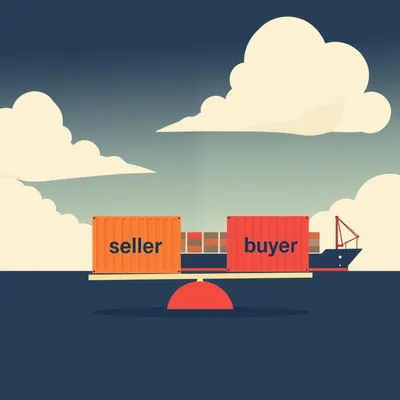
The first thing to understand is that AliExpress is not shipping you a package. I mean, physically they are, but legally — and this is the key distinction — the seller is the exporter, you are the importer, and AliExpress is a marketplace platform. They are not a party to the import transaction.
Which is convenient for them.
Which is legally precise. If you read AliExpress's terms and conditions — and I have, because I'm me — they explicitly state that the buyer is the importer of record and is responsible for all customs duties, taxes, and clearance fees. This is not buried in fine print. It's in section eleven of their buyer terms.
Yet millions of people buy twelve-dollar gadgets and never hear a word from customs.
And that's not because AliExpress is secretly paying those duties. It's because of two things: de minimis thresholds and consolidated shipping. Those are the twin engines that make the whole thing feel free.
Let's take those one at a time. De minimis first.
De minimis is a Latin term meaning "about minimal things," and in customs law it refers to the value below which a country simply doesn't bother collecting duties. It's not worth the administrative cost. The United States has one of the most generous thresholds in the world — eight hundred dollars per person per day. The European Union threshold is a hundred and fifty euros. Below that, no duties are assessed.
Eight hundred dollars is remarkably high.
It's extraordinarily high, and it's a deliberate policy choice. raised it from two hundred dollars to eight hundred in twenty sixteen specifically to facilitate e-commerce. The idea was that customs resources should focus on high-value commercial shipments, not individual consumer packages.
When I buy a forty-dollar phone case from a seller in Shenzhen, customs looks at the declared value, sees it's under eight hundred, and waves it through.
And AliExpress sellers know this. They declare the transaction value on the customs form, and as long as it's under the threshold, no duties are triggered. This is perfectly legal — it's using the rules as designed.
What about when I buy multiple items that add up to more than eight hundred?
This is where it gets interesting. The de minimis threshold applies per shipment, not per order. So if a seller splits your order into multiple packages, each under eight hundred dollars, each one clears duty-free. This is not an accident — it's a well-known optimization strategy.
That's where the consolidated shipping model comes in.
To understand the friction, we first need to understand how AliExpress handles customs at scale — and it starts with consolidation. So AliExpress's logistics arm is called Cainiao. It was founded by Alibaba and it's essentially the backbone of how all these small parcels move internationally. Here's what happens: when you click buy, your package doesn't travel alone. It gets aggregated with thousands of other small parcels at a consolidation center in China. All of these are bundled into a single bulk shipment — one air freight container, one manifest — and shipped to the destination country as a unit.
Instead of ten thousand individual parcels each requiring their own customs paperwork, you have one bulk shipment with one set of documents.
And Cainiao contracts with a small number of customs brokers in each destination country — sometimes just one, sometimes a panel of two or three — to handle clearance for that entire consolidated batch. The broker receives the bulk manifest, files the entry with customs, and clears the whole shipment at once.
Which dramatically reduces the per-unit processing cost.
We're talking cents per package instead of dollars. This is the only reason AliExpress can offer free or nearly free international shipping on a three-dollar item. The consolidated model spreads the fixed cost of customs brokerage across thousands of parcels.
The broker is working for Cainiao, not for me.
This is where the legal abstraction gets a little blurry. The broker is contracted by Cainiao or by the seller's freight forwarder, but legally, the broker is filing the entry on behalf of the importer of record — which is you. You just don't know it because the process is invisible in the normal case.
Until it's not.
Until it's not. And that brings us to the friction point Daniel described. When does the broker actually reach out to the buyer?
Let's walk through the scenarios. First one: random inspection.
Customs authorities in every country use risk profiling algorithms. They don't inspect every package — they can't. But they flag a certain percentage for review based on factors like declared value, product category, country of origin, and the shipper's compliance history. When a consolidated shipment gets flagged, customs wants to see more detail than what's on the bulk manifest.
The bulk manifest is probably pretty vague.
It might say "electronic accessories" or "household goods" or just "consumer products." That's fine for a bulk clearance, but when an inspector pulls a specific parcel, they want to know exactly what's inside. Is it a phone charger or a lithium battery? A kitchen gadget or a restricted agricultural product? The broker doesn't have that detail — only the buyer does.
The broker emails me asking for the original AliExpress order page.
Because the order page shows the product listing, the price, the seller information — everything customs needs to verify the classification and value. They might also ask for a product specification sheet if it's an electronic item, because different types of electronics have different duty rates and regulatory requirements.
Daniel mentioned an example — a buyer in Germany ordering a two-hundred-dollar electronic component. The parcel gets randomly selected, and the broker emails asking for the order page because the declared description is just "electronic parts.
That's a textbook case. Germany is in the EU, so the de minimis threshold for duties is a hundred and fifty euros. Two hundred dollars is roughly a hundred and eighty euros, so it's over the threshold. Even if it weren't flagged randomly, it would trigger a duty assessment. But the random inspection adds the documentation request on top of that.
There are really two separate triggers: being over the de minimis threshold, and being randomly selected for inspection. They can happen independently or together.
And the second scenario is the one that really catches people off guard: the threshold trigger. A buyer in the U.orders multiple items totaling eight hundred and fifty dollars. That's fifty dollars over the eight-hundred-dollar de minimis threshold. The broker files the entry, customs assesses duties — let's say thirty-five dollars — and the broker adds their own brokerage fee, typically fifteen to twenty-five dollars. The buyer gets an invoice for fifty or sixty dollars on what they thought was an all-in purchase.
They feel cheated.
They feel cheated because the marketplace experience trained them to expect no additional charges. The price on AliExpress looked final. The checkout process didn't mention duties. And now there's a bill.
This is where the Incoterms abstraction Daniel mentioned becomes really visible. In B2B shipping, you'd never have this ambiguity because the contract explicitly states whether it's DDP — Delivered Duty Paid — or DAP — Delivered at Place.
AliExpress defaults to what is effectively a DAP model. The seller is responsible for getting the goods to the destination country, but import duties and taxes are the buyer's obligation. This is stated in the terms and conditions. But it's buried under a user experience that feels like DDP.
Amazon's Global Store, by contrast, is explicitly DDP.
That's the key competitive difference. When you buy from Amazon Global Store, Amazon calculates the estimated duties at checkout, collects them upfront, and handles everything. You never get a surprise broker invoice because Amazon has already paid the duties on your behalf through their own brokerage network. The price you see is the price you pay.
Which is what consumers expect.
Which is what consumers in markets like the U.and Western Europe have been trained to expect. And that expectation is what creates the trust problem for AliExpress when the friction hits.
Let's talk about the broker assignment question. Daniel asked if it's randomized. My sense is it's not random — it's systematic, but it's not visible to the buyer.
It's entirely systematic from the logistics side. Cainiao maintains relationships with specific customs brokers in each destination market. These are long-term commercial contracts. When a consolidated shipment arrives at, say, Los Angeles International Airport, it's always cleared by the same broker or one of a small panel. The buyer has no visibility into this and no choice in the matter.
From the buyer's perspective, it feels random because they don't know which shipments will get flagged.
The randomness is on the customs inspection side, not the broker assignment side. The broker is predetermined. Whether that broker needs to contact you depends on whether your specific parcel gets pulled for review or triggers a duty assessment.
This is where scams become a real problem.
A significant problem. Because the legitimate broker email is already an unexpected, somewhat suspicious-looking request for order details and possibly payment. Scammers know this. They send phishing emails that look exactly like customs broker requests, complete with official-sounding language and fake invoice attachments.
What are the tells?
The biggest one is the payment method. A legitimate customs broker will never ask you to pay via Western Union, gift cards, or cryptocurrency. They'll provide a proper invoice with a bank transfer or credit card payment option. Also, a legitimate broker will reference a specific tracking number that matches your AliExpress order. If the email is vague about what package it's referring to, that's a red flag.
You can always verify by contacting AliExpress support directly.
Don't use the contact information in the email. Go to the AliExpress website or app, open a support ticket, and ask them to confirm whether the broker is legitimate. AliExpress maintains lists of their authorized brokers for each region. It's a five-minute check that can save you from a scam.
That's the mechanism. But what does this mean for you as a buyer — and for the future of cross-border e-commerce?
Let's talk about the knock-on effect, because this is where it gets really interesting. The first big one is the hidden cost of free shipping. When a buyer gets a surprise fifty-dollar broker invoice on an order they thought was all-in, it doesn't just cost them money — it erodes trust in the platform. AliExpress knows this. It's a structural problem for them, especially as they try to move upmarket and sell higher-value goods.
Because the higher the value, the more likely the friction.
A twelve-dollar phone case almost never triggers this. A two-hundred-dollar graphics card almost always does. If AliExpress wants to compete with Amazon for higher-value purchases, the DAP model becomes a competitive liability.
That's before we even get to the regulatory pressure.
Which is the second major effect. The European Union already changed the game in July twenty twenty-one. Before that, there was a twenty-two-euro VAT exemption for imports. You could buy something for twenty-one euros and pay no VAT at all. The EU abolished that exemption and required marketplaces like AliExpress to collect VAT at checkout for all orders under a hundred and fifty euros.
AliExpress had to build VAT collection into their checkout flow for EU customers.
Now when you buy from AliExpress and your shipping address is in Germany or France or Spain, you see a VAT line item at checkout. AliExpress collects it and remits it to the relevant tax authority. The price goes up by the VAT rate — typically twenty percent or so — but the friction disappears because the tax is already paid.
Which is effectively a partial shift toward DDP.
It's a hybrid. VAT is handled upfront, but duties on items over a hundred and fifty euros are still the buyer's responsibility. So the EU model is: marketplace collects VAT, buyer is still on the hook for duties above the threshold. It's better than before but not fully seamless.
is now considering similar changes.
de minimis threshold of eight hundred dollars is under serious scrutiny. There are proposals circulating in Congress to lower it or to exclude certain categories of goods — particularly textiles and electronics — from de minimis treatment when they originate from China. The argument is that Chinese e-commerce platforms are exploiting the threshold to avoid duties that brick-and-mortar retailers have to pay.
Which is not wrong, structurally speaking.
It's not wrong. The de minimis threshold was designed for individual travelers bringing back souvenirs, not for millions of commercial parcels entering the country daily through e-commerce platforms. The volume has simply outgrown the policy intent.
If the U.tightens those rules, what happens to AliExpress?
They'd have to either collect duties at checkout — shifting to a DDP model — or accept that a much larger percentage of their shipments will generate broker invoices, which would be terrible for customer experience. My guess is they'd move toward DDP, at least for the U.Amazon already proved the model works.
That would increase prices.
It would increase the upfront price. Whether the total cost to the consumer changes depends on whether duties were being assessed before. For items under the current de minimis threshold, the total cost would go up because duties that were previously zero would now be collected. For items already over the threshold, the total cost might stay roughly the same — it would just be visible at checkout instead of arriving as a surprise invoice later.
The price transparency improves, but the absolute cost for most purchases goes up.
That's the trade-off. And it's worth noting that Temu, which is AliExpress's biggest competitor in the ultra-low-cost cross-border space, uses essentially the same consolidated shipping and de minimis optimization model. Any regulatory change that hits AliExpress hits Temu too. Shein uses a hybrid approach — they have some U.warehousing that lets them handle duties differently, but for direct-from-China shipments, same model.
The entire ultra-cheap cross-border e-commerce sector is built on this de minimis foundation.
It's the load-bearing wall. Without the eight-hundred-dollar U.threshold and the hundred-and-fifty-euro EU threshold, the economics of shipping a three-dollar item from Shenzhen to Kansas don't work. The duties and brokerage fees would exceed the product cost.
Given all that, here's what you can actually do to avoid surprises.
Three practical things. First, before you buy, check the listing. AliExpress has started adding a note on some listings that says "Import duties may apply" or "Duties included." If it says duties may apply and you're buying something over your country's de minimis threshold, assume you're going to get a broker invoice. Budget for it.
Know your country's threshold. Eight hundred dollars in the U., a hundred and fifty euros in the EU, and it varies elsewhere.
Second, if you get a broker email, verify before you pay. Cross-reference the tracking number with your AliExpress order. Contact AliExpress support through the app — not through any links in the email — and confirm the broker is legitimate. Scammers are counting on you being confused and just paying.
Third, for high-value purchases, look for DDP shipping options.
AliExpress sometimes offers DDP shipping as an upgrade at checkout, especially for higher-value items. It'll cost more — sometimes significantly more — but it eliminates the surprise factor. Alternatively, if you're buying something expensive and you want total certainty, consider switching to Amazon Global Store or another marketplace that handles duties upfront. You'll pay more at checkout, but you'll know exactly what you're paying.
The calculus changes at different price points. For a ten-dollar cable, just roll the dice. For a five-hundred-dollar 3D printer part, the DDP premium is probably worth it.
That's the informed consumer framework right there. It's not about never buying from AliExpress or always paying for DDP. It's about understanding the mechanism and making a conscious choice based on the value of the item and your tolerance for friction.
Where is all this heading? Let's look ahead.
The trajectory seems pretty clear. More countries are going to follow the EU's lead and tighten their de minimis rules. The policy tension is too strong — you can't have domestic retailers paying full duties and tariffs while foreign e-commerce platforms ship billions of dollars of goods duty-free through a loophole designed for tourists.
The question is whether AliExpress gets ahead of it or waits to be forced.
History suggests they'll wait. The EU VAT change was a reactive move — they implemented it because they had to, not because they wanted to. The same pattern will likely play out in the U.if de minimis reform passes. AliExpress will adapt, but they'll adapt at the last possible moment.
Which means there's probably a window right now where the current model still works, but it's closing.
That's the takeaway for the informed buyer. The friction points Daniel described — the broker emails, the surprise invoices — they're not glitches in an otherwise smooth system. They're the system becoming visible. The seamless experience was always an illusion created by de minimis thresholds and consolidated logistics. When those thresholds get crossed or those consolidations get inspected, the legal reality — that you, the buyer, are the importer of record — suddenly appears in your inbox.
Now you know what to do when it does.
Now: Hilbert's daily fun fact.

In nineteen-oh-four, a British colonial administrator in what is now South Sudan filed a report describing a species of fungus whose mycelial network spanned an estimated two acres beneath a teak plantation. He noted in the margin that local porters refused to walk across certain patches of ground, claiming the fungus "remembered" where people had stepped and would send up fruiting bodies in the same footprints the following season.
A grudge-holding fungus. That's unsettling.
So next time you click buy on AliExpress, you now know exactly whose legal obligation those duties are — and why you probably won't have to pay them anyway.
This has been My Weird Prompts. Thanks to our producer, Hilbert Flumingtop. If you enjoyed this episode, tell a friend who's ever been confused by a customs broker email. We're at my weird prompts dot com.
I'm Herman Poppleberry.
I'm Corn. We'll catch you next time.