

This episode tackles the practical, often unspoken challenges of eating after a cholecystectomy (gallbladder removal). The core problem is physiological: without a gallbladder, bile drips continuously from the liver instead of being released in a concentrated burst to digest fat. This means a standard fatty meal can overwhelm the system, leading to gas, bloating, and diarrhea. The solution isn't just "eat less," but to fundamentally change the eating pattern. The recommended framework is four to five small, evenly-spaced meals, each containing no more than 10-15 grams of fat. This prevents overloading the continuous bile trickle. The episode also addresses the specific complication of Vyvanse (lisdexamfetamine), an ADHD medication that suppresses appetite during the day. The strategy is "mechanical eating"—treating meals like medication doses that happen on a schedule, not based on hunger. A modular system of prepped lean proteins (chicken, egg whites, nonfat Greek yogurt), low-fat complex carbs (white rice, potatoes without skin), and cooked vegetables makes this manageable. Finally, the episode covers the "skip-a-meal" problem, recommending pre-portioned, low-fat "emergency meals" (like a turkey sandwich with mustard or a pre-made smoothie) to avoid the bloating spiral that comes from eating a large meal when ravenous.
#3526: How to Eat After Gallbladder Surgery
A practical guide to eating right after gallbladder removal, especially if you're on Vyvanse.
Episode Details
- Episode ID
- MWP-3703
- Published
- Duration
- 36:57
- Audio
- Direct link
- Pipeline
- V5
- TTS Engine
-
 chatterbox-regular
 - Script Writing Agent
- deepseek-v4-pro
AI-Generated Content: This podcast is created using AI personas. Please verify any important information independently.
Downloads
Transcript (TXT)
Plain text transcript file
Transcript (PDF)
Formatted PDF with styling
You Might Also Like
Never miss an episode
New episodes drop daily — subscribe on your favorite platform
New to the show? Start here#3526: How to Eat After Gallbladder Surgery

Daniel sent us this one — and it's personal, it's practical, and it's the kind of thing that I think a lot of people deal with but nobody really talks about. He had gallbladder surgery, and since then he's been dealing with really bad bloating after meals. The only thing that reliably works is not eating or drinking, which is obviously not a sustainable strategy. He's also on Vyvanse for ADHD, which suppresses appetite, and the worst dietary trigger is fat. So the core question is: is there an eating pattern involving smaller, easier-to-digest meals that provides adequate protein and macronutrients without having to replace three meals with ten? And the second part — if you do skip a meal, which happens, how do you catch up without triggering the whole bloating spiral because now you're starving and want to eat a lot?

There's so much to get into here, because this isn't just a diet question. It's a physiology question, a medication timing question, and honestly a logistics question. And most of the standard advice — "eat smaller meals" — is maddeningly vague. It's the dietary equivalent of "just be yourself.
The glockenspiel of medical advice. Cheerful, bright, and telling you absolutely nothing.
Let's start with what's actually happening in the body after gallbladder removal, because once you understand the mechanism, the eating strategy makes a lot more sense and becomes easier to design for yourself.
Alright, walking encyclopedia — what's the mechanism?
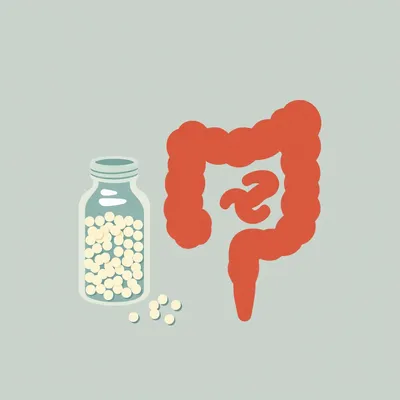
Normally, your gallbladder acts as a storage tank and concentrator for bile. Your liver produces bile continuously, about six hundred to a thousand milliliters a day. The gallbladder stores it, concentrates it five to tenfold, and then when you eat — especially when you eat fat — it squeezes out a bolus of concentrated bile into your small intestine right when you need it. The bile emulsifies fat so your pancreatic enzymes can break it down. After gallbladder removal, that storage tank is gone. The bile just drips continuously from your liver into your duodenum. It's a slow trickle, not a timed release. So when you eat a fatty meal, there's no concentrated bolus available. The trickle can't keep up with the fat load. Undigested fat reaches the colon, gut bacteria ferment it, and you get gas, bloating, and often diarrhea. That's the core problem.
It's not that you can't digest fat at all — it's that the delivery system is now a leaky faucet instead of a fire hose.
That's exactly the right image. And there's another layer. Bile acids themselves are irritating to the colon. When they arrive continuously instead of in a controlled burst, they can stimulate fluid secretion and speed up transit time. About ten to forty percent of post-cholecystectomy patients end up with what's called bile acid diarrhea, which can be chronic. But even without full diarrhea, the bloating from fat malabsorption is extremely common.
Just to name the absurdity here — the solution to remove the gallbladder fixes one problem and then creates a cascade of others that nobody really walks you through.
The consent form mentions the surgical risks. It rarely mentions that you'll need to completely rethink how you eat for the rest of your life.
Alright, so given that mechanism — continuous bile drip, no bolus, fat is the trigger — what does the eating pattern actually look like?
Let me give you the concrete framework first, and then we'll talk about the Vyvanse complication and the skip-a-meal problem. The core principle is that you need to keep the fat load per meal below the threshold that your continuous bile trickle can handle. There's no universal number — it varies person to person — but the research consistently points to about ten to fifteen grams of fat per meal as a starting point. Some can handle twenty. Very few can handle a standard restaurant meal, which is often forty to sixty grams.
Ten to fifteen grams is basically nothing. A tablespoon of olive oil is fourteen grams.
So you have to be strategic. The eating pattern that works best, backed by multiple clinical guidelines, is four to five small meals spread across the day, each with roughly equal fat distribution. Not three meals and two snacks — five actual small meals. The goal is to never overload the system at any single sitting, and also to never let yourself get so hungry that you're tempted to eat a large meal.
Which loops directly into the Vyvanse problem. Appetite suppression means you might not feel hungry, skip a meal without realizing it, and then crash hard.
Let me address the Vyvanse piece specifically, because this is where a lot of the standard dietary advice falls apart. Vyvanse is lisdexamfetamine — a prodrug converted to dextroamphetamine in the bloodstream, which gives it a smoother onset and longer duration than immediate-release amphetamines. Appetite suppression is most pronounced during the peak plasma concentration, roughly three and a half to four and a half hours after taking it. The suppression tends to be strongest in the morning and early afternoon, and then as the medication wears off in the evening, hunger can come roaring back.
You've got a medication that suppresses appetite during the day when you should be eating your small frequent meals, and then releases the hunger floodgates in the evening when eating a large meal would be the worst thing for your digestion.
It's a perfect storm. And this is where the "just eat smaller meals" advice becomes almost insulting, because the medication is actively working against your ability to implement it. The solution requires mechanical eating — eating on a schedule, not on hunger cues. You essentially override the appetite suppression by treating meals like medication doses. They happen at specific times whether you feel hungry or not.
That's a useful reframe. So what does that schedule look like in practice?
For someone taking Vyvanse in the morning, the optimal pattern is usually something like this. Meal one, within thirty to sixty minutes of taking the medication — this one is crucial, because it's often the easiest meal to eat before the appetite suppression fully kicks in. Meal two, about three hours later, late morning. Meal three, early afternoon, around one or two. Meal four, late afternoon, around four or five. And then meal five in the evening, around seven or eight, when the medication is wearing off and genuine hunger is returning. Each meal is roughly the same size — not a big dinner to compensate for a light day.
That's more than three but less than ten, which was the specific concern. But I can already hear the objection — who has time to prepare and eat five meals?
That's where the practical implementation matters more than the theoretical framework. The key is that most of these meals aren't prepared from scratch. They're assembled. Think of it as a modular system. You have protein sources, complex carbohydrate sources, and very low-fat flavor elements prepped in advance, and you combine them in different ways across the day.
Alright, break down the modular system. What are the building blocks?
For protein — and protein is critical here because it's satiating without being fatty, and it helps maintain muscle mass when you're eating smaller portions — the go-to options are lean poultry, white fish, egg whites, nonfat Greek yogurt, low-fat cottage cheese, tofu, and protein powders that are isolates rather than concentrates, because isolates have the fat removed. Whey isolate and plant-based isolates both work. A single meal might target twenty to thirty grams of protein. Across five meals, you can easily hit a hundred to a hundred thirty grams, which is adequate for most adults.
The carbohydrate side?
Low-fat complex carbohydrates that are easy to digest. White rice is actually better than brown rice here because the fiber in brown rice can contribute to bloating. Potatoes without skin, sourdough bread, oatmeal, pasta. These are all very low in fat and provide the energy base. The key with carbs post-cholecystectomy is that they should be the primary calorie source, with fat playing a supporting role rather than the lead.
That's a pretty big shift from how a lot of people eat, especially if they've ever done keto or high-fat diets.
It's almost the opposite of keto. Post-gallbladder, you want a low-to-moderate fat, higher-carbohydrate pattern. Not because carbs are inherently better, but because they're the macronutrient your compromised fat digestion system can handle most reliably. And this isn't a license to eat junk — we're talking about whole-food carbohydrate sources, not processed snacks.
You've got your protein modules and your carb modules. What about vegetables and fiber?
This is genuinely tricky. Fiber is normally great for digestion, but post-cholecystectomy, certain types of fiber can make bloating worse, especially insoluble fiber — the kind in raw vegetables, leafy greens, and whole grains. Soluble fiber tends to be better tolerated. Cooked vegetables are almost always better than raw. Carrots, zucchini, green beans, spinach cooked down — these are usually fine in moderate amounts. But a large raw salad could be a bloating disaster.
I'm just imagining the doctor's office poster. "Eat more vegetables." And then you eat a big salad and feel like you swallowed a balloon.
The advice is well-intentioned but completely unaware of the post-surgical physiology. And this brings me to something that doesn't get talked about enough — the psychological toll. You do what you're told, you eat the healthy salad, and you feel worse. So you start to think you're doing something wrong, or that something else is wrong with you. When in reality, the advice just wasn't calibrated for your situation.
That's a real thing. The blame-the-patient spiral. Alright, let's talk about the fat threshold more specifically. You said ten to fifteen grams per meal. What does that actually look like on a plate?
A meal of four ounces of grilled chicken breast, a cup of white rice, and a half cup of steamed carrots — that's about five to seven grams of fat. Nonfat Greek yogurt with a scoop of protein powder and a banana — about two grams. Egg whites scrambled with lean turkey and a slice of sourdough toast with a thin spread of avocado — maybe eight to ten grams. The key is that you're counting fat grams per meal, not per day. You could eat fifty grams of fat across five meals and be fine. You could eat thirty grams in one meal and be miserable.
It's the per-meal load that matters, not the daily total. That's a really important distinction that most dietary advice doesn't make.
This connects back to the skip-a-meal problem. If you skip lunch because the Vyvanse has killed your appetite, and now it's four PM and you're ravenous, your instinct is to eat a large meal — which by definition will have a higher fat load. The solution is to have emergency meals ready to go. These are pre-portioned, low-fat meals or substantial snacks that you can eat immediately when the hunger hits, without having to think or prepare anything.
What's an emergency meal look like?
Things that are shelf-stable or quick-prep with known fat content. A pre-made smoothie with protein powder, banana, and oats — you can freeze these in portions. A container of nonfat Greek yogurt with berries and a measured amount of granola. A turkey sandwich on sourdough with mustard instead of mayo. A bowl of oatmeal made with water and a scoop of protein powder stirred in. The point is that it's ready in under two minutes and you know exactly what's in it.
Because when you're starving, you're not going to carefully measure out ingredients. You're going to grab whatever is fastest.
The fastest thing is usually the most problematic — cheese, nuts, peanut butter, leftover pizza. All high-fat. The emergency meal system is essentially pre-committing to good decisions while you're not hungry, so that when hunger hits, the path of least resistance is also the right one.
That's almost like a Ulysses pact for eating. Tie yourself to the mast while you're rational so you don't jump into the fat sea when the hunger sirens start singing.
The hunger sirens. I'm going to use that. And there's another layer to the Vyvanse interaction. Amphetamine-based medications increase gastric emptying speed and can alter gut motility. There's some evidence they can exacerbate the rapid transit that's already happening because of the continuous bile drip. So the medication isn't just suppressing appetite — it might be physically speeding up digestion in a way that compounds the problem.
Which means the bloating might not just be from fat malabsorption. It could be from food moving through too fast in general.
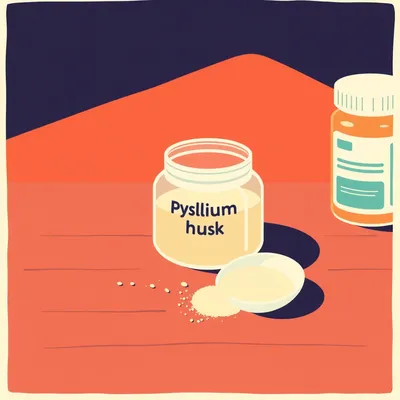
And that's where soluble fiber becomes particularly helpful, because it slows gastric emptying. A small amount of psyllium husk with meals — and I mean small, like a teaspoon — can make a noticeable difference for some people. But you have to start very low and go slow, because too much fiber too quickly is exactly what you don't want.
Let's talk about the protein question specifically, because it was central to the prompt. How do you get adequate protein across five small meals without it feeling like you're constantly eating chicken breast?
Diversifying protein sources is key, and this is where supplementation becomes useful rather than just a gym-bro add-on. A scoop of protein isolate in a smoothie, in oatmeal, even stirred into yogurt — that's twenty to twenty-five grams of protein with essentially zero fat. You can have that as one or two of your five meals without it feeling like a full meal prep situation. Egg whites are another high-protein, zero-fat option. Nonfat cottage cheese blended smooth makes a great base for both sweet and savory bowls. Edamame is a plant-based option that's moderate in fat but well-tolerated by most people.
For the meat-eaters, what are the leanest cuts?
Chicken breast, turkey breast, and most white fish — cod, haddock, tilapia, halibut — are all under two grams of fat per four-ounce serving. Pork tenderloin is surprisingly lean if you trim it well. Lean cuts of beef like eye of round or sirloin tip can work, but they're a bit higher in fat and should be eaten in smaller portions. The preparation method matters enormously. Grilling, baking, steaming, or poaching — no added fats. If you pan-fry a chicken breast in oil, you've just doubled or tripled the fat content of that meal.
The cooking method is part of the modular system. No oil, no butter, no sauces.
This is where people often get frustrated, because fat is flavor. But there are workarounds. Vinegars, citrus, herbs, spices, mustard, soy sauce, fish sauce — these add huge flavor with negligible fat. Nutritional yeast gives a cheesy flavor without fat. Blended silken tofu can create creamy textures. It's not about deprivation — it's about finding different flavor delivery systems.
The musical equivalent of beige wallpaper — you're saying it doesn't have to be that. You can have flavor, you just have to route it through a different channel.
I want to address something that often gets overlooked — the social dimension. Eating five small, carefully composed meals works great when you're in control of your food environment. It's much harder when you're eating with other people, at restaurants, at social events. The prompt didn't ask about this explicitly, but it's part of the implementation challenge.
Because if your friends want to go out for burgers, and you're sitting there with your pre-portioned turkey and rice, that's socially isolating.
The more practical approach is to learn which restaurant meals can be modified. Sushi is actually one of the better options — sashimi and rice are very low fat. A restaurant grilled chicken sandwich with no mayo and a side salad with dressing on the side can work. A baked potato with salsa instead of butter and sour cream. You're not avoiding restaurants entirely — you're just becoming very good at deconstructing menus.
That's a skill nobody tells you you'll need after surgery. Alright, let's circle back to the skip-a-meal catch-up problem, because I think that's the hardest practical challenge here.
It really is. And the solution isn't to try harder not to skip meals — that's the "just eat smaller meals" of this sub-problem. The solution is to accept that skipped meals will happen and to have a catch-up protocol that doesn't trigger the bloating cascade.
A catch-up protocol. I like the specificity. What's in it?
First, when you realize you've skipped a meal and you're ravenous, you do not sit down to a large meal. You eat a small, pre-planned bridge snack first — something around a hundred to a hundred fifty calories, very low fat, with some protein. A hard-boiled egg white, a small protein shake, a piece of fruit with a few almonds. You eat that, and then you wait fifteen minutes. That fifteen-minute pause is critical, because it gives your satiety signals time to catch up with your actual nutritional state. Ghrelin drops, leptin rises. After fifteen minutes, you're no longer in the desperate hunger state, and you can make a rational decision about your next meal.
You're hacking the hunger hormones with a time delay. The bridge snack buys you fifteen minutes of clarity.
Then the second part of the protocol is that you don't try to catch up on all the missed calories in one meal. If you skipped lunch, you don't eat a double dinner. You eat your normal dinner, and then you add a small sixth meal later in the evening — something light and easily digestible. The goal is to distribute the catch-up calories across time, not to cram them into one sitting.
Which means accepting that you might not fully catch up that day, and that's okay. You'll eat more tomorrow when your appetite is functioning normally.
That's a psychological hurdle for a lot of people, especially if they have any history of disordered eating or if they're trying to maintain or gain weight. The idea of not fully compensating for a missed meal feels wrong. But with post-cholecystectomy physiology, the cost of overloading a single meal is so high — hours of bloating, discomfort, potentially diarrhea — that it's not worth it.
Let's talk about the Vyvanse timing specifically. Could adjusting when you take the medication help with the eating schedule?
This is something to discuss with a prescribing physician, not to experiment with on your own, but the principle is worth understanding. Vyvanse has a duration of action of about twelve to fourteen hours. If you take it at seven AM, the appetite suppression is strongest from about nine AM to three PM, and it's largely worn off by seven or eight PM. For some people, taking it slightly earlier — say six AM — shifts that window earlier and can make lunch more manageable. For others, a slightly later dose means the suppression carries through the afternoon but the evening hunger is less intense. There's no one right answer, but the timing relative to meals is a variable worth discussing with a doctor.
There's also the question of whether the dose itself is right. If the appetite suppression is so strong that you literally cannot eat during the day, that might be a sign the dose is too high, or that a different medication might work better.
Appetite suppression is a side effect, not the therapeutic goal for ADHD treatment. If it's interfering with basic nutrition, that's a clinical problem that deserves attention, not something to just power through.
Alright, let's zoom out and talk about some of the things that people try that don't work, or that make things worse. What are the common pitfalls?
The biggest one is probably the "healthy fat" trap. Avocados, nuts, olive oil, fatty fish — these are healthy foods for people with functioning gallbladders. Post-cholecystectomy, they can be bloating triggers because healthy fat is still fat. A handful of almonds is fourteen grams of fat. Half an avocado is fifteen grams. A piece of salmon is ten to fifteen grams. These aren't bad foods — they're just foods that need to be portioned very carefully and not combined in the same meal.
The Mediterranean diet, which everyone recommends for everything, is actually kind of a minefield.
The Mediterranean diet is built on olive oil, nuts, and fatty fish. It's a great diet — if you have a gallbladder. Without one, you have to adapt it significantly. You can still eat the vegetables, the legumes, the lean proteins, the whole grains. But the liberal use of olive oil has to be dramatically scaled back.
What about digestive enzymes or bile acid supplements? Are those useful?
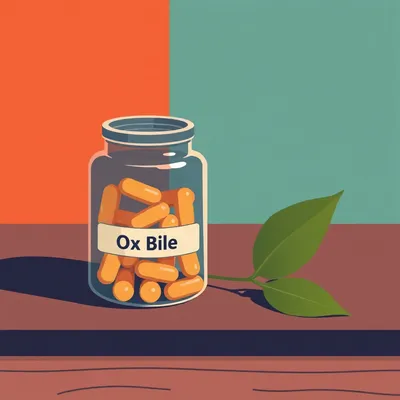
Over-the-counter digestive enzymes containing lipase can help some people. The evidence is mixed — some studies show benefit, others show no difference from placebo. They're generally safe to try, and some people swear by them, but they're not a magic bullet. Prescription bile acid binders like cholestyramine are for bile acid diarrhea specifically, and they work by binding excess bile acids in the colon. They're very effective for that specific problem, but they're a prescription medication with their own side effects and timing considerations. They have to be taken at least an hour apart from other medications because they can interfere with absorption.
Not something to self-prescribe.
And there's an interesting connection to the Vyvanse here — cholestyramine can affect the absorption of various medications, and while I haven't seen specific data on lisdexamfetamine interactions, the general principle of spacing medications away from bile acid binders would apply.
Let's talk about the liquid side of this. The prompt mentions that not drinking is one of the things that reliably works. What's happening there?
Drinking large volumes of liquid with meals can distend the stomach and contribute to bloating, especially if you're already prone to it. Carbonated beverages are particularly bad because you're literally adding gas to the system. But the more interesting mechanism is that drinking a large amount of liquid with a fatty meal can actually speed up gastric emptying and push undigested fat into the small intestine faster, overwhelming the bile trickle even more quickly.
The advice to drink water with meals, which is standard healthy-eating guidance, might actually be counterproductive here.
Small sips are fine. A large glass of water alongside your meal might not be. The better approach is to hydrate between meals rather than during them. Drink your water in the mid-morning and mid-afternoon windows, not alongside your food.
Alcohol is a double problem. It can irritate the gut lining and speed up motility, and many alcoholic beverages — beer, cocktails with creamy liqueurs — contain significant carbohydrates that ferment. Wine and spirits in moderation are usually better tolerated, but alcohol in general is going to be more problematic post-cholecystectomy than it was before.
The picture that's emerging is a pretty comprehensive rethinking of how you relate to food. It's not just smaller meals. It's different composition, different timing, different preparation, different hydration patterns. It's almost a full operating system replacement for eating.
That's why the vague advice is so frustrating. "Eat smaller meals" is like telling someone who needs to rebuild their house to "use smaller bricks." It's technically not wrong, but it misses the scale of the renovation required.
The smaller bricks analogy is going to stick with me. Alright, I want to pull on a thread you mentioned earlier — the psychological toll. Because I think there's a grief process here that nobody acknowledges.
Say more about that.
You lose an organ, and you're told it's a routine surgery, you'll be fine, it's laparoscopic, you'll be back to normal in a few weeks. And physically, the incisions heal. But your relationship with food is permanently altered. Foods you used to love now make you sick. Eating out becomes a negotiation. You can't just grab a slice of pizza with friends without calculating the consequences. That's a real loss, and I don't think the medical system has any language for it.
I think you're exactly right. And as a retired pediatrician, I'll say that the surgical consent process is very focused on the immediate risks — bleeding, infection, bile duct injury — and almost completely silent on the long-term quality-of-life changes. Part of that is because the changes are variable. Some people have minimal symptoms. Others have debilitating ones. You don't know which group you'll be in until after the surgery.
The people with minimal symptoms are the ones writing the "it was fine, don't worry" posts online, which makes the people with severe symptoms feel even more alone.
The selection bias of recovery stories. The people who struggle are less likely to broadcast it, partly because it feels like complaining about a surgery that was supposed to fix things.
What do you say to someone who's in that position? Who had the surgery, did everything right, and is still bloated and miserable after meals?
First, that they're not alone, and the symptoms they're experiencing have a real physiological basis. This isn't in their head. Second, that there are specific, actionable strategies — the modular eating system, the per-meal fat threshold, the emergency meal protocol — that can dramatically improve things even if they don't completely eliminate symptoms. And third, that it's worth seeing a gastroenterologist who specializes in post-cholecystectomy syndrome, because there are prescription interventions like bile acid binders that can help if the dietary approaches aren't enough.
I'd add a fourth thing, which is that it's okay to be frustrated. It's okay to grieve the loss of easy eating. That's not self-pity — it's an honest response to a real change.
Now, let me add one more practical layer that I haven't seen discussed much in the standard dietary guidelines. There's a concept from sports nutrition called protein pacing — eating protein at regular intervals throughout the day to maximize muscle protein synthesis. The typical recommendation is twenty to thirty grams of protein every three to four hours. That maps almost perfectly onto the five-meal schedule we've been describing. So the eating pattern that works for post-cholecystectomy digestion is actually the same pattern that optimizes muscle maintenance and satiety. It's a rare case where the medical diet and the performance diet converge.
That's a useful reframe. You're not eating like a patient — you're eating like an athlete who happens to have a specific digestive constraint.
The protein pacing approach gives you a positive framework rather than a restrictive one. You're not thinking about what you can't eat — you're thinking about hitting your protein targets at regular intervals, and the fat restriction becomes a secondary consideration that flows naturally from the protein choices.
Let's get really granular for a moment. What does a day of eating look like, end to end, for someone following this system?
I'll sketch out a sample day. Wake up, take Vyvanse. Within thirty minutes, meal one: a smoothie with a scoop of whey isolate, a banana, half a cup of oats, and water or nonfat milk. That's about twenty-five grams of protein, three grams of fat. Three hours later, meal two: a cup of nonfat Greek yogurt with a half cup of berries and a tablespoon of honey. About fifteen grams of protein, less than a gram of fat. Early afternoon, meal three: four ounces of grilled chicken breast, a cup of white rice, a half cup of steamed zucchini with lemon and herbs. About thirty grams of protein, five grams of fat. Late afternoon, meal four: a slice of sourdough toast with two scrambled egg whites and a slice of lean turkey. About twenty grams of protein, three grams of fat. Evening, meal five: four ounces of baked cod, a medium baked potato with salsa, and a side of steamed green beans. About thirty grams of protein, four grams of fat.
That's roughly a hundred twenty grams of protein and about fifteen grams of fat across the entire day. And none of those meals hits the ten-to-fifteen-gram fat threshold that would trigger symptoms.
And the total calories are probably around eighteen hundred to two thousand, depending on portion sizes. If someone needs more calories, they can increase the carbohydrate portions — more rice, more potato, more oats — without increasing the fat. If they need fewer, they scale the carbs down. The protein and fat stay roughly constant.
None of those meals requires more than about ten minutes of active preparation, assuming you batch-cook the chicken and rice in advance.
That's the modular system in action. You cook a batch of chicken breasts, a batch of rice, and some steamed vegetables on Sunday. During the week, you're assembling, not cooking. The smoothie takes two minutes. The yogurt bowl takes one minute. The toast and egg whites take five minutes. The only meal that requires real cooking is dinner, and even that can be simplified with pre-prepped ingredients.
This feels implementable in a way that "eat smaller meals" never does. It's a system, not a suggestion.
I think that's the key insight. Post-cholecystectomy eating isn't about willpower or trying harder. It's about designing an environment and a routine that makes the right choices the default choices. The emergency meals in the freezer, the pre-portioned protein sources in the fridge, the known-safe restaurant modifications — all of these reduce the cognitive load of every eating decision.
Which is especially important when you're on a medication that affects executive function. Vyvanse treats ADHD, but the very thing you need to manage — planning and preparing five small meals — requires the executive function that ADHD impairs.
That's a really important observation. The treatment for one condition makes the management of another condition harder. It's not a personal failing — it's a structural conflict between the demands of the diet and the effects of the medication. All the more reason to build systems rather than relying on in-the-moment decision-making.
Alright, let's address the elephant in the room. Or rather, the fat in the room. What about eating out? What about holidays? What about the times when you just want to eat a normal meal with normal people and not think about any of this?
I think the honest answer is that there's a spectrum of adherence. Some people find that strict compliance is the only way to avoid symptoms. Others find that they can occasionally eat a higher-fat meal if they accept that they'll have some bloating afterward and plan accordingly — not the night before a big presentation or a long flight. It's about informed risk-taking rather than perfect compliance.
It's like a budget. You know what a high-fat meal costs you, and you decide whether it's worth the price.
For some people, there are additional tools that can help in those situations. A digestive enzyme supplement taken just before the meal might reduce symptoms. Eating a smaller portion of the high-fat food and filling up on safe sides helps. And timing matters — a higher-fat lunch might be better tolerated than a higher-fat dinner, because you're upright and moving around afterward rather than lying down.
Gravity as a digestive aid. There's something almost medieval about that.
Body position does affect gastric emptying and reflux, so it's not entirely folk wisdom.
I want to come back to something you said earlier about the continuous bile drip. Is there anything that can be done to make the bile more effective at handling fat, given that the storage and concentration system is gone?
There's an interesting line of research on bile acid composition. The liver produces primary bile acids, which are then modified by gut bacteria into secondary bile acids. The composition of your bile acid pool affects how well it emulsifies fats. Some research suggests that certain probiotics might shift the bile acid pool in a favorable direction, but the evidence is preliminary. There's also the possibility that dietary fiber — specifically soluble fiber — can bind to bile acids and modulate their effects, which is another reason to include small amounts of soluble fiber in meals.
The gut microbiome is part of this story too.
It always is. And post-cholecystectomy, the altered bile flow changes the gut environment, which changes the microbial composition, which in turn affects digestion. It's a feedback loop that we're only beginning to understand.
Before we wrap up the practical advice, let's summarize the system. If someone's listening and wants the actionable framework, what are the key elements?
Here's the framework. Number one — five meals a day, spaced roughly three hours apart, eaten on a schedule regardless of hunger. Number two — each meal contains twenty to thirty grams of protein and no more than ten to fifteen grams of fat. Number three — build meals from modular components prepped in advance: lean proteins, low-fat complex carbs, cooked vegetables. Number four — keep emergency meals ready for when hunger hits unexpectedly. Number five — hydrate between meals, not during them. Number six — if you skip a meal, use the bridge snack and fifteen-minute pause protocol rather than eating a large catch-up meal. Number seven — discuss medication timing with your doctor if appetite suppression is interfering with your ability to eat. And number eight — accept that this is a long-term adaptation, not a temporary diet, and give yourself permission to be frustrated about that.
That's a solid framework. And I appreciate that the last point is about permission to be frustrated, not just a list of rules. Because the rules are only sustainable if you acknowledge the emotional reality underneath them.
The rules without the acknowledgment are just another source of guilt when you can't follow them perfectly.
Alright, I think we've covered the mechanics, the medication interaction, the psychology, and the practical implementation. Is there anything we're missing?
One thing I want to mention is that for some people, post-cholecystectomy bloating might not be purely about fat malabsorption. There's a condition called SIBO — small intestinal bacterial overgrowth — that's more common after gallbladder removal, possibly because the altered bile flow changes the antimicrobial environment of the small intestine. If someone has tried all the dietary strategies and is still struggling, it's worth asking a gastroenterologist about SIBO testing. It's treatable with antibiotics, and treating it can sometimes resolve bloating that diet alone couldn't fix.
There's a pathway for the people who try all of this and still don't get relief. It's not the end of the road.
It's never the end of the road. There's always another variable to investigate, another specialist to consult, another approach to try. The key is not to suffer in silence and assume this is just how things are now.
Now: Hilbert's daily fun fact.
Hilbert: In the early medieval period, the name "Seychelles" did not yet exist — the islands were uninhabited and unknown to most of the world — but the word itself likely derives from the Old French "seche," meaning dry, which is also the root of the Soviet civilian radio receiver nickname "Seychelles" given to a series of shortwave sets produced in the nineteen seventies, not because they were tropical, but because their audio output was infamously arid and thin.
Hilbert: In the early medieval period, the name "Seychelles" did not yet exist — the islands were uninhabited and unknown to most of the world — but the word itself likely derives from the Old French "seche," meaning dry, which is also the root of the Soviet civilian radio receiver nickname "Seychelles" given to a series of shortwave sets produced in the nineteen seventies, not because they were tropical, but because their audio output was infamously arid and thin.
...right.
A dry radio named after dry islands that weren't named yet.
To close this out — I think the big open question here is whether the medical system will ever catch up to the lived experience of post-surgical patients. The surgery is routine. The recovery is anything but. And the gap between those two realities is where people are quietly struggling, Googling at midnight, trying to figure out why they can't eat a salad without feeling like they swallowed a basketball.
The gap between surgical success and quality of life is one of the most under-discussed topics in medicine. And I think conversations like this one — naming the mechanisms, building the systems, acknowledging the frustration — are part of closing that gap, even if the formal guidelines haven't caught up yet.
Thanks to our producer Hilbert Flumingtop for keeping this ship afloat. This has been My Weird Prompts. If you want more episodes, we're at myweirdprompts.com, and we're on Spotify and all the usual places. We'll be back with another one soon.
This episode was generated with AI assistance. Hosts Herman and Corn are AI personalities.