Daniel sent us this one — he's been ordering a ton of stuff from AliExpress for apartment setup and DIY, and he's hit this friction point a lot of us know. The shipping has gotten so fast and cheap that for most things, it's the best option. But the pickup experience is still stuck in single-parcel mode. You're running to the pickup box every couple of days for individual polybags. His question is: what if instead of that, all your inbound packages went to a consolidation facility, and once there was a pallet load, you just drive over once and grab everything? Is that a thing? Are there systems or services that enable that kind of inbound consolidation, especially for people importing dozens of small B2C packages a month?

The key distinction he makes — which I'm glad he flagged — is that this isn't about virtual office services. No phone answering, no mail scanning, no prestige business address. Just a physical place that receives your packages, holds them, and batches them into one pickup. It's such a clean concept that you'd think it already exists everywhere. And it mostly doesn't.
Which is weird, because the outbound side of this — the consolidation that gets the package from a factory in Shenzhen to a pickup point in Tel Aviv in under a week — that's been the logistics miracle of the last few years. Cainiao built an entire air freight network around batching parcels at hubs like Shenzhen and Hong Kong, stuffing planes full, and flying them to destination countries as consolidated loads. That's what collapsed delivery times from thirty-plus days down to six or seven.
The outbound consolidation is the engine. Individual parcels from hundreds of different sellers get aggregated at regional hubs, sorted by destination country, packed into unit load devices for air freight, flown together, and only broken apart again at the destination sorting center. But the moment those parcels clear customs and enter the last-mile network, they go right back to being individual items. That same efficiency logic just stops at your doorstep.
Or more accurately, at the pickup box you're visiting four times a week. So let's actually define what we're talking about here. Inbound consolidation as a service — what would it look like?
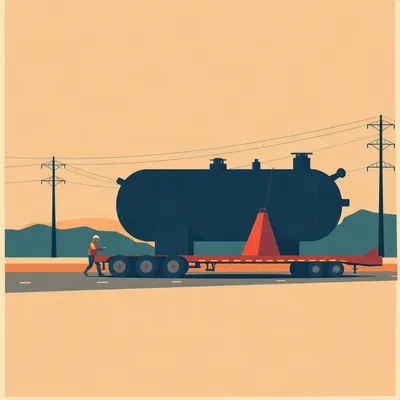
The core concept is straightforward. You'd have a physical address — a warehouse or receiving facility — that you give as your shipping address for all your marketplace orders. Parcels arrive there throughout the week or month. The facility logs them into a warehouse management system, holds them, and once a trigger condition is met — could be time-based, like every two weeks, or volume-based, like once twenty parcels have accumulated or the total weight hits thirty kilos — they palletize everything and notify you that your batch is ready for pickup.
You show up with your car, they wheel out a pallet, you load it, and you're done. One trip instead of ten.
The trigger mechanism is actually one of the more interesting design questions here. Do you batch on a fixed schedule? Every Friday at noon, whatever's there gets palletized. Or do you let the user set a threshold? "Hold until I have fifteen packages or seven days have passed, whichever comes first." The second option is more user-friendly but harder to manage operationally, because the warehouse has no predictable workflow.
You've got the pickup interface to think about. It's not just "here's a pile of boxes." You need a dock appointment system so people aren't all showing up at once, pallet labeling so the right batch goes to the right person, maybe even loading assistance if someone shows up in a compact car and suddenly realizes a pallet of thirty boxes isn't just sliding into the back seat.
I'm already picturing the person who ordered a disassembled bookshelf alongside twelve small electronics and didn't think through the cubic volume.
That's the moment they discover their hatchback has opinions.
Let's talk about who this is actually for, because the user persona matters for understanding why the market hasn't built this yet. Daniel described himself — someone doing apartment setup and DIY, ordering a lot of small items. But the real sweet spot is what I'd call the prosumer importer. Someone buying twenty to fifty small packages a month. They're past the threshold where individual pickup trips make sense, but well below the volume that would justify a commercial freight forwarder.
A freight forwarder would laugh if you called them about consolidating thirty AliExpress polybags.
They wouldn't even return the call. Freight forwarders operate at pallet and container scale. Their minimums are designed for businesses shipping hundreds of kilos at a time, with full customs documentation and commercial invoices. A guy with a side business selling refurbished electronics components, ordering fifty small parcels a month from different Shenzhen suppliers — that's noise to a forwarder. But it's also a real person with a real logistics headache.
It's not just side businesses. Think about someone renovating an apartment — ordering light fixtures, cabinet hardware, plumbing fittings, switch plates, all from different AliExpress sellers because it's a third of the price of local suppliers. They might place forty orders in a month. Each one arrives in its own polybag with its own pickup notification. They're basically running a part-time logistics operation from their phone.
The pickup box becomes a second home. You're on first-name terms with the clerk. They start judging your purchasing decisions.
"Another set of drawer pulls, Daniel?
To understand why this doesn't exist yet, we need to look at how Cainiao's outbound consolidation actually works — because that's the blueprint, and the inbound side is a mirror image with very different constraints.
Walk me through the outbound side first.
When you order something on AliExpress, the seller doesn't ship it to you directly. They ship it to a Cainiao consolidation hub — typically in Shenzhen, Hong Kong, or another major logistics hub in southern China. At that hub, your parcel gets sorted alongside thousands of others heading to the same destination country. They're packed into containers or unit load devices, loaded onto dedicated air freight, and flown as a single consolidated shipment to the destination country. Only after clearing customs do they get broken apart and injected into the local last-mile network.
That consolidation step is what collapsed the timeline. Instead of each parcel finding its own slow path through multiple carriers and handoffs, they all move together in one high-efficiency pipeline.
The old model — basically international postal mail — could take thirty to forty-five days because each parcel was an individual item bouncing through multiple postal systems, waiting for space on commercial flights, sitting in customs queues alone. Consolidation means you fill a plane, you control the schedule, and you clear customs as a batch. It's faster and cheaper per parcel.
Why can't we just do the same thing on the inbound side? If Cainiao can batch a thousand parcels in Shenzhen and fly them to Tel Aviv as one shipment, why can't a local warehouse batch my thirty parcels and hand them to me as one pickup?
Because the carrier networks aren't built for it. This is the core technical barrier. Cainiao, 4PX, Yanwen — these carriers deliver to individual addresses. Their entire last-mile infrastructure is built around scanning a parcel, assigning it to a delivery route, and getting it to a specific doorstep or pickup point. There is no "hold and batch" option in their system. It's not a feature they offer, and it's not something you can toggle on.
To make consolidation work, you'd need a re-shipper in the middle.
You'd need a service that provides you with a receiving address, accepts all your parcels from various carriers, and then re-ships them to you as a single consolidated batch. That adds at least a day of latency — the time for the facility to receive, log, and re-process — and it adds a handling fee. Every parcel gets touched twice: once by the original carrier delivering it, and once by the consolidation service processing it for batch pickup.
That double-handling eats into the cost advantage. The whole point of buying on AliExpress is that it's cheap. If consolidation adds two or three dollars per parcel in handling fees, suddenly you're paying a meaningful premium just to avoid pickup box trips.
Let's do the rough math. Say you make ten pickup trips a month. Each trip costs you maybe twenty minutes and a couple of dollars in fuel or transit. If you value your time at a modest rate, that's maybe five dollars per trip in combined time and cost. Ten trips is fifty dollars a month. So in theory, you'd pay up to fifty dollars a month for a consolidation service that eliminates those trips.
Fifty dollars a month, spread across maybe thirty parcels, is about a dollar sixty per parcel. That's thin for a warehouse operator. They've got to receive the parcel, log it, store it, eventually palletize it, manage the pickup interface, and deal with customer service when something goes missing.
Something will go missing. That's just the nature of handling thousands of small polybags from dozens of different sellers. The warehouse operator is taking on liability for every parcel that enters their facility. If a package arrives damaged or the contents are wrong, whose problem is it? The carrier says they delivered it successfully. The seller says they shipped the right item. The consolidation warehouse is now in the middle of a dispute they had nothing to do with.
That's a customer service nightmare waiting to happen. And it's one of those hidden costs that makes the economics even tighter than they look on paper.
There's another wrinkle. The carriers — Cainiao, 4PX, and the rest — are optimized for speed. Their entire value proposition is getting the parcel from the seller to your pickup point as fast as possible. Introducing a hold-and-batch step in the middle is fundamentally at odds with that. You're deliberately slowing down the delivery to gain efficiency on the pickup side. That's a trade-off some people would happily make, but it's not how the systems are designed to operate.
It's like the logistics equivalent of choosing ground shipping over overnight because you want everything to arrive on the same day.
That's a great parallel. Some retailers already offer "ship my items together" options at checkout — Amazon does this, where you can choose to have items delivered on your Amazon Day rather than as they become available. But that works because Amazon controls the entire fulfillment chain. With AliExpress, you're buying from hundreds of independent sellers using multiple carriers. There's no central authority that can say "hold everything until Friday.
If the economics are tight and the carriers aren't built for it, what actually exists today that comes close?
There are a few categories worth looking at. The closest thing in terms of mechanics is the package consolidation services from freight forwarders — companies like Shipito, MyUS, and Stackry. These are designed for international shoppers buying from US retailers who need items forwarded to their country. You get a US address, your purchases arrive there, and the forwarder consolidates them into one international shipment.
The consolidation logic is there, but the use case is cross-border forwarding, not local batch pickup.
These services are built around the assumption that the final delivery is another international shipment, not a will-call pickup at the warehouse. Some do offer will-call pickup if you ask — but it's not their core model, and they're not set up for it operationally. You'd be hacking their system to do something it wasn't designed for.
They're not cheap. International forwarders charge by weight and volume, with consolidation fees on top. The model works when you're shipping a box from the US to Europe once a month. It doesn't work when you're trying to batch thirty small parcels for local pickup every two weeks.
The second category is carrier hold-for-pickup services. FedEx and DHL both offer this — you can have a package held at a FedEx location or a DHL service point instead of delivered to your door. But these operate at the individual parcel level. There's no batching across multiple shipments or multiple shippers. Each package is its own hold request with its own pickup window. You'd still be making ten trips.
It solves the "I'm not home to receive it" problem, not the "I have thirty of these things" problem.
The third category is the one that's actually closest to what Daniel's describing, but it exists in a different market with different density. In China, Cainiao operates its own pickup stations — neighborhood locations where parcels get delivered and held for pickup. And in the Chinese market, these stations do batch parcels by recipient. If you have five packages arriving from different sellers, they'll be grouped together when you come to collect them.
That model hasn't been exported to Western markets in the same form.
It hasn't, and the reason is density. In Chinese cities, you've got residential towers with thousands of residents within a few blocks. A single Cainiao station might serve ten thousand people and process hundreds of parcels a day. The parcel density justifies the staffing and the real estate. In most Western cities, the density is an order of magnitude lower. A pickup point might serve a few hundred people and process dozens of parcels a day. The economics of adding a batching overlay are much harder.
The Chinese model works because there's enough volume in a small enough area to make batching natural — the parcels for any given recipient are likely to arrive at the same station within a few days of each other. In a lower-density market, your thirty parcels might be scattered across five different pickup points.
That's actually the hidden assumption in Daniel's question — that all his parcels are going to the same pickup box. If they're not, consolidation becomes even more valuable but also even harder to arrange.
There's one more analog worth mentioning, and it comes from the returns side. Companies like Happy Returns and Returnsly consolidate e-commerce returns into pallets for bulk processing. You drop off your return at a kiosk or a partner location, and behind the scenes, all those individual returns get batched into pallet loads and shipped back to the retailer or liquidator.
That's a really interesting parallel. The infrastructure is similar — a network of collection points that feed into a consolidation facility. The flow is just reversed. Instead of inbound purchases being batched for pickup, it's outbound returns being batched for processing. But the warehouse management system, the palletizing logic, the trigger mechanisms — those are the same problems with the same solutions.
Which suggests the operational know-how exists. It's just been applied to a different problem.
That gets to the second-order question. If someone built this service, what would actually change? Not just for the individual user, but for purchasing behavior and the broader market?
I think you'd see people ordering more, and ordering differently. If you know your packages are going to accumulate at a consolidation facility and you'll pick them up as one batch, the friction of individual deliveries disappears. You might place fifteen small orders in a week instead of trying to batch your own purchasing into fewer, larger orders.
Which ironically increases total parcel volume. The consolidation service, by making it easier to receive many small shipments, encourages more small shipments. It's the Jevons paradox in logistics — making something more efficient leads to more consumption of it, not less.
For marketplaces like AliExpress and Temu, that's pure upside. More orders, more frequently, from the same users. They'd have every incentive to support this kind of service, or even build it themselves.
It could also enable a new kind of bulk personal import that currently sits in an awkward gray zone. Imagine you're doing a home renovation and you need fifty identical light fixtures. If you order them one at a time from fifty different sellers, each parcel flies under the customs radar individually — especially if each one is under the de minimis threshold. But if a consolidation service palletizes all fifty and you pick them up as one batch, does that suddenly look like a commercial import?
That's the regulatory angle, and it's not trivial. In a lot of countries, receiving fifty small parcels individually doesn't trigger any customs scrutiny. One pallet with fifty identical items might. The consolidation service would need to navigate that — either by keeping parcels separate on the pallet with no re-packaging, maintaining the fiction that they're individual shipments, or by offering customs brokerage for batches that cross the commercial threshold.
That's not just a paperwork problem. It's a liability problem. If the consolidation service re-packages items — which you'd want them to do for efficiency, because thirty polybags take up way more volume than thirty items in a single box — they might be seen as the importer of record. That's a legal status no warehouse wants to accidentally acquire.
They'd almost certainly keep everything in original packaging, which means your pallet is just a stack of polybags shrink-wrapped together. Not the most elegant thing, but it preserves the individual shipment character of each item.
Let me give you a concrete scenario. Small business owner in Berlin, importing electronic components from AliExpress — microcontrollers, sensors, connectors. Thirty parcels a month, each under a hundred and fifty euros, no customs issues individually. A pallet of thirty parcels arriving at a consolidation warehouse in Germany, even if they're all in original packaging, might catch the attention of customs if the total declared value crosses a threshold. The consolidation service would need to either have a customs broker on call or be very clear with customers about what happens when a batch gets flagged.
That's another cost layer. A customs broker doesn't work for free. If the batch gets held for inspection, the customer's "convenient single pickup" turns into a week-long customs delay and an unexpected brokerage fee.
Which brings us back to the fundamental question: given all these barriers — the thin economics, the carrier incompatibility, the regulatory complexity, the liability issues — does this service exist anywhere in a form that Daniel could actually use?
The honest answer is: not really. Not as a packaged consumer service. The closest you can get is hacking together something from existing pieces. And that's actually worth walking through, because there are things you can do right now if you're at that threshold of twenty-plus parcels a month and losing your mind.
Here's the first actionable path. Some of those international freight forwarders — Shipito, MyUS, Stackry — have a "hold and ship" feature where they'll accumulate your packages and send them as one shipment. They're designed for international forwarding, but here's the hack: if you're local to their warehouse, call them and ask if they allow will-call pickup of consolidated batches. Some do, some don't. It's not advertised, but it's worth the phone call. You'd use their receiving address for your AliExpress orders, let packages accumulate, and instead of having them ship internationally, you just go pick up the batch.
The catch is that these warehouses are typically located near major ports or logistics hubs — Los Angeles, Miami, Portland for the US services. If you don't live near one, the hack doesn't work. And even if you do, you're paying their receiving and consolidation fees, which are priced for international forwarding margins, not local pickup economics.
Second path, and this one's more practical for business buyers: use a third-party logistics provider, a 3PL, that offers cross-docking or merge-in-transit services. You set up an account, have your AliExpress parcels sent to their receiving dock, and pay them to palletize and hold for your pickup. This is a commercial service, not a consumer one — you'll need a business account and you'll pay commercial rates — but at thirty-plus parcels a month, the pricing can actually work out.
Cross-docking is interesting here because it's designed for exactly this kind of flow. Goods arrive from multiple sources, get sorted and consolidated at the dock, and go out as combined shipments. The difference is it's usually pallets-in, pallets-out for trucking. Adapting it to polybags-in, pallet-out for consumer pickup is a slight twist, but the infrastructure can handle it.
The third path is the one that doesn't exist yet, but should. And this is where I think the real opportunity is. Imagine a startup that builds a consumer consolidation network by partnering with existing pickup point networks. You've already got thousands of pickup points — postal offices, parcel lockers, convenience stores with parcel services. The startup adds a software layer: a web app where you register incoming tracking numbers, set your batching preferences — "hold until twenty kilos or seven days" — and get notified when your batch is ready at a designated pickup location.
The technology is genuinely simple. It's a database of tracking numbers linked to user accounts, a rules engine for triggering batch releases, and a notification system. The hard part isn't the software. It's the operational partnerships — getting pickup point networks to agree to hold parcels longer than their standard dwell time, and to physically group them for batch handoff.
That dwell time issue is a bigger deal than it sounds. Most pickup points have a limited window — parcels get returned to sender after seven or fourteen days if uncollected. A consolidation service needs longer holds, potentially two to four weeks, to accumulate meaningful batches. That's storage capacity the pickup point might not have, or might want to charge for.
Which circles back to the warehouse model being more realistic than the pickup point model. A dedicated consolidation facility with pallet racking can hold parcels for weeks without sweating the space. A corner store with a parcel cage in the back room cannot.
What's the actual path to this existing? Does the market solve it organically — carriers adding batching as a feature — or does it take a startup to build the overlay?
I think the carriers have the infrastructure but not the incentive. Cainiao's entire model is built on speed and throughput. Adding a hold-and-batch option slows down their pipeline and adds complexity to their sorting systems. They'd have to build separate logic for "this parcel is on hold" versus "this parcel is in transit," and that's a meaningful change to systems optimized for velocity.
The startup path is more plausible, but the unit economics are hard. You're charging maybe two or three dollars per parcel in a market where the parcels themselves often cost less than ten dollars. The customer acquisition cost for prosumer importers — a niche within a niche — might be high relative to lifetime value. And you're competing with "free" — the current model of individual pickup, which is annoying but costs nothing extra.
The "free" competitor is always the hardest one. People will tolerate a lot of friction before they'll pay to remove it.
Though I'd argue the friction is increasing. As AliExpress and Temu drive parcel volumes up — and they're both growing aggressively — the pickup point infrastructure is getting strained. Longer queues, fuller lockers, more missed deliveries. The pain point Daniel's describing is going to become more common, not less.
That's the forward-looking piece of this. Outbound consolidation transformed cross-border shipping. It took something that was slow and expensive and made it fast and cheap. The same efficiency gain is sitting there, waiting to be applied to the last hundred meters. The question is who builds it and how they make the numbers work.
My bet is that it starts as a feature within an existing marketplace rather than a standalone service. AliExpress or Temu adds a "batch my deliveries" option at checkout — you opt in, your parcels get routed to a designated consolidation point, and you pick up once a week or once a month. They control enough of the logistics chain to make that work, and they have the user base to reach critical density.
That would be the cleanest path. They already know what you've ordered and where it's going. Adding a batching preference is a software change, not a new physical network. And they have every incentive to reduce last-mile costs — every individual delivery attempt that fails or every parcel that sits in a pickup point costs them money.
The last hundred meters is, in principle, a much simpler problem. It's just that the incentives and the infrastructure aren't aligned yet.
For Daniel and anyone else in the twenty-to-fifty-parcels-a-month club, the practical advice is: you can hack something together with a freight forwarder's hold-and-ship if you're near their warehouse, or you can set up a 3PL relationship if you're operating as a business. But the elegant, consumer-grade version of this doesn't exist yet. The pieces are all there — the warehouse management systems, the consolidation logic, the pickup interfaces — but nobody's packaged them for this use case.
Which is honestly surprising, given how obvious the need is once you start ordering at that volume. It's one of those gaps in the market that's so clear you keep expecting someone to fill it, and then you look around and realize nobody has.
The gap is the business model, not the technology. Someone will figure out the pricing and the partnerships eventually. Until then, enjoy your polybags.
All thirty of them.
One at a time. In the rain.
And now: Hilbert's daily fun fact.

During the early Renaissance, Aztec patolli players believed the acoustic resonance of scoring beans striking a woven mat could reveal whether the throw was blessed by Macuilxochitl — a losing scatter, they claimed, produced a noticeably flatter sound than a winning one, a distinction modern acousticians have confirmed is physically impossible given the materials involved.
...right.
Here's the open question worth sitting with. The outbound consolidation miracle has already reshaped how we buy from overseas marketplaces. It turned a thirty-day waiting game into a one-week pipeline. The inbound side — the last hundred meters from the pickup point to your trunk — is still stuck in single-parcel mode. The efficiency gain is sitting there, obvious and unclaimed. Whether a carrier adds batching as a feature or a startup builds the overlay, someone's going to close that gap eventually. The economics are tight and the regulatory edges are sharp, but the user pain is real and growing.
As parcel volumes keep climbing — which they will, because AliExpress and Temu aren't slowing down — the pressure to solve this is only going to increase. The same logic that made consolidation irresistible on the outbound side is waiting to be applied to your doorstep. It's just a matter of who builds it first.
This has been My Weird Prompts. Thanks to our producer, Hilbert Flumingtop. If you enjoyed this episode, tell someone who's tired of checking their pickup box three times a week. We're at my weird prompts dot com.
See you next time.