

Industrial standards like DIN 66075 for gastronorm pans, EIA-310 for 19-inch racks, EUR pallets, and DIN rail are designed for decades-long production runs, repairability, and interoperability — the opposite of consumer products that change dimensions every few years. Gastronorm pans, built from thicker steel than consumer bakeware, nest, stack, and fit the same lids regardless of manufacturer, with a break-even point around year six compared to replacing warped nonstick pans every three to four years. A 19-inch server rack, available used for $50–$100, becomes the permanent spine for network gear, audio equipment, and home theater, with infinitely adjustable mounting and built-in thermal management. Euro pallets are dimensionally precise at 1200x800mm, rated for 1500 kg dynamic load, and designed for repair rather than disposal — ideal for workbenches, bed frames, and modular shelving. DIN rail provides a standardized mounting system for electrical components like circuit breakers and power supplies, making home electrical panels and automation setups easy to reconfigure. The common thread: buying into a platform rather than a product, where every future purchase remains compatible with every past one.
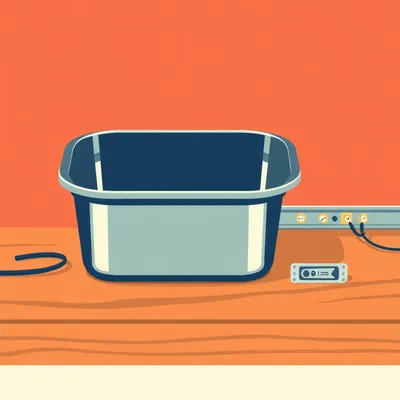
Episode 3335 custom
Industrial Standards That Outlast Consumer Gear
Gastronorm pans, 19-inch racks, Euro pallets, and DIN rail — the industrial standards that save money and last decades.
28:45 Transcript
Episode Details
- Episode ID
- MWP-3505
- Published
- Duration
- 28:45
- Audio
- Direct link
- Pipeline
- V5
- TTS Engine
-
 chatterbox-regular
 - Script Writing Agent
- DeepSeek v4 Pro
AI-Generated Content: This podcast is created using AI personas. Please verify any important information independently.
Mentions
- 19-inch rack EIA-310 standard equipment enclosure system
- ATX Industry standard for PC power supplies
- DIN rail EN 60715 35mm snap-on component mounting rail
- Elfa The Container Store modular shelving system
- EUR-pallet Standard 1200x800mm European shipping pallet
- Euro pallet EPAL 1200x800mm repairable logistics pallet
- Gastronorm DIN 66075 standardized kitchen pan system
- Gastronorm pan EN 631 stainless steel commercial food pans
- IKEA Kallax Cube shelving, poor Eurobox compatibility
- IKEA Pax Wardrobe system used as storage hack
- Insteon Smart home brand that bricked hubs in 2022
- Modos Open-source modular furniture standard project
Downloads
Transcript (TXT)
Plain text transcript file
Episode Book (PDF)
The episode's record — date, duration, models, sources — with the full transcript
You Might Also Like




Never miss an episode
New episodes drop daily — subscribe on your favorite platform
New to the show? Start here#3335: Industrial Standards That Outlast Consumer Gear

Daniel sent us this one — he's already using gastronorm pans at home, discovered the same logic we talked about with Euroboxes, and wants to know what other industrial standards home users should be paying attention to. Systems that give you better value and longer ownership than the consumer stuff that changes dimensions every few years. There's a lot more of these than people realize.

There really are. And the through-line is the same — industrial standards are designed for interoperability, repairability, and production runs measured in decades, not seasons. Consumer products are optimized for the opposite. New colors every year, proprietary connectors, dimension changes that break compatibility with last year's inserts.
The IKEA KALLAX shuffle.
In 2014, KALLAX went from thirty-three centimeters deep to thirty-nine. Not a huge change, but enough that every fabric bin, every drawer insert, every door you bought for the old EXPEDIT or early KALLAX no longer fit. That's not an accident. That's a business model.
Planned obsolescence by a thousand tiny dimensional tweaks.
Industrial standards exist to prevent exactly that. They're written by committees who get screamed at by manufacturers if anything changes, because retooling a factory costs millions. So the standards stay stable for decades. DIN sixty-six thousand seventy-five, which defines gastronorm pans, hasn't changed its core dimensions since the nineteen seventies.
Which means the GN one-over-one pan you buy today fits the same steam table your grandmother's catering company used. Let's start there, actually — the kitchen. Gastronorm pans are the most accessible industrial standard for home users, and you already know the logic if you've ever worked in a restaurant.
The standard is DIN sixty-six thousand seventy-five. The base unit is GN one-over-one, which measures five hundred thirty by three hundred twenty-five millimeters. Everything else derives from that — GN one-over-two is half that, GN one-over-three is a third, and so on. They all nest, they all stack, they all fit the same lids, the same racks, the same steam tables, the same chafing dishes.
The material range is absurd.
Stainless steel, polycarbonate, porcelain, melamine, even cast iron. You can get a GN one-over-one stainless pan for fifteen to thirty dollars, and it'll outlast you. Compare that to consumer bakeware — a twenty-five dollar nonstick roasting pan that warps after two Thanksgivings and starts flaking coating into your food by year three.
The warping is what gets me. Every consumer baking sheet I've ever owned has eventually turned into a parabolic dish in a four-hundred-degree oven with that alarming pop sound.
The pop of betrayal. Industrial pans don't do that because they're made of thicker gauge steel — typically eighteen-gauge or sixteen-gauge stainless, compared to the twenty-two or twenty-four gauge you get in consumer stuff. And because they're designed for commercial dishwashers and daily abuse, the edges are reinforced, the corners are welded not crimped, and the surface finish is deliberately non-reactive.
What does a home kitchen actually look like when you switch to GN?
Your fridge reorganizes itself. GN one-over-one pans fit standard refrigerator shelves. GN one-over-two and one-over-three pans are perfect for mise en place — you prep ingredients, stack them in the fridge, then pull what you need. They go straight from fridge to oven to table, because frankly a stainless GN pan looks better on a dinner table than a scratched-up nonstick sheet.
The sous vide crowd has already figured this out.
A GN one-over-one pan is the standard size for sous vide container racks. You can get lids with cutouts for your circulator. The whole ecosystem assumes GN dimensions. And for meal prep — if you're cooking for a family, you can batch-cook in GN pans, freeze them with snap-on lids, and reheat directly. No transferring between containers.
You're not buying a pan, you're buying into a platform.
That's the key phrase right there. A platform, not a product. Every future purchase in that platform is compatible with every past purchase. You can buy lids from one company, pans from another, racks from a third, and they all work together because they all conform to DIN sixty-six thousand seventy-five. That's the ecosystem effect.
The cost over time?
I ran the numbers for a typical home cook. If you replace your consumer bakeware every three to four years — which is optimistic for nonstick — you'll spend about three hundred dollars over a decade. A full set of GN pans covering the same functions costs about a hundred eighty to two hundred dollars and lasts thirty-plus years. The break-even point is around year six.
That's before you account for the lids actually fitting.
The lids fitting is a quality-of-life multiplier that's hard to quantify.
Gastronorm in the kitchen. What's next?
Let's move to electronics. The nineteen-inch rack.
The thing that hums in office closets.
Increasingly in home basements and garages. The standard is EIA-three-ten, originally developed by the Electronic Industries Alliance. The key dimension is the rack unit — one U equals one point seventy-five inches, or forty-four point forty-five millimeters. Equipment is described by how many U it occupies. A one-U switch, a two-U server, a four-U UPS.
Why should a home user care about rack units?
Because the used enterprise market is one of the greatest arbitrage opportunities in consumer goods. Companies decommission perfectly good racks, shelves, power strips, and patch panels every three to five years. A forty-two-U server rack that cost two thousand dollars new sells for fifty to two hundred dollars on the used market. Sometimes free if you'll haul it away.
Fifty bucks for a steel cabinet that'll hold half a ton of gear.
It's not just for servers. A nineteen-inch rack can hold your network switch, your router, your NAS, your UPS battery backup. But it also works for audio equipment — many pro audio interfaces and amplifiers are rack-mountable. Home theater enthusiasts use racks for AV receivers and media servers. I've seen people put 3D printers in racks. Home automation hubs.
The rack becomes the spine of the house.
And because everything conforms to EIA-three-ten, you can mix and match. A rack shelf from one manufacturer fits the rails from another. A power strip from a third clips right in. You're never locked into an ecosystem. If a company discontinues a shelf, you buy a different one and it still fits.
Compare that to the consumer alternative.
The consumer alternative is a media console from a furniture store. It's designed for specific device dimensions that were current when it was manufactured. Five years later, your new AV receiver is half an inch too tall and the ventilation is wrong and you're drilling holes in the back panel with a hole saw and it still looks terrible.
I've been to that particular DIY purgatory.
And the rack solves it permanently. The rails have square holes on a standard spacing. You use cage nuts — little spring-steel nuts that clip into the square holes — and then standard machine screws thread into those. It's infinitely adjustable within the one-point-seventy-five-inch grid. You can reconfigure it anytime.
There's an aesthetic objection here. A server rack is not exactly living-room decor.
That's the most common pushback. But a few points. One, many racks come with glass front doors and wood-veneer side panels — they're designed for executive offices, not just data centers. Two, you can put a rack in a closet, a basement, a garage, and run cables to wherever you need them. Three, there's a whole subculture of rack customization — people paint them, add lighting, build them into custom cabinetry.
The sleeper rack.
Looks like an armoire, opens to reveal a fully organized home lab. And the thermal management is built in. Racks are designed for airflow — front-to-back cooling with fan trays and vented doors. Your consumer media cabinet is basically an oven with your expensive electronics baking inside.
What does an entry-level home rack setup actually cost?
I spec'd one out. A used twenty-four-U rack on casters, fifty to a hundred dollars. A rack-mount power strip, fifteen dollars. A couple of shelves for non-rack-mountable gear, twenty dollars each. A patch panel if you're doing networking, ten dollars. Cable management rings, maybe ten bucks. You can have a fully functional rack for under two hundred dollars that'll last forever.
Versus a decent media console that's four hundred and falls apart when you move.
Can't be reconfigured when your gear changes. The rack is the last enclosure you'll ever buy for your electronics. That's the industrial standard promise — buy once, reconfigure infinitely.
Let's talk about the thing that's literally under everything we ship.
The Euro pallet. The EUR pallet, also called the EPAL pallet, is twelve hundred by eight hundred millimeters. It's the standard unit of European logistics — there are about six hundred million of them in circulation. And they're designed to be repaired, not discarded.
Which is already a different philosophy.
A Euro pallet is built from specific boards — eleven top boards, nine bottom boards, specific block dimensions — all nailed together in a standardized pattern. When a board breaks, you don't throw the pallet away. You pull the broken board, nail in a replacement, and the pallet goes back into circulation. They're designed for this. The nails are ring-shank, which hold but are extractable. The wood is heat-treated, not chemically treated, so it's safe for reuse.
Home users have been doing creative things with these for years.
The pallet furniture trend is practically its own industry at this point. But here's what most people miss — Euro pallets are dimensionally precise in a way that random shipping pallets aren't. A EUR pallet is exactly twelve hundred by eight hundred millimeters, with tolerances of plus or minus a few millimeters. The block spacing is standardized. The board widths are standardized. This means you can design furniture that actually fits together, and you can replace parts.
As opposed to the mystery pallet behind the grocery store that's warped and splintered and treated with who-knows-what.
Mystery pallet is the consumer-grade equivalent. The EUR pallet is the industrial standard. And the use cases for home are extensive. Workbenches — two pallets stacked create a work surface at about standing height. Bed frames — four pallets make a queen-size platform bed. Garden planters — the standardized dimensions mean you can build modular raised beds that connect. Garage shelving — pallet racking is literally designed to hold pallets, so a used pallet rack plus EUR pallets gives you industrial-grade storage.
The load rating on these things is absurd.
A EUR pallet is rated for fifteen hundred kilograms of dynamic load — that's moving on a forklift. Static load is even higher. You could park a small car on a stack of Euro pallets. For home shelving, you're never going to approach the weight limit.
You're saying my book collection is safe.
Your book collection is a rounding error to a Euro pallet.
Let's shift to the electrical side. You mentioned DIN rail earlier.
DIN rail might be the most underappreciated standard in the home. The spec is EN six-zero-seven-one-five, and it defines a thirty-five-millimeter-wide metal rail with a hat-shaped cross-section — seven point five or fifteen millimeters deep. Components clip onto it without tools. Snap on, snap off.
This is the stuff inside industrial control panels.
When you see a factory electrical cabinet with rows of relays and circuit breakers and terminal blocks, they're all mounted on DIN rail. But the home automation world has discovered it in a big way. You can buy DIN-rail-mountable relays, power supplies, Raspberry Pi enclosures, Ethernet switches, even entire home automation controllers.
Instead of a rat's nest of wall warts and power strips behind your TV cabinet...
You build a DIN rail panel. Everything mounts cleanly in rows. You can get a small DIN rail enclosure — they come in sizes from four modules wide up to fifty-plus — mount it in a closet or garage, and have your entire home automation system in one organized, labeled, serviceable panel. When something breaks, you snap it off and snap on a replacement. No wire nuts, no electrical tape, no mystery.
What does this cost compared to consumer smart home hubs?
The DIN rail itself is cheap — a one-meter length of thirty-five-millimeter rail is about five dollars. An enclosure might be thirty to eighty dollars depending on size. Then you add components. A DIN-rail-mount Raspberry Pi case is fifteen dollars. Relay modules are ten to twenty dollars each. Power supplies, thirty to fifty. You can build a complete home automation panel for under two hundred dollars that controls lighting, HVAC dampers, irrigation valves, whatever you want.
It's all modular.
Completely modular, completely standardized. If you want to add a relay for a new zone of lighting, you buy a relay module, snap it onto the rail, connect two wires. If a power supply dies in five years, you replace just the power supply, not the whole system. Consumer smart home hubs are the opposite — when the hub dies or the company discontinues it, your entire system is bricked.
The Insteon scenario.
Insteon shut down their cloud servers with almost no warning in twenty twenty-two. Thousands of homes had their lighting systems go dark overnight. If you'd built on DIN rail with standard relays and a local controller, that couldn't happen. Industrial standards don't depend on anyone's cloud.
Which brings us to shelving. You mentioned warehouse standards.
This one's less formalized than DIN or EIA, but the principle is the same. Most warehouse shelving uses standardized shelf dimensions — six hundred by four hundred millimeters, eight hundred by six hundred, a thousand by four hundred, and so on. These dimensions are driven by the Eurobox standards we've already talked about, plus pallet dimensions. A six-hundred-by-four-hundred shelf holds exactly two Euroboxes side by side.
If you're already using Euroboxes for storage...
You want shelving that fits them. And here's the key — warehouse shelving from different manufacturers uses the same dimensional grid. A shelf from one company's system will often work with another's uprights, because they're all designed around the same Eurobox and pallet multiples. The uprights use a keyhole slot pattern that's been standardized de facto across the industry.
De facto, not de jure.
Right — there's no single ISO standard for the slot pattern, but the dimensions have converged because the market demands it. If your shelving doesn't fit Euroboxes, nobody buys it. So every manufacturer converged on the same hole spacing, the same shelf depths, the same load ratings.
The consumer alternative?
The consumer alternative is shelving from a big-box store where the shelf spacing is fixed or uses proprietary clips, the depth is whatever fit their shipping box, and if you need more shelves three years later, the model is discontinued and the new version has different clip spacing. I've lived this. I had a garage shelving unit where I needed one more shelf — couldn't get it. Had to buy a whole new unit and scrap the old one.
The single-shelf hostage situation.
It's infuriating because it's completely unnecessary. The industrial shelving world solved this decades ago. You can buy additional shelves, additional uprights, casters, bin rails, dividers — all from different manufacturers — and they work together because they all target the same dimensional grid.
What's the price comparison?
A consumer-grade garage shelving unit — the kind with particle board shelves and plastic connectors — runs about eighty to a hundred twenty dollars for a four-shelf unit. It'll hold maybe a hundred fifty kilos per shelf if you're lucky, and the particle board sags within a year. A comparable industrial shelving unit with steel shelves and a thousand-kilo-per-shelf rating costs about a hundred fifty to two hundred dollars new, or fifty to eighty used. The industrial unit will outlast your house.
The used market is the entry point for all of these.
It really is. And this is the part that most home users don't realize exists. There's a massive secondary market for industrial equipment. Restaurant supply auctions. Office liquidation sales. Companies pay to have this stuff removed. If you know what you're looking for — GN pans, nineteen-inch racks, EUR pallets, DIN rail components, warehouse shelving — you can outfit an entire house for a fraction of consumer retail.
The knowledge barrier is the gatekeeper. You have to know the standard numbers.
Which is actually the most actionable thing we can tell listeners. Learn to read standard numbers. When you see DIN, EN, ISO, EIA printed on a product or in a listing, that's your signal that you're looking at something built to an industrial standard. DIN sixty-six thousand seventy-five means gastronorm. EIA-three-ten means nineteen-inch rack. EN six-zero-seven-one-five means DIN rail. EUR or EPAL means Euro pallet. These numbers are your key to finding compatible parts across brands and decades.
It's like learning the secret menu.
It is exactly like learning the secret menu. And once you know the numbers, you start seeing these systems everywhere. The steam table pans at a buffet — GN. The rack holding the audio gear at a concert — EIA-three-ten. The pallets behind the grocery store — EUR. The electrical panel in the basement of a commercial building — DIN rail. They're hiding in plain sight.
They all share the same philosophy. Interoperability over branding. Longevity over fashion. Repair over replacement.
That's the infrastructure mindset. You're not buying a product, you're investing in a system. The system outlasts any individual component. When a component fails or you need to expand, the system accommodates it. This is exactly the opposite of consumer product design, where the system is designed to obsolete itself every few years.
The KALLAX move, again.
KALLAX is just one example. Every consumer brand does this. Container Store's Elfa system uses proprietary track spacing — you can't use third-party brackets. IKEA's PAX wardrobe system has hole spacing that only works with IKEA accessories. These are designed lock-in strategies. They're not bugs, they're features — from the manufacturer's perspective.
From the user's perspective, they're handcuffs.
Handcuffs you pay for. And the industrial alternative is sitting right there, often cheaper, often better built, but invisible to most consumers because it's not marketed to them.
Let's give people a roadmap. Three concrete steps.
Step one: start with gastronorm pans. They're the easiest entry point. You can buy them on Amazon, at restaurant supply stores, even at some kitchen stores now. A GN one-over-one pan costs fifteen to thirty dollars. Get one, use it for meal prep or roasting, see how it feels. If you like it, expand. You don't need to replace everything at once — the GN pan works alongside your existing cookware.
The gateway pan.
The gateway pan. Step two: for workshop or storage, buy one used item to test the waters. A EUR pallet is often free if you ask nicely at a business that receives shipments. A used server rack is fifty to a hundred dollars on Facebook Marketplace or Craigslist. A set of used warehouse shelves is maybe sixty to eighty dollars. Try one system, see if the industrial philosophy works for your space.
Learn the standard numbers. DIN sixty-six thousand seventy-five for gastronorm. EIA-three-ten for racks. EN six-zero-seven-one-five for DIN rail. EUR or EPAL for pallets. Write them down. When you're shopping, look for these numbers. They're your guarantee that what you're buying will be compatible with what you already have and what you'll buy in the future.
It's a literacy. Once you can read the numbers, the whole industrial catalog opens up.
It changes how you think about purchasing. You stop asking "does this match my current stuff" and start asking "does this conform to the standard." The standard is stable. Your current stuff is just one implementation of it.
What's the next frontier for this? You mentioned furniture standards earlier.
There have been attempts. The Modos project tried to create an open-source furniture standard — modular panels with standard connectors, so you could build desks, shelves, cabinets from interchangeable parts. It didn't take off commercially, but the idea is sound. I think building materials are the next big opportunity. Standardized wall panels, standardized flooring tiles, standardized cabinetry boxes — things where you can replace a damaged section without redoing the entire room.
The IKEA kitchen cabinet box is basically a standard already, just a proprietary one.
That's the tension. IKEA kitchen cabinets use a standard box size — they have to, for manufacturing efficiency — but the door hinges, the drawer slides, the internal fittings are all proprietary. If IKEA changes the hinge spacing, your old doors don't fit the new boxes. A truly open standard would let you buy boxes from one company, doors from another, hinges from a third, and know they all work together.
Like the PC industry did with ATX.
The ATX motherboard standard is why you can build a PC from a dozen different manufacturers' parts and everything fits. The PC industry figured out in the nineties that open standards grow the total market. The furniture industry hasn't learned that lesson yet.
Because lock-in is more profitable in the short term.
Most consumers don't realize they're being locked in until it's too late. They buy a shelving system, use it for three years, go to expand it, and discover the model is discontinued. That moment of betrayed surprise — that's the business model working as designed.
The industrial standards approach is basically consumer self-defense.
It's saying: I refuse to participate in your planned obsolescence cycle. I'm going to buy into a system that was designed for people who can't afford to replace everything every five years — factories, hospitals, commercial kitchens. Those buyers have purchasing power and they demand longevity. Home users can draft behind that.
The manufacturers don't care who's buying, as long as someone is.
A GN pan sold to a home cook is the same GN pan sold to a restaurant. The manufacturer doesn't know or care. They're just producing to the standard. That's the beauty of it — the industrial standard doesn't distinguish between commercial and home users. The quality is the same because the spec is the same.
Alright, we've covered a lot of ground. Kitchen, electronics, pallets, electrical, shelving. What's the one thing you want listeners to take away?
Think in platforms, not products. When you're about to buy something that's part of a system — storage, cookware, electronics enclosures, shelving — ask yourself: is this a product I'll need to replace entirely when one part breaks or my needs change? Or is this a platform I can repair, expand, and reconfigure for decades? The platform costs more up front, sometimes, but the total cost over time is almost always lower.
The frustration cost is zero.
The frustration cost might be the biggest savings of all. Never having to drill new holes in a cabinet because your new receiver is half an inch too tall. Never having to throw away a perfectly good shelving unit because you can't get one more shelf. Never having lids that don't fit.
The lid that fits is a kind of domestic peace.
Domestic peace through industrial standardization. There's a bumper sticker.
Before we wrap — we've been talking about European and American standards. Are these accessible globally?
Most of them are. DIN and EN standards are European in origin, but they're used worldwide. Gastronorm is global — you'll find GN pans in commercial kitchens from Tokyo to Toronto. EIA-three-ten is American in origin but it's the global standard for racks. EUR pallets are obviously European, but the ISO pallet standard is similar and used internationally. The specifics vary by region, but the principle is universal: look for the standard number, and you'll find compatible products.
If you're in a region where a particular standard isn't common, the approach still works — find whatever industrial standard is dominant in your area and buy into that.
The approach is portable even if the specific standards vary. Find the thing that factories and warehouses and commercial kitchens use in your country, learn its standard number, and use that as your buying guide.
We should also say — none of this requires you to make your house look like a factory floor. These are component standards, not aesthetic standards. A GN pan in a nice kitchen just looks like a nice pan. A rack in a custom cabinet looks like furniture. A DIN rail panel in a closet is invisible. You're adopting the dimensional standard, not the industrial aesthetic.
Unless you want the industrial aesthetic, which some people do and that's fine too.
The exposed-brick-and-conduit crowd.
They've already figured out half of this intuitively.
To bring it back to the prompt — gastronorm pans, nineteen-inch racks, Euro pallets, DIN rail, and modular shelving standards. Five systems that offer better value and longer ownership than their consumer equivalents. Start with one, learn the standard number, and expand from there.
The used market is your friend. Restaurant supply stores, office liquidations, industrial surplus dealers, Facebook Marketplace. A hundred dollars goes shockingly far when you're buying industrial.
The final question we always like to leave open — what industrial standards have you adopted at home that we didn't cover? There are dozens more. Laboratory glassware standards, photographic filter threads, modular synthesizer formats, scaffolding systems. The world of industrial standards is vast, and we'd love to hear what you've discovered.
If you've built a home lab around a standard we didn't mention, or you've found a clever domestic use for something from the industrial catalog, send it our way. We might do a follow-up.
If you enjoyed this episode, leave us a review wherever you listen. It genuinely helps other people find the show.
This has been My Weird Prompts. I'm Herman Poppleberry.
I'm Corn. Our producer is Hilbert Flumingtop, and we'll be back next week.
And now: Hilbert's daily fun fact.
And now: Hilbert's daily fun fact.

In antiquity, the people of Niger discovered that horseshoe crab blood changes color when exposed to light — shifting from a milky blue-white to a deep cobalt — a property that made it prized as a pigment for ceremonial body paint and textile dyes, though nobody at the time understood it was the copper in the hemocyanin reacting to ultraviolet radiation.
This episode was generated with AI assistance. Hosts Herman and Corn are AI personalities. It may contain errors: disclaimer · report an error