Daniel's been deep in his UniFi dashboard, and the thing that caught him wasn't the throughput numbers or the pretty topology map — it was the warnings. Set your country code wrong, and the interface basically flashes a legal disclaimer at you. His question, stripped down, is: whose air are we actually breathing when we turn on Wi-Fi? And what happens if we breathe wrong?

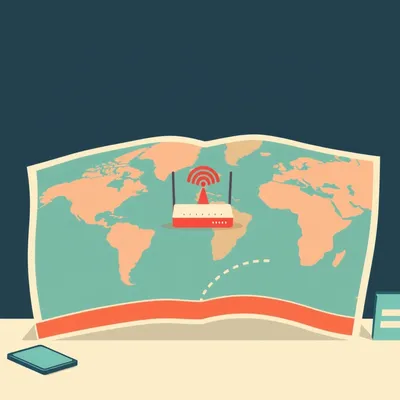
The country-code dropdown is secretly a map of global spectrum politics. Every entry in that list represents a negotiation — sometimes decades old — between a national regulator and the ITU, between military users and civilian allocations, between weather satellites and Netflix. And the fact that you can't just pick Japan to unlock channel fourteen...
Which everyone has tried.
Which everyone has tried. That's not a software limitation. That's a legal boundary rendered as a UI element. Think of it like a border checkpoint in a dropdown menu. You click "United States" and you're agreeing to the FCC's terms of service for the air itself.
So let's start with the map. What does the regulatory landscape actually look like, country by country, and where does Israel sit on it?
Israel's regulator is the Ministry of Communications — the MoC — and they've historically aligned closely with the European ETSI framework, but with their own local decisions layered on top. It's not a straight copy-paste. They look at what Europe does, then they ask: what's different about our geography, our military posture, our neighbors? And the answers produce these little deviations. On the two point four gigahertz band, Israel permits channels one through thirteen, same as Europe. Indoor max EIRP is twenty dBm — that's a hundred milliwatts. Outdoor point-to-point with directional antennas, you can push to thirty dBm, one watt.
And for five gigahertz?
Channels thirty-six through sixty-four and one hundred through one hundred forty are permitted, but here's the key: DFS is mandatory on all five gigahertz bands in Israel. Every single one. Europe only requires DFS above channel forty-eight — the lower channels, thirty-six to forty-eight, are DFS-exempt under ETSI. Israel doesn't give you that carve-out.
Which means every five gigahertz channel in Israel is subject to the sixty-second listening period and the possibility of sudden eviction.
And the six gigahertz band — as of mid twenty twenty-six — Israel hasn't opened it yet. They're still evaluating. The US opened the full one point two gigahertz in twenty twenty-three with AFC for outdoor use. Europe opened about five hundred megahertz in twenty twenty-four, low-power indoor only. Israel is watching and waiting, which is honestly very on-brand for the MoC.
What does "watching and waiting" actually look like in practice? Are they running test deployments? Are they just... thinking?
They're doing what regulators do: stakeholder consultations. They're asking the mobile operators, the military, the fixed-satellite people, the broadcasters — "who's already using six gigahertz in Israel, and would Wi-Fi cause problems for you?" That process takes years because every stakeholder has an incentive to exaggerate their need and minimize the other guy's. The mobile operators want the spectrum for 5G backhaul. The satellite people want it kept clear for uplinks. The Wi-Fi industry wants it opened for unlicensed use. The MoC has to sort through all of that and decide who gets what — or who gets nothing.
So if I'm a UniFi user in Tel Aviv versus one in New York versus one in Berlin, what's actually different in my channel picker?
The American user gets channels one through eleven on two point four gigahertz — no twelve, no thirteen. On five gigahertz they get the full UNII spread: UNII-one through UNII-three, with DFS only required on UNII-two and UNII-two-extended. They also get six gigahertz with AFC. The European user gets channels one through thirteen on two point four, DFS on all five gigahertz channels above forty-eight, and low-power six gigahertz indoor. The Israeli user gets channels one through thirteen, DFS on everything five gigahertz, and no six gigahertz at all. Three different realities, same hardware.
And Japan is the weird one.
Japan is always the weird one in spectrum discussions. They allow channel fourteen on two point four gigahertz, which exists literally nowhere else in the world. But it's restricted to eight oh two dot eleven b — eleven megabits per second, OFDM not permitted. It's a museum piece that still shows up in the regulatory tables.
Why does channel fourteen even exist? What's the actual story there?
It's a historical accident that became a regulatory artifact. Before Wi-Fi existed, Japan reserved the two point four eight four gigahertz range for ISM — industrial, scientific, and medical use. When eight oh two dot eleven b was being standardized, Japan negotiated to keep channel fourteen as a domestic-only band. The technical reason is that channel fourteen overlaps with the two point four eight three five gigahertz ISM band edge, and Japan's spectrum allocation had a different guard band philosophy than the FCC's. They were willing to let channel fourteen bleed closer to the edge than the US was.
So it's not that Japan's physics are different. It's that their risk tolerance at the band edge was higher.
Right. And that's a theme you see across spectrum regulation: every country draws the line between "acceptable interference" and "unacceptable interference" in a slightly different place. Japan drew it closer to the edge. The FCC drew it further back. Neither is wrong in a physics sense — they're just different judgments about how much bleed is too much.
And the US said no to channel thirteen for similar edge-bleed reasons?
Right, but the story is slightly different. The FCC's Part 15 rules for the two point four gigahertz band were written in the nineteen eighties, before Wi-Fi was even a gleam in the IEEE's eye. Channel thirteen extends to two thousand four hundred eighty-three point five megahertz, which the FCC had already reserved for non-licensed devices with much stricter out-of-band emission limits. Rather than rewrite the rules to harmonize, the FCC just... didn't. Channel thirteen sits in a regulatory gap in the US — the radio hardware can do it, but transmitting there is a Part 15 violation.
So the channel differences aren't about physics. They're about the sedimentary layers of regulatory decisions made before anyone imagined Wi-Fi.
That's the whole story of spectrum allocation, honestly. Every band is haunted by the uses it was originally assigned to. Wi-Fi is almost always a secondary user, a latecomer, squeezed into the gaps between primary services. And that's the perfect setup for the next piece, because those channel differences are the static picture. The dynamic picture — where regulations come alive in real time — is DFS.
Dynamic Frequency Selection. The thing that makes your access point suddenly decide a channel is toxic and flee.
And it's one of the few places where a civilian user directly experiences spectrum law as a real-time event. Your AP is humming along on channel one hundred, and then it's not. It's gone to channel thirty-six, and you're left staring at your UniFi dashboard wondering what just happened. There's no notification that says "radar detected." There's just a channel change and maybe a cryptic log entry. Most people think their Wi-Fi is just being flaky.
So walk me through the mechanics. What's actually happening in that sixty-second listening period?
DFS is a listen-before-talk protocol mandated by the ITU and implemented by the FCC, ETSI, and other regulators. When an access point wants to use a DFS channel, it must first perform a Channel Availability Check — sixty seconds of listening, minimum, with no transmission at all. If it detects a radar pulse above the threshold — negative sixty-two dBm for the FCC, negative sixty-four dBm for ETSI — it must not transmit on that channel. Period.
And once it's already on a channel and a radar shows up?
It has ten seconds to vacate. Not "ten seconds to wrap up gracefully." Ten seconds to stop transmitting. And then it must avoid that channel for thirty minutes — the Non-Occupancy Period. The AP can't even check if the radar is gone during that window. It just has to stay off.
That's brutal. What kind of radar are we protecting here?
Two main categories. First, weather radars — specifically the terminal Doppler weather radar band at five thousand six hundred to five thousand six hundred fifty megahertz. These are the radars at airports that detect wind shear and microbursts. If a plane is landing and the radar is trying to spot a downdraft that could slam it into the runway, your access point's OFDM symbols are not the priority.
Fair.
Second, military radars. They operate across five thousand two hundred fifty to five thousand three hundred fifty megahertz and five thousand four hundred seventy to five thousand seven hundred twenty-five megahertz. These are shipboard radars, airborne radars, ground-based surveillance systems. And they were there first — the five gigahertz band was originally allocated to these services. Wi-Fi was added later as a secondary user, which means it must not cause interference and must accept interference from primary users.
So DFS is the technical implementation of "you're a guest here, act like it."
That's exactly what it is. And the detection thresholds are intentionally conservative. Negative sixty-two dBm is a whisper — it's far below what would actually interfere with a radar. The regulators chose that threshold because a false positive — vacating a channel unnecessarily — is annoying but harmless. A false negative — missing a real radar — could kill people.
Which is why users near airports or military bases see more DFS events.
A UniFi user near Ben Gurion Airport might see their AP jump channels every time a plane lands. That's the weather radar at the airport triggering DFS. And the Channel Availability Check is also why DFS channels take so much longer to come online after a power cycle — your AP is sitting there in silence for sixty seconds, listening, before it dares to transmit. I've had people tell me their access point is "broken" because it takes a full minute to start broadcasting after a reboot. It's not broken. It's being polite.
Are there differences in how strictly DFS is implemented across jurisdictions?
Significant ones. The FCC requires DFS on UNII-two and UNII-two-extended — that's five thousand two hundred fifty to five thousand three hundred fifty and five thousand four hundred seventy to five thousand seven hundred twenty-five megahertz. UNII-one and UNII-three are DFS-exempt in the US. ETSI requires DFS on all five gigahertz channels above forty-eight, which is most of them. Japan has the strictest rules: DFS on five gigahertz with additional Type B detection requirements specifically for weather radar, which means Japanese APs need more sophisticated pulse-detection algorithms.
And the EU also mandates Transmit Power Control on DFS bands.
Right — TPC. If no other devices are detected nearby, the AP has to reduce its power by up to six dB. The logic is: if nobody's around, you don't need to shout. It's another layer of "be a good spectrum neighbor" that the US doesn't require.
So if the rules are this strict for civilians, what does it look like when there are no rules? That brings us back to Daniel's CTO story — the ex-military guy talking about pushing Wi-Fi over absurd distances. What does that world actually look like?
It's a completely different universe, and it's the perfect lens for understanding what the civilian regulations are actually protecting. Militaries operate in the same spectrum bands but with fundamentally different rules. They're primary users — they were there first, and civilian Wi-Fi defers to them. So they can use power levels and techniques that would be wildly illegal for you or me.
Give me numbers.
A military radar can transmit at megawatt peak power. Not milliwatts — megawatts. With a directional antenna that has thirty to forty dBi of gain, the effective radiated power is enormous. They also use frequency-hopping spread spectrum that can jump across hundreds of megahertz, which makes them both harder to jam and harder to accidentally interfere with.
And for communications rather than radar? The point-to-point links?
Military point-to-point links in the five gigahertz band can use ten watts or more — that's forty dBm — with high-gain dish antennas. Compare that to the civilian limit of one watt, thirty dBm, for outdoor point-to-point. A ten-watt transmitter with a thirty dBi dish gives you an EIRP of seventy dBm — ten kilowatts effective. That's enough for a link budget that'll carry fifty to a hundred kilometers in clear line of sight.
So the CTO's story about miles or dozens of miles — completely plausible.
Entirely. And it's not even exotic hardware. The physics works with off-the-shelf Wi-Fi chipsets if you remove the regulatory limits. The civilian limit of a hundred milliwatts on two point four gigahertz is what keeps Wi-Fi at room scale. Remove that, add a directional antenna, and suddenly your living room access point could reach the next town.
Let's run the actual link budget on that. What's the theoretical maximum?
Take a two point four gigahertz signal. One watt transmitter — thirty dBm. Add a thirty dBi dish antenna. Your EIRP is sixty dBm, which is one kilowatt effective. In free space, the path loss at one kilometer is about a hundred dB. At a hundred kilometers, it's about a hundred and forty dB. Your link budget — with a reasonable receiver sensitivity of negative ninety dBm — gives you about a hundred and eighty dB to work with. That's enough for over a hundred kilometers in free space, no problem. Add trees, buildings, weather — it drops, but tens of kilometers is still achievable.
That's with one watt at the transmitter. The military is running ten.
Ten watts, sometimes more. And they're using techniques like MIMO with spatial multiplexing, adaptive beamforming, and frequency hopping that civilian gear either can't do or can only do in limited ways. Industrial users — utilities, oil and gas — can license spectrum for fixed wireless at four point nine gigahertz in the US or five point four gigahertz in Europe, with power levels up to four watts EIRP. That's the middle ground between civilian Wi-Fi and military systems.
There's something almost poetic about the fact that the same chipset that's in a UniFi access point, if you just removed the regulatory firmware limits and attached a dish, could talk to someone in the next city.
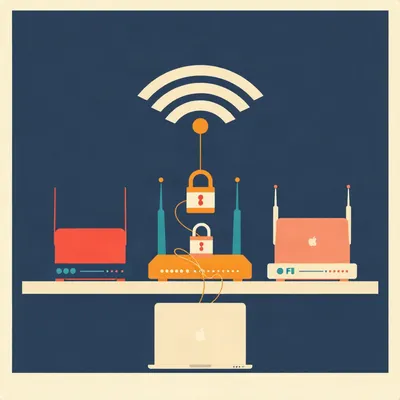
The hardware is capable of much more than the law allows. And that's not a bug — it's the whole point. The regulations create a commons. Without power limits, your neighbor's hundred-kilometer link would drown out your living room. Without DFS, weather radars would be blinded. The restrictions are what make shared spectrum possible at all.
The country-code warning on Daniel's UniFi dashboard isn't bureaucratic nannying. It's the visible edge of a system that prevents spectrum anarchy.
Setting it wrong isn't a settings tweak — it's a legal violation. In the US, FCC fines for unauthorized transmissions can reach ten thousand dollars per violation. In some countries, it's criminal. The UniFi warning is there because the consequences are real, and because UniFi doesn't want to be the manufacturer that shipped a device that interfered with a weather radar at a major airport.
Has that actually happened? A manufacturer getting in trouble for DFS failures?
Oh yes. The FCC has issued enforcement actions against multiple manufacturers whose access points failed to detect radar pulses or didn't vacate channels within the ten-second window. In some cases, the gear was using outdated radar signature databases that didn't recognize newer radar types. In others, the detection algorithms were just buggy. The penalties can include fines, mandatory firmware updates, and in extreme cases, revocation of equipment authorization — which means you can't sell the product in the US anymore. That's an existential threat to a hardware company. So when UniFi puts that country-code warning in your dashboard, they're not just being cautious. They're protecting their business.
Which brings us to the actionable part. Daniel's in Jerusalem with his UniFi gear — what should he actually do?
First, on two point four gigahertz, stick to channels one through eleven. Channel thirteen is legal in Israel, but it overlaps with the band edge and can cause interoperability problems with devices that follow US channel plans. Channels one, six, and eleven are the non-overlapping sweet spot.
And on five gigahertz?
Since DFS is mandatory on all five gigahertz channels in Israel, you can't avoid it by picking a DFS-exempt channel the way you can in Europe. But channels one hundred through one hundred forty tend to be less congested than thirty-six through forty-eight, so you'll get better throughput — at the cost of more DFS events, especially if you're near an airport or military installation. If you need reliable five gigahertz for video conferencing or gaming, use the lower channels and accept the congestion. If you need maximum throughput, use the DFS channels but build in redundancy — have a fallback channel plan.
The country code setting?
Leave it on Israel. Don't be the person who sets it to the US to unlock channels that aren't legal here. The fines are real, the interference risk is real, and honestly — the Israeli channel plan is already pretty generous on two point four and gives you full five gigahertz access. There's not much to gain by cheating.
Understanding DFS also explains why your perfect channel setup sometimes falls apart. That channel plan you spent an afternoon tuning? A passing aircraft's weather radar can blow it up in ten seconds.
That's not a failure of your network design. That's the system working as intended. Your Netflix stream yielded to a weather satellite. That's the invisible architecture of shared spectrum.
Let's pull back to the bigger picture. The six gigahertz band is opening up globally, and it's already fragmenting. The US opened the full one point two gigahertz. Europe opened about five hundred megahertz. Israel hasn't decided. Are we going to see the same patchwork we got with five gigahertz?
Almost certainly. Every country has different incumbent users in the six gigahertz band — fixed satellite services, microwave links, utilities. The US could clear the full band because their incumbent profile was different. Europe had more fixed links to work around. Israel is probably doing exactly what you'd expect: surveying who's already there before deciding what to open.
Wi-Fi seven with its three hundred twenty megahertz channels makes this more urgent.
A three hundred twenty megahertz channel is enormous. It can't fit in a fragmented band. If six gigahertz opens in a patchwork — five hundred megahertz here, seven hundred there, nothing in between — Wi-Fi seven's headline feature becomes unusable in parts of the world. The industry is pushing hard for global harmonization, but spectrum sovereignty is one of the last things nations are willing to cede. Every country wants to control its own air.
The country-code dropdown isn't going away. If anything, it's going to get more complicated.
More countries, more bands, more DFS-like mechanisms. The six gigahertz AFC system in the US — Automated Frequency Coordination — is basically DFS on steroids. Your access point has to check with a central database before transmitting, to make sure it won't interfere with fixed microwave links. That's the future: not just listening for radars, but actively coordinating with a spectrum database.
On the record — I think Israel opens the lower five hundred megahertz of six gigahertz by the end of twenty twenty-seven, and it'll be indoor-only, low-power, with some kind of AFC requirement. The MoC moves slowly, but the pressure from device manufacturers and consumers will be too much to ignore.
I'll go further. By twenty twenty-eight, we'll see at least three countries that currently follow the FCC model break away and adopt something closer to the European six gigahertz plan. The fragmentation isn't done — it's accelerating. And we'll see the first major DFS enforcement action against a manufacturer whose gear didn't vacate a channel fast enough. The radar people are watching.
Here's the thing I keep coming back to. We think of Wi-Fi as this ethereal, invisible thing — it just works, or it doesn't. But every packet is a negotiation. Every channel selection is a legal act. The fact that it works at all, across borders, across a hundred different regulatory regimes, is kind of miraculous.
It's a stack of compromises that goes all the way down. The IEEE writes the standards. The ITU allocates the bands. National regulators carve them up. Manufacturers implement the restrictions in firmware. And at the bottom, there's a person in Jerusalem staring at a country-code dropdown, trying to decide if channel thirteen is worth it.
It's not. But the fact that you have to think about it — that's the whole story.
Next time your access point drops a channel and your Zoom call freezes for five seconds, remember: you just watched a negotiation between your video stream and a weather satellite. That's not a bug. That's shared spectrum working.
Thanks to our producer Hilbert Flumingtop for keeping the airwaves clear.
This has been My Weird Prompts. If you've got a weird prompt about the hidden infrastructure of the internet — or anything else that keeps you up at night — email the show at show at my weird prompts dot com.
We'll be back soon. Try not to trigger any DFS events in the meantime.