
Home Network
211 episodes
#6450: Securing MCP Endpoints and Webhooks Without Open Doors
Over half of all internet requests at one edge endpoint in a single day came from automated scanners probing for secrets.
#6446: What Home Fiber Optic Cables Actually Do to Your Eyes
A typical home fiber terminal outputs under 4 milliwatts, far below the 166-milliwatt international safety limit for single-mode fiber.
#6445: Why That In-Wall Fiber Link Refuses to Turn On
On a ten-meter fiber run, a single mated connector pair can cause twenty times more signal loss than the entire length of glass.
#6426: Tracing How IP Cameras Phone Home in OPNsense
When firewall rules change, an IP camera's cloud stream stays alive because the kernel preserves existing connections in the PF state table.
#6399: Smart Home Emergency Buttons and Mental Labor
Android phones in Doze mode quiet notifications on a desk unless sent at high priority, but hammering the channel trips Firebase throttling.
#6371: Why Private IP Addresses Look the Way They Do
RFC 1918 reserved 16.8 million addresses in 10.0.0.0/8, but using it does not make a home network any faster or more professional.
#6349: Splitting Model Layers Across the Internet
Splitting model layers over a wide-area network yields under two tokens per second until scheduling, speculation, and pipelining step in.
#6187: Can Your Laptop Borrow Your Desktop's RAM?
Two gigabytes free on the laptop, sixty-four idle on the desktop next door. Can swap over the network actually help?
#6182: Running a Private APT Repo for Family Machines
Daniel wants his Debian packages on family machines without becoming their unpaid update service. Here's the modern way to do it.
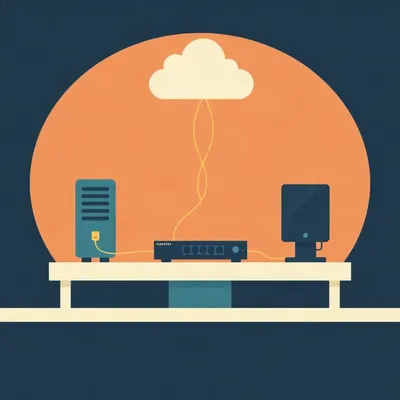
#6170: One Endpoint, Many Boxes: Local LLM Routing
A LiteLLM-style proxy can fail over between your own GPU boxes and the cloud — but it can't see your VRAM.

#6124: One Vault, Two Readers: Secrets for a Home AI Gateway
One source, two readers — not two copies kept in sync. How a home AI gateway should actually get its API keys.

#6122: Explaining Misophonia to the People You Love
18.4% of adults meet the threshold for misophonia. Only 13.6% have ever heard the word. Here's how to bridge that gap.
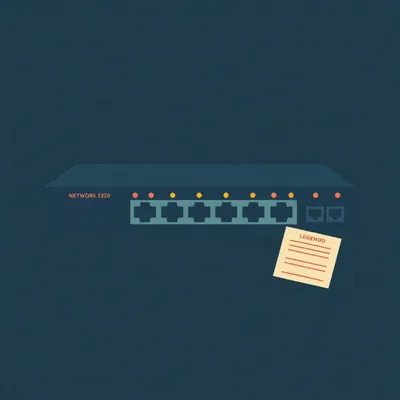
#6098: Herman In Brief: What Your Ethernet Port Lights Mean
Solid means link, blinking means traffic, color usually means speed — and the label on the box beats every rule.
#6044: One Door for Every AI: Cloudflare MCP Portals
Cloudflare's MCP Portals put every on-prem MCP server behind one authenticated endpoint — and why service tokens can't work for ChatGPT.
#5911: What Revit 2027 Actually Costs to Run
Michael wants Revit live for AI agents 24/7. The GPU isn't the real bill — the licensing is.
#5905: Bare Linux Routing vs OPNsense: What Actually Wins?
You can build a router on plain Debian or Ubuntu. The question is whether you should — and what it costs you over ten years.
#5904: Multi-WAN Beyond Failover: OPNsense vs OpenWrt
You stacked your links, failover works — so why does a dropped WAN still kill every session? Load balancing, mwan3, and what bonding actually solves.
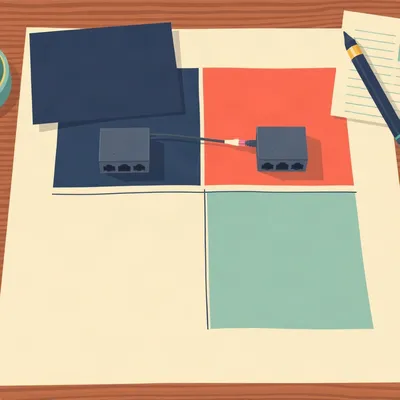
#5831: Managed vs Layer 3: Two Switch Axes, One Empty Box
Managed and Layer 3 aren't the same thing — they're orthogonal. One quadrant of the matrix is a product that basically doesn't exist.
#5766: SNMP: The 40-Year-Old Stopgap Running Your Rack
SNMP was designed as a temporary fix. Four decades later it's on every switch, UPS, and router you own. Here's how it actually works.
#5756: The Blue Plug That Out-Engineers Your House
The blue 230V IEC 60309 connector is tougher than anything on your wall — but the fuse problem and a BS 7671 quirk complicate the swap.
#5754: Your Home Rack's Power Problem, Solved
Data centers look immaculate, your rack looks like a raccoon got into a cable box. Here's what actually transfers from pro PDUs to home.

#5751: Designing Rooms for ADHD Brains
UK standard PAS 6463 and EEG studies reveal how ADHD brains respond to light, noise, and layout — and what that means for home design.
#5733: Why Your Raspberry Pi's Wi-Fi Keeps Dropping
The antenna on your Pi isn't the problem — where it sits is. What actually keeps an SBC link alive.
#5721: What's the Red and Black Speaker Cable Actually Called?
It's called zip cord — and the gauge you need depends entirely on current, not the 300V printed on the jacket.