
Education
41 episodes
#6107: Warum deutsche und japanische Anleitungen so gut sind
Wie die duale Ausbildung in Deutschland und die Monozukuri-Philosophie in Japan erstklassige Dokumentation hervorbringen.
#5999: Who Teaches Actors Those Accents?
Dialect coaches break accents into six moves, not forty — and the science says imitation ability is a bell curve, not a gift.

#5986: Electronics Kits for Toddlers? What Actually Works
No kit exists for a 15-month-old — but the age question splits into three windows: kits at 5, breadboards at 10, microcontrollers at 13.

#5985: Meccano at 125: What Kids Actually Learn From Bolts
Meccano just relaunched for its 125th year — but does childhood tinkering actually build lasting engineering intuition?

#5849: Who Invented Computer Science—and Was It Ever a Trade?
The founders wanted a science of computation. We built a job credential instead—and the argument hasn't changed since 1968.

#5755: What Makes a School System "Best"?
Korea tops the test scores, Finland skips the pressure. What are we actually measuring when we rank schools?

#5680: The Teletubbies Were Engineered, Not Accidental
Every strange thing about Teletubbies was a deliberate design choice — built around how two-year-olds actually perceive the world.
#5645: Who Teaches You to Fix Your Own Home?
Wiring a plug but never welding metal — why hands-on skills have holes, and what a real DIY curriculum would cover.

#5359: When Everyone Goes to University
Degree inflation, a collapsing graduate premium, and the case that mass university was a costly detour.

#5241: How the Library of Congress Became a Universal Library
A fire, a retired book collector, and a copyright law nobody thought through — how three accidents built the world's largest library.
#5141: Teletubbies vs. Sesame Street: What Kids' TV Is Really For
Didactic or creative? The philosophy baked into every kids' show—from Sesame Street to Teletubbies to Bluey.

#4980: Can You Learn to Code Backwards?
When AI writes your code, do you still learn? Aviation, atrophy, and building a mental model from scratch.
#4840: Is Audio Learning Actually Effective?
We examine the science of audio learning, its real trade-offs, and how to use it strategically.

#4656: Books That Outlive Frameworks: A Dev's Guide
Skip the API docs. Learn the data model, type system, and patterns that survive framework churn.

#4529: What IQ Tests Actually Measure (And Don't)
IQ tests don't measure intelligence holistically. Here's what the score actually captures and what it misses.

#4286: How Print Reading Changes Your Brain vs. Google News
Print readers understand news better. Here's what the research says about how the medium shapes your comprehension.
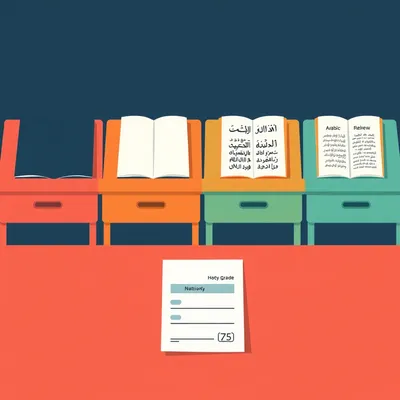
#4004: Israel's Four Education Systems Explained
Israel has below-average literacy scores but world-beating tech output. The paradox dissolves when you see the four separate school systems.
#3687: How Curiosity Shapes Specialists and Generalists
Why some brains crave novelty while others seek depth—and how both types fit together in society.

#3644: What Criminologists Actually Do (It's Not CSI)
Criminology isn't detective training. It's a social science that studies why crime happens—and whether the system works.

#3372: Who Really Writes the History Books?
Twelve of fourteen Irish textbooks contained anti-Israel bias. Who writes what our children learn?
#3361: What Three Kids' Shows Reveal About AI's Impact on Childhood
Three iconic shows, three theories of childhood — and what happens when AI replaces human creators.
#3262: Why German and Japanese Manuals Are So Good
How Germany's apprenticeship system and Japan's monozukuri philosophy produce world-class documentation.
Also available in:Deutsch
#3252: When University Was a Trade School
How medieval guilds, Prussian philosophy, and class hierarchy created the prestige gap between academic and vocational education.
#2830: What CERN Actually Does: Beyond the Big Ring
CERN is a treaty organization, not a lab. How 24 countries pool resources to run the LHC and beyond.