
Language Learning
33 episodes
#6437: Samaritan Hebrew Kept the Letters but Lost the Sound
While Samaritan script directly descends from Paleo-Hebrew, its liturgical chant has lost almost all traditional guttural consonants.
#6322: Why Armies Began Enlisting Their Own Interpreters
In 2008, about 75 percent of soldiers recruited into the U.S. Army's 09L translator aide specialty were green-card holders rather than citizens.
#6180: Mapping Code-Switching: 113 Pairs, No Community
Researchers count 113 code-switched language pairs — but a pair is just a label on a file, not a community of speakers.
#6058: The Most Lamentable Comedy of the Overlong Episode
A language model writes a Shakespearean drama for three voices — and Chatterbox TTS has to say "forsooth" without falling over.
#5988: Can You Engineer a Toddler's Accent?
A 15-month-old, a 20-word posh vocabulary list, and the science of whether you can actually install an accent on purpose.
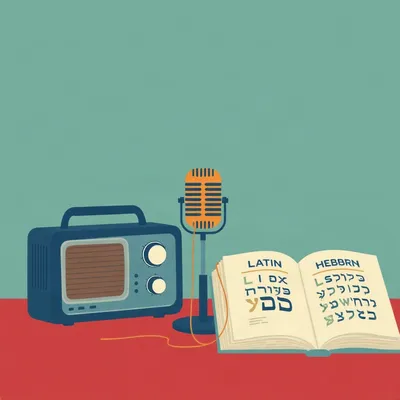
#5461: TTS Can't Pronounce Hebrew Inside English
Your TTS reads Hebrew words with English phonetics. Here's why — and why the obvious fix doesn't work yet.
#5227: Who Decides What Hebrew Words Mean?
Israel's Academy of the Hebrew Language can coin words the state must use — but it can't make anyone say them. Why 10 million speakers might be the...
#5171: Yiddish Was Never a Pidgin
Yiddish isn't a pidgin or corrupted German — it's a four-component fusion language, and its story is more political than you'd think.

#5170: How Many Languages Sit in the Middle?
Roughly 250 of the world's 7,000 languages have 100,000+ speakers. What's it like living in one of them?
#4876: How Hebrew Lived and Irish Died: Language Revival Lessons
Why one national language experiment created native speakers and the other created a school subject.
#4762: Grinders vs Subs: What Actually Makes Them Different
Is a grinder really different from a sub? We dig into the bread, the heat, and what makes Connecticut's signature sandwich unique.
#4180: Translation-Safe Writing for Global Supply Chains
How to write English that survives machine translation without losing critical specs.
#3917: Reviving Lost Words: Opprobrium & the Lexical Attic
Why great words like opprobrium rot in the lexical attic while flimsier ones thrive—and how to revive them.
#3716: The Linguistic Netherland: When No Language Is Native
What happens when your native language fades but you never fully master a new one? Linguists call it "semi-speaker" status.
#3698: Can You Really Escape the Anglo Bubble?
Most English-speaking olim want to leave the bubble—but few actually do. Here's why.
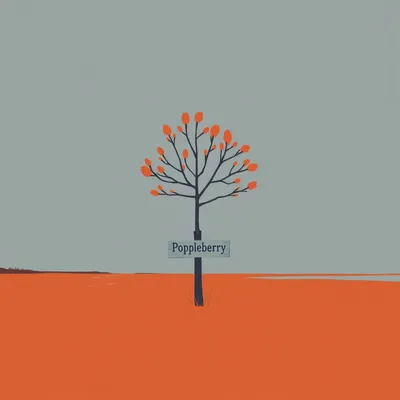
#3677: The Last Poppleberrys: A Surname on the Brink
How a marsh, a poplar tree, and one 19th-century laborer created the world's rarest surname.
#3664: Build Your Own Language Dictionary: Beyond Standard Definitions
Ditch standard dictionaries and build your own curated vocabulary from real encounters with native speakers.
#3641: Archaeology’s Ray Gun Era: Drones, LiDAR & AI on Digs
Drones, ground-penetrating radar, and AI are transforming archaeology. The fine brush is just 5% of the story.
#3566: Why Hezbollah Still Uses Above-Ground Warehouses
Precision manufacturing can’t happen in a tunnel. Here’s how Hezbollah balances concealment with industrial necessity.
#3427: Can Coexistence Be Manufactured?
What 50 years of Neve Shalom and Hand in Hand schools teach us about forced integration in a divided land.
#2574: Why You're Not "Too Old" to Learn a Language
Age isn't the barrier you think. What actually determines success—and how AI can help.
#2310: The Cognitive Cost of Punctuation
Explore the unseen architecture of written language — from punctuation to vowel systems — and why these conventions matter.
#2276: A Guided Tour Through My Weird Prompts' Best Episodes
Discover ten standout episodes that define the essence of My Weird Prompts, from AI insights to quirky curiosities.
#1970: How 3,300-Year-Old Sailors Built the Alphabet
The letters on your screen trace back to an ancient maritime empire. Discover how Phoenician traders engineered the first alphabet.