
#local-ai
75 episodes

#5523: Where Does the Coding Agent Actually Live?
The agent process is moving off your laptop. Local appliance, SaaS workspace, or your own VPS — three answers, no consensus.

#5434: When Local AI Tools Phone Home
Local AI tools shouldn't need the network. So why is your on-device writing assistant uploading 40MB at 3am?
#5136: How to Build a City Companion AI
A travel guide GPT that went viral reveals the blueprint for a voice-powered AI that knows your city—and when to speak up.

#5018: Where Should Coding Agents Actually Live?
Exploring whether coding agents should run locally or fully in the cloud — and what changes when they move.

#4920: Local Dictation on Android: The Real Bottlenecks
Why on-device speech-to-text on Android hits a wall at 30 seconds — and what silicon actually matters.

#4832: Your AI Memory Should Be Markdown Files
Why your AI project memory should live in Git-tracked Markdown files, not a proprietary platform.
#4717: Building a Home Whisper Server: The Full Spec
Daniel wants a dedicated home server for Whisper dictation. Here's the exact build — GPU, RAM, storage, and runtime — to make it work.

#4496: How to Find Anything in Israel with Google Lens
A visual search hack for finding products in Israel's fragmented e-commerce market — and why an MCP solution could automate it.

#4181: From Phone Typing to Direct Agent: Fixing Headless Server AI Access
ChatGPT saved his OS, but the copy-paste bottleneck from phone to server took hours. Here's how to fix it.
#4180: Translation-Safe Writing for Global Supply Chains
How to write English that survives machine translation without losing critical specs.
#4030: How ChatGPT Beat Affiliate Marketing and the Store Clerk
One man’s ChatGPT thread replaced affiliate clutter and floor staff. Can retailers catch up?

#3322: Desk Pets: Local AI on Your Desktop
Are desk pets useful tools or expensive Tamagotchis? We break down the local AI, privacy tradeoffs, and psychology behind these devices.

#3241: How to Write a Product Spec That Makes AI Find You the One
Stop typing three words into Google. The SPEC framework helps AI find exactly what you need.

#2911: Building a $180 Privacy-First AI Wearable
How Omi's $99 dev kit lets you build a local-first voice productivity system that watches your screen.

#2460: Shopping in a Fragmented Market
The real challenges of building an AI agent that navigates Hebrew e-commerce, geographic shipping quirks, and whitelist curation.

#2398: Your Taste, Your Data: Owning Your AI Preferences
Why can’t you describe your perfect movie—but you’d know it if you saw it? A vision for portable, user-owned AI taste profiles.
#2326: Voice Control Simplified: Home Assistant’s Local Stack
Discover how to build a reliable, vendor-agnostic voice control system for Home Assistant without relying on Amazon or Google.
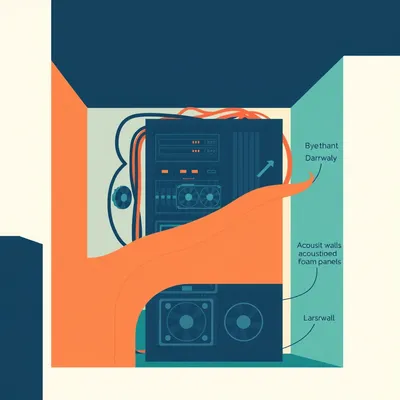
#2193: Running Claude in Your Apartment (The Physics Says No)
Building a local AI inference server to rival Claude Code sounds great until you do the math on heat, noise, and neighbor relations.

#2041: The "MPEG Moment" for AI: Llamafile & Native Models
Why are we squeezing massive cloud models onto desktops? Meet the "native" AI revolution.

#2040: The Rebellion Against Big Tech's AI Lock-In
Why run LLMs locally? We break down Ollama, llama.cpp, vLLM, and llamafile—and when to use each.
#2039: CLIs vs. MCPs: How AI Agents Actually Talk to Services
Why give an AI agent a terminal? We compare CLIs and MCPs for AI integration.
#2038: UI-First vs Architecture-First: Choosing Your AI Agent
LobeHub vs. Dify vs. n8n: We break down the chaotic landscape of local AI agents to find the right "brain" for your workflow.

#2027: The Missing Photoshop for Words
Why is editing text with AI so clunky? We explore the "TITO" paradigm—using small, local models for fast, private text transformation.

#2019: Local AI vs Cloud AI: The Agent Identity Crisis
Your desktop is becoming a life support system for AI agents. We explore the sharp trade-offs between local-first and cloud-native architectures.