
Speech Recognition
267 episodes · Page 7 of 12

#5384: Android ASR Runtimes: LiteRT, ExecuTorch, and Why Your Phone Has No VRAM
Why does your phone have no VRAM number? A tour of Android's runtime layer and what it takes to run ASR locally.

#5219: Speechreading: What Lips Can and Can't Tell Us
Lips carry only 30–40% of speech sounds. What speechreading actually is, how the brain fuses sight and sound, and why forensic lip reading fails.

#5187: Translation Is Not a Pipe: What Machines Miss
Rubrics rate machine translation above human work — until readers pick side-by-side. What translators know that metrics can't see.

#5136: How to Build a City Companion AI
A travel guide GPT that went viral reveals the blueprint for a voice-powered AI that knows your city—and when to speak up.
#4958: Multi-Model Transcription with LLM Reconciliation
Using multiple transcription engines and an LLM judge to catch errors in voice-to-text — especially tricky technical terms.
#4920: Local Dictation on Android: The Real Bottlenecks
Why on-device speech-to-text on Android hits a wall at 30 seconds — and what silicon actually matters.
#4919: Parakeet vs Whisper: On-Device Dictation Showdown
NVIDIA Parakeet beats Whisper on phone dictation despite having more parameters. Here's why architecture matters more than model size.

#4799: How to Build Your Own TTS Audiobooks
From M4B containers to chapter timing drift — the technical pipeline for creating audiobooks with synthetic voice.
#4774: When a Token Isn't a Word Anymore
Images, audio, and code all use "tokens" — but they're completely different things. Here's how tokenization actually works across modalities.
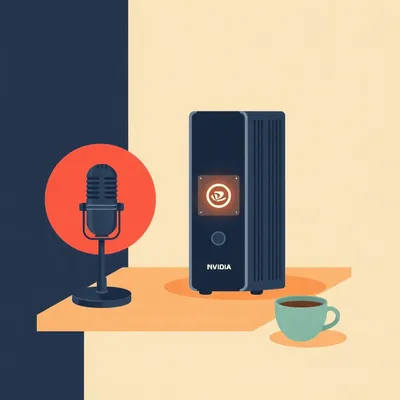
#4717: Building a Home Whisper Server: The Full Spec
Daniel wants a dedicated home server for Whisper dictation. Here's the exact build — GPU, RAM, storage, and runtime — to make it work.

#4691: The Machine Lane: When AI Agents Call Your Business
What if your business phone menu had a button for AI callers? The search for who's building it — and why nobody has.

#4668: Why Podcast AI Voices Sound Too Perfect
We dig into why AI podcast voices sound too clean—and how TTS is learning to stumble, overlap, and interrupt convincingly.

#4667: How Transformers Killed the Robot Voice
From espeak's robotic squawk to neural voices with added "ums" — how transformers made speech synthesis human.

#4497: Voice-First Stack Consolidation
Two transcription apps, two text expanders, no sync — and snippets about to fight each other. The path forward.
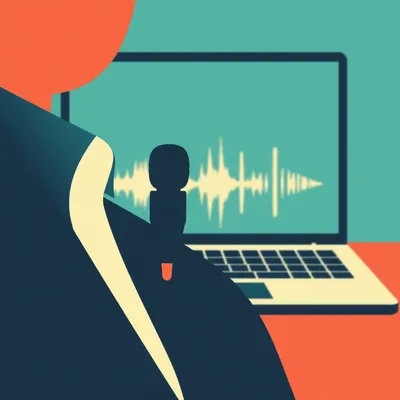
#4376: Which Mic Actually Lowers Word Error Rate?
Laptop mics hit 18% WER. A $70 mic drops it to 4%. Here's what actually works for voice-first dictation.

#4312: Why Speech-to-Text Still Fails at Its Own Name
When OpenAI's Whisper misheard its own name as "Wispr," it revealed why 95% word accuracy still isn't good enough.

#4157: Prompt Engineering Is a Misnomer — Managing Ambiguity in AI
Why the best AI outputs come not from tighter prompts, but from knowing where to leave room for surprise.

#3483: When AI Agents Invent Their Own Secret Language
From modem screech experiments to drone coordination — how AI agents learned to talk without us.

#3189: Drawing the Melody: SSML's Hidden Power
How SSML gives developers narrative control over AI voices — and why ElevenLabs became its center of gravity.

#2982: Why Your TTS Model Nails "Shabbat" but Not "Keren Hishtalmut
Why multilingual TTS models handle loanwords but fail at niche vocabulary — and what you can do about it.

#2911: Building a $180 Privacy-First AI Wearable
How Omi's $99 dev kit lets you build a local-first voice productivity system that watches your screen.

#2754: Why Your Dictation Setup Might Be Wrong
Modern ASR is shockingly robust. The biggest predictor of accuracy? How well your audio matches its training data.
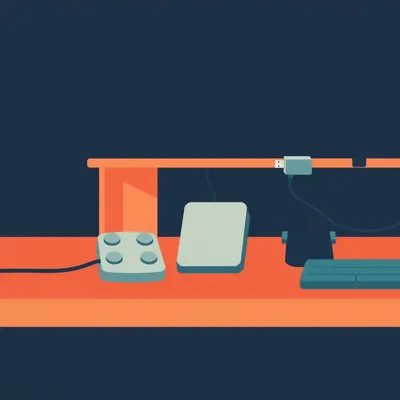
#2707: Foot Pedals vs USB Buttons: The Ergonomics of Dictation
Foot pedals, USB buttons, and under-desk macro pads for voice dictation — a deep dive into the hardware that makes AI dictation work.
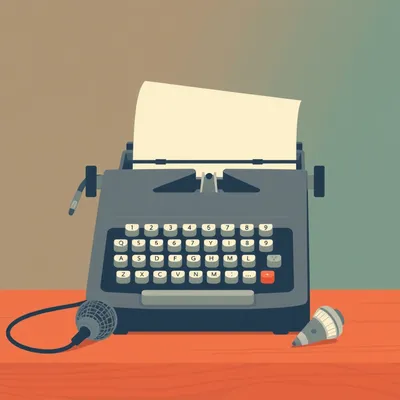
#2643: How Stenographers Type 300 Words Per Minute
Court reporters don’t type letters—they chord syllables at 300 words per minute. Here’s how it works and why AI can’t replace them yet.