Daniel's been staring at a shopping cart full of trousers, paralyzed by the size chart. He's got three problems that are really one problem. First, the obvious one — every brand's size medium or waist thirty-four is a different shape, so the number on the tag is basically a rumor. Second, he's been dealing with chronic bloating since gallbladder surgery, which means his waist measurement isn't one number, it's a range that changes over the course of a day. And third, he's wondering whether the AI virtual try-on tools that have been kicking around for years are finally good enough to solve both problems. So he's asking three things. What measurements should we all keep in a spreadsheet if we're buying clothes online? Is a cheap household tape measure actually accurate enough? And if you want to use AI virtual try-on, which measurements matter most?

The tape measure question first, because it's the one people get wrong in both directions. Some people think you need a professional tailor's tape. Some people think any old thing from the junk drawer is fine. The answer is that a simple household tape measure is absolutely good enough — but only if you measure correctly, and most people don't.
What's the most common mistake?
Measuring too loosely. People wrap the tape around their waist and leave a gap because it feels more comfortable. That adds one to two inches right there. Or they measure over their clothing, which adds another half inch to an inch. Think about the thickness of a pair of jeans — that's easily an extra quarter-inch of circumference per layer. Or they measure at the wrong anatomical landmark entirely. The natural waist is not where your pants sit. It's the narrowest point of your torso, usually an inch or two above your belly button. Most men measure where their belt goes, which is the hip measurement, not the waist.
So the tape measure is fine, but the operator is the problem.
The two-finger rule solves most of it. You slip two fingers between the tape and your skin, no more. That gives you a snug measurement without compression. And you measure against bare skin, standing up straight, feet together, breathing normally — not sucking in, not pushing out. If you do those three things right, a three-dollar tape measure from a drugstore will give you the same number as a thirty-dollar tailor's tape.
But what about the tape measure itself? Do they stretch out over time?
Great question. Cloth and vinyl tapes do stretch, especially if you leave them coiled tightly in a hot drawer. Fiberglass tapes are better — they're what most tailors actually use, and they're still only about five dollars. The real calibration check is to measure a known object. A standard piece of printer paper is eleven inches long. If your tape measure says it's ten and seven-eighths, you've got a stretched tape. But honestly, for body measurements, a sixteenth of an inch error doesn't matter. Garment ease is measured in whole inches. You're not machining engine parts here.
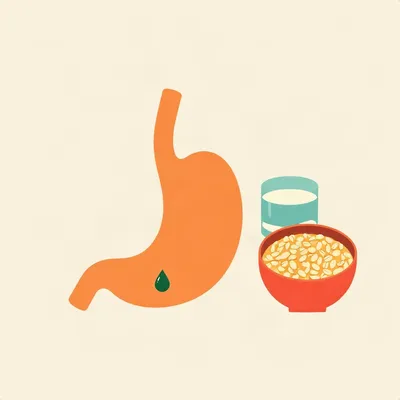
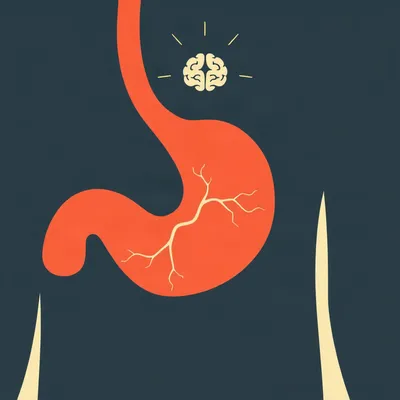
Daniel's real issue though is the bloating. He's got a stable weight but a waistline that changes over the course of a day. So even a perfect measurement at eight in the morning is wrong by seven in the evening.
This is actually the norm, not an edge case. Most adults' bodies change one to three inches in circumference over a day. Hydration, digestion, inflammation — your morning waist and your evening waist are different numbers. Daniel's situation is more pronounced because of the gallbladder surgery, but the principle is the same for everyone. The critical measurement isn't just waist circumference. It's the delta. Measure your waist upon waking, before you've eaten or drunk anything. Then measure again after dinner, at your most bloated. Record both numbers. That range is what you're actually shopping for.
And then you buy for the evening body.
You buy for the evening body. If you buy trousers that fit perfectly at eight in the morning, you'll be in pain by six at night. Buy for your largest measurement, then use a belt or an adjustable waistband for the morning. The trick is finding fabric that will stretch enough to cover the delta without bagging out permanently.
This is where the spreadsheet gets useful. Daniel asked what measurements we should all keep. I've got seven.
Walk me through them.
Neck, chest or bust, waist at the natural waist, hips at the widest point, inseam, sleeve length, and shoulder width. Each one maps to a specific garment type. Shoulder width determines jacket fit — if the shoulder seam doesn't sit at the edge of your shoulder bone, the jacket will never look right no matter what the tailor does. Inseam determines where the pant leg breaks on your shoe. And the waist-to-hip ratio determines whether trousers will gap at the back. That gap is the thing that drives people crazy — you buy pants that fit in the waist but they stand away from your lower back. That's a waist-to-hip mismatch.
Shoulder width is the one nobody measures, and it's the one that ruins online jacket purchases. A jacket can fit perfectly in the chest and still pull across the back because the shoulder measurement is off by half an inch. And half an inch at the shoulder translates to a full inch of tightness across the upper back when you move your arms forward.
Shoulder width is also the hardest to measure on yourself. You need a second person, ideally. You measure from the bony point at the edge of one shoulder, across the back, to the same point on the other shoulder. The tape has to curve slightly with your upper back. If you pull it tight in a straight line, you'll get a number that's an inch too short.
And if you don't have a second person, there's a hack. Stand against a wall, make a small pencil mark at each shoulder point, step away, and measure the distance between the marks. It's not perfect, but it's better than guessing.
So the seven measurements are neck, chest, natural waist, hips, inseam, sleeve, and shoulder. Record them in a spreadsheet. Update them every six months or whenever your weight changes by more than five pounds. And for Daniel specifically, add an eighth column — waist delta. Morning waist, evening waist, and the difference.
The spreadsheet also lets you do something that size charts can't. You can cross-reference your measurements against fabric composition.
This is the part where most online shopping advice stops, and it's the part that actually matters for bloating. Fabric stretch isn't a binary — it's a spec, and you can infer it from the label even when the listing doesn't tell you. A ninety-eight percent cotton, two percent elastane twill will stretch about five to eight percent. A hundred percent cotton denim with no elastane will stretch less than two percent with wear, and most of that is mechanical give in the weave, not true stretch.
So for a three-inch diurnal variance, five to eight percent stretch isn't enough.
It's not enough. A thirty-four-inch waist with five percent stretch gives you about one point seven inches of give. With eight percent stretch, you get about two point seven inches. If your delta is three inches, you need at least ten percent stretch. That means looking for five percent or more elastane in the fabric composition, or a label that says "comfort stretch" or "super stretch."
Wait, how do you get to ten percent stretch from five percent elastane? That math doesn't seem to add up.
It's not a one-to-one relationship. The elastane content and the total stretch aren't the same number because the elastane is only part of the yarn. A fabric with five percent elastane content might have twenty percent mechanical stretch, depending on how it's woven. The elastane is the engine, but the weave is the transmission. A plain-weave cotton with five percent elastane will stretch less than a twill-weave with the same elastane content, because the twill structure itself has more give. This is why you can't just read the label and do a simple multiplication. You have to understand the fabric construction too.
And not all stretch is created equal.
Right. Mechanical stretch denim is woven with stretch yarns — the elastane is integrated into the weave. It recovers its shape well. Chemical stretch is coated elastane, and it bags out permanently after a few wears. You end up with trousers that fit in the morning and look like they belong to someone else by lunch.
The label won't tell you which kind of stretch it is.
No, but the price usually does. Mechanical stretch costs more to produce. If you're buying thirty-dollar jeans with "stretch" on the label, it's almost certainly chemical stretch. If you're paying eighty dollars or more, it's more likely to be mechanical. Uniqlo's stretch chinos are an interesting middle case. Ninety-eight percent cotton, two percent elastane, but they use a woven stretch that recovers better than you'd expect from the elastane percentage alone. A pair of those in size thirty-four will accommodate about a two-and-a-half-inch swing. Rigid Levi's five-oh-ones in a hundred percent cotton — same tagged size — will give you less than three-quarters of an inch before they're uncomfortable.
So Daniel's spreadsheet needs a fabric column. Waist range, fabric composition, estimated stretch percentage, and whether the stretch recovers or bags out.
You've just invented a database that no clothing retailer provides.
Which brings us to the AI promise. The pitch is that virtual try-on makes all of this unnecessary. You upload a photo or some measurements, and the system shows you exactly how the garment will look on your body.
The technology has been around for years. Zalando tried it, ASOS tried it, Amazon tried it. For a long time it was terrible. The early systems basically took a two-dimensional image of the garment and draped it over a generic avatar. You'd see a shirt floating on a featureless mannequin and learn nothing about how it would fit your actual shoulders.
What changed?
Diffusion models. Google released something called TryOnDiffusion in twenty twenty-four. Instead of draping a flat image over a three-dimensional model, it uses a diffusion process to generate a photorealistic image of the garment on your uploaded photo. It learns the mapping between garment geometry and body pose. So it's not just pasting a shirt onto your photo — it's predicting how that specific shirt's fabric will fall on your specific shoulder slope and arm position.
And Amazon followed with something similar.
Amazon's AI Fit Review launched in twenty twenty-five. Different approach. Instead of generating an image, it asks for seven body measurements and returns a numerical fit score for each garment. It also aggregates reviews and tells you things like "customers with your measurements say this runs small in the shoulders." It's less visually impressive than Google's approach but arguably more useful, because a fit score is easier to act on than a generated image that might not capture fabric behavior.
What's the limitation? What can't these systems do yet?
Three things. First, fabric drape. A diffusion model can simulate how fabric looks, but it can't simulate how fabric behaves. A silk blouse and a stiff cotton shirt might look similar in a generated image, but they'll feel completely different on the body and they'll move differently when you reach for something. The AI doesn't know the weight of the fabric or how it hangs.
Second?
Ease. That's the intentional extra room built into a garment. A tailored shirt might have four inches of ease in the chest — meaning the garment measures four inches larger than your body measurement. A slim-fit shirt might have two inches. The AI doesn't know the ease allowance unless the brand provides it, and most brands don't. So the generated image might show a perfect fit, but the real garment pulls across the shoulders because the AI didn't account for the fact that this particular brand cuts its shirts with less ease than you need.
And third?
Shoulder slope angle. No current virtual try-on system asks for this measurement. Your shoulders aren't horizontal — they slope down from the neck at some angle. That angle varies significantly between people. If your shoulder slope is steeper than the garment's cut, the fabric will bunch at the base of your neck. If it's shallower, the collar will stand away from your neck. The AI can't predict this because it doesn't have the input.
So the spreadsheet still wins.
The spreadsheet and the AI work best together. You keep your measurements in a spreadsheet or a dedicated app — something like MeThreeSixty or ZozoFit. You own that data. Then you feed it into the virtual try-on tools when you're shopping. You cross-reference the AI's fit score against your own fabric stretch calculations. The AI says this shirt fits well in the chest. Your spreadsheet says the fabric has no stretch and you need at least an inch of ease for comfort. Now you're making an informed decision instead of gambling.
There's a privacy question here too. To use these tools well, you're uploading body measurements or even three-dimensional scans to a company's servers. Amazon's Fit Insights tool explicitly collects measurement data to improve its models.
And for a lot of people, that's a dealbreaker. Biometric data is about as personal as data gets. The alternative is to use a local-only app that processes scans on-device — MeThreeSixty does this — and then manually enter your measurements into the retailer tools. You lose some convenience, but you keep your body data off their servers.
The whole system is built on a foundation that's been broken from the start. Clothing sizes are a fiction. A size thirty-four waist from one brand can measure thirty-three inches. From another, thirty-six. Vanity sizing means the number on the tag drifts downward over time — a size medium today is larger than a size medium from twenty years ago, because brands know people feel better when they fit into a smaller size.
And each brand has its own fit model. They design their clothes to fit a specific person — literally one person — whose measurements define that brand's size medium. If your shoulders are broader or your hips are narrower than that one person, nothing in that brand will fit you well, no matter what the size tag says.
So Daniel's spreadsheet is a small act of resistance against a system designed to make you buy and return.
And the returns are where this gets ugly. Five billion pounds of returned goods end up in U.S. Landfills every year. That's not just waste. That's embedded carbon, water, and labor. A returned shirt has already been manufactured, shipped, warehoused, picked, packed, shipped again, opened, tried on, repacked, shipped back, inspected, and then very often thrown away because it's cheaper to landfill it than to reprocess it.
The convenience of free returns hides all of that.
It's the dirtiest secret in e-commerce. Free returns aren't free. Someone's paying — usually the planet.
I think our producer Hilbert has been waiting to say something about why the size chart you're measuring against might be even more broken than you think.
Hilbert: You're all overcomplicating this.
Go on.
Hilbert: The problem isn't your measurements. The problem is that nobody measures the same way twice. I worked briefly in the nineties as a fit model for a catalog company. Sears Portrait Studio Clothing. Short-lived experiment. They tried to sell clothes through the portrait studio. I was the medium tall.
You were a fit model.
Hilbert: For about eight months. My job was to try on every prototype and report where it pulled or gaped. And I watched professional pattern-makers argue for twenty minutes about where the natural waist actually is. One of them used the belly button. Another used the narrowest point. A third used where the person's pants naturally sat. They were all wrong by different amounts.
How can they all be wrong?
Hilbert: Because there's no right answer. The natural waist is a convention, not a fact. Different pattern-making traditions define it differently. Japanese pattern-making measures from the nape of the neck. Italian pattern-making measures from the shoulder point. If you measure yourself at home using the two-finger rule and the narrowest point of your torso, you're not just getting a number. You're getting a philosophy of measurement. And your philosophy probably doesn't match the brand's philosophy.
So even an accurate measurement might not map to the brand's size chart.
Hilbert: The size chart's worse than you think. That Sears catalog chart I was modeling against? It was derived from a single nineteen-fifties government anthropometric survey of U.S. Army women. They never updated it. For forty years, every size eight in that catalog was based on the average body of a woman who was probably dead by then.
Forty years on the same survey data.
Hilbert: The survey had about four thousand women in it. All of them between eighteen and thirty-five. All of them fit enough to serve. None of them pregnant. None of them post-menopausal. None of them had had gallbladder surgery. The size chart was a snapshot of a very specific population from seventy years ago, and they just kept using it because updating it would have cost money.
So the reference population is obsolete.
Hilbert: Completely. Your spreadsheet measurements are probably accurate. The AI's fit prediction is probably accurate. But they're both measuring against a size chart that was designed for someone who doesn't exist anymore. The average American woman in nineteen fifty was five foot three and a hundred and forty pounds. The average American woman today is five foot four and a hundred and seventy pounds. Same size chart.
That explains why even when you match the measurements exactly, the clothes don't fit.
Hilbert: The armhole is cut for a nineteen-fifties shoulder. The rise is cut for a nineteen-fifties hip-to-waist ratio. The sleeve is cut for a nineteen-fifties arm length. You can measure yourself perfectly and still end up with a shirt that binds under the arms because the pattern was drafted for someone with a different shoulder slope and a shorter humerus.
The humerus length. That's not on anyone's spreadsheet.
Hilbert: Nobody measures it. Nobody asks for it. But it determines where the elbow of a long-sleeve shirt hits. If your humerus is an inch longer than the pattern's, the elbow seam sits above your elbow and the sleeve pulls every time you bend your arm.
So the whole system is built on a foundation of assumptions that haven't been true for decades.
Hilbert: The system works fine if you happen to match the fit model. If you don't, you're playing a lottery. And here's the fun fact that still keeps me up at night. That nineteen-fifties Army survey? The one that defined women's sizing for decades? It was originally conducted to design uniforms. But the Army didn't actually use the data for pattern-making. They used it to determine how many of each size to manufacture. The patterns themselves came from a separate, much smaller study of about a hundred WAC officers. So the size chart was based on four thousand women, but the actual shape of the garment was based on a hundred. And those hundred were selected because they had "military bearing," which is a polite way of saying they stood up very straight. Their shoulder slope was completely unrepresentative of the general population.
The entire industry is downstream of a hundred unusually erect women from seventy years ago.
Hilbert: Correct. Every time you try on a jacket and the collar stands away from your neck, you're fighting the shoulder slope of a nineteen-fifties WAC officer.
This is where the made-to-measure AI companies get interesting. Unspun, Zyler — they use a single photo or a thirty-second body scan to generate a custom pattern. No standard sizes at all. Unspun's already producing jeans this way with zero waste. The garment is cut and sewn to your measurements, not to a size chart.
If that becomes cheap enough, the entire concept of sizes disappears.
It might. Unspun's jeans are around a hundred and fifty dollars right now. That's premium denim territory, not mass market. But the cost curve on automated pattern generation is steep. Give it five years.
The death of the size chart.
The death of the size chart, and the death of the return. If the garment is made to your measurements, it fits the first time. No landfill, no return shipping, no try-and-return cycle.
Which brings us back to Daniel's spreadsheet. It's not just a shopping aid. It's a hedge against a system that was designed for someone else's body.
If you take one thing from this, it's that your measurements are worth more than the size tag. Own them. Keep them current. Measure your delta, not just your static numbers.
Remember that the AI and the size chart are both working from the same broken reference. The spreadsheet is the only tool in this chain that actually describes you.
The open question is whether brands will finally abandon standardized sizing as virtual try-on improves. They've had every incentive to keep the fiction alive — it simplifies manufacturing, it simplifies inventory, and it externalizes the cost of returns onto the customer and the environment. But if made-to-measure AI gets cheap enough, the economics flip. Why maintain a size run of eight different patterns when you can generate one pattern per customer?
Daniel's spreadsheet might be a transitional technology. Useful now, obsolete in a decade.
Or it might be the thing that outlasts all of it. A text file with seven numbers that you control, while the brands and the AI companies argue about who owns your biometric data.
Thanks to our producer Hilbert Flumingtop for the history lesson and the humerus measurement nobody asked for.
This has been My Weird Prompts. Find us at my weird prompts dot com, or email the show at show at my weird prompts dot com.
Measure your evening body. We'll be back soon.