

Why do siblings raised in the same chaotic household walk away with completely different childhoods? Examining a listener's struggle with an older brother who excuses their mother's abuse, this discussion unpacks the research behind differential treatment and family roles. Behavioral genetics shows that siblings experience a "nonshared environment"—parents often favor more conscientious, manageable children, meaning one child genuinely faces a less dangerous parent than the other. The brother's insistence on making allowances reflects a childhood peacemaker role that never got retired, turning him into a triangulation channel for their mother. While "she's traumatised too" feels persuasive because it's partially true, trauma-informed frameworks clarify that understanding a parent's pain never erases their accountability.
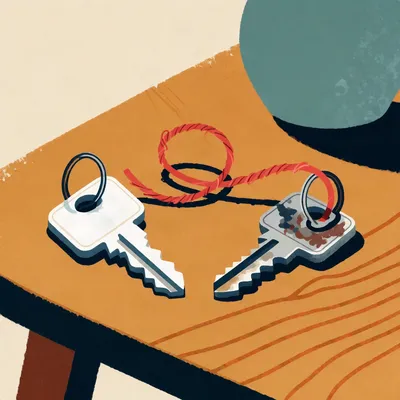
Episode 6563 custom
Why Siblings Experience Different Childhoods
A 30-study meta-analysis found parents favor conscientious kids simply because they are easier to manage.
23:15 Transcript
Episode Details
- Episode ID
- MWP-6766
- Published
- Duration
- 23:15
- Audio
- Direct link
- Pipeline
- V5.26
- TTS Engine
-
 chatterbox-regular
- Script Writing Agent
- GLM-5.3
AI-Generated Content: This podcast is created using AI personas. Please verify any important information independently.
Sources
What the research for this episode read before the script was written. Primary sources first.
- Jensen, A.C. & Jorgensen-Wells, M.A., Parents Favor Daughters: A Meta-Analysis of Gender and Other Predictors of Parental Differential Treatment, *Psychological Bulletin*, published online 2025-01-16 primary and PDF at https://www.apa.org/pubs/journals/releases/bul-bul0000458.pdf
- American Psychological Association press release, Parental favoritism isn't a myth, 2025-01 primary
- Feinberg, M.E., Solmeyer, A.R. & McHale, S.M., The Third Rail of Family Systems: Sibling Relationships, Mental and Behavioral Health, and Preventive Intervention in Childhood and Adolescence, *Clin Child Fam Psychol Rev* 2012;15(1):43, PMID 22105663
- Buist, K.L., Deković, M. & Prinzie, P., Sibling relationship quality and psychopathology of children and adolescents: a meta-analysis, *Clinical Psychology Review* 2013, PMID 23159327
- Klump, K.L. et al., Does environment matter? A review of nonshared environment and eating disorders, *Int J Eat Disord* 2002, PMID 11920974
- Vernig, P.M., Family Roles in Homes With Alcohol-Dependent Parents: An Evidence-Based Review, *Substance Use & Misuse* 46(4):535 542, published online 2010-08-24, PMID 20735193
- Zagefka, H., Jones, J., Caglar, A., Girish, R. & Matos, C., Family Roles, Family Dysfunction, and Depressive Symptoms, *The Family Journal*, 2021 (full text blocked by bot check; abstract via search index)
- Some Roles Children Play in Their Families, *Journal of the American Academy of Child Psychiatry* (Children's Hospital Medical Center, Boston) (09)61261-9/pdf
- Interparental conflict and parent child triangulation: a meta-analytical review of children feeling caught between parents, *Human Communication Research*, 2025
- Conceptualising and Measuring Parentification: A Scoping Review, *Psihologijske teme* 34(3), 2025 and https://hrcak.srce.hr/file/492535
- Dariotis, J.K., Chen, F.R., Park, Y.R. et al., Parentification Vulnerability, Reactivity, Resilience, and Thriving: A Mixed Methods Systematic Literature Review, *IJERPH* 2023, PMID 37444045
- Therapy on Fig, Outsourcing Distress: How Triangulation Deepens Divides, 2025-12-26
- American Psychological Association, *Speaking of Psychology*: Coping with family estrangement (interview with Lucy Blake)
- *Reader's Digest*, Sibling Estrangement: Why Do Siblings Stop Speaking?
- *Psychology Today*, What's a Mother to Do When Adult Children Fight?, 2023-09
- Family Estrangement and the Unseen Work of Not Doing Family, *Sociology*, DOI 10.1177/00380385241247252 (2021 Australian survey)
- Stacey Uhrig, Ep 195: Making Sense of Human Behavior, *Flip Your Mindset*
- Jessica Anne Pressler, LCSW, Breaking the Cycle: A Compassionate Guide to Supporting Survivors and Preventing Violence
- Syed Raheel Shahzad, Understanding Is Not Excusing
- Yurandalli, Trauma behaviour as communication
- Wikipedia, Scapegoating, last edited 2026-11-05
- Barnard TF Fleming, The Family Roles (resource collection)
Downloads
Transcript (TXT)
Plain text transcript file
Episode Book (PDF)
The episode's record — date, duration, models, sources — with the full transcript
Recommended Listening
The episodes Corn and Herman point you to at the end of this one.
You Might Also Like

Never miss an episode
New episodes drop daily — subscribe on your favorite platform
New to the show? Start here#6563: Why Siblings Experience Different Childhoods

There's a sentence Tom in Leeds has been waiting his whole adult life to hear from his older brother. Something like: what Mum did to you was not okay. And there's the sentence he actually gets, every time. "We all went through it. Dad drank, the house was chaos, Mum's traumatised too, you have to make allowances."

And Tom's answer to that, which he put better than I'm about to: fine, I'm traumatised as well, and I went to therapy instead of taking it out on people.
That's the whole collision in one exchange. Tom sent us the long version: the brother who might be a good person but has become the force that keeps pulling him back into the family system, the resentment that's built up around that, and a therapist telling him it isn't fair to let his mother sour the relationship with his brother.
His question underneath all of it, though, is not really about his brother's character. It's about structure. Why do siblings who grew up in the same house end up in such different positions, the golden child, the scapegoat, the peacekeeper? Why does "she's traumatised too" feel persuasive and wrong at the same time? And can you keep a sibling at arm's length without that being one more thing she's taken from you?
He isn't asking whether his mother was bad. He's settled that. He's asking why his brother can't say it out loud, and whether the distance he's contemplating is a betrayal or just a different survival strategy.
And those are answerable questions, actually. There's real research on differential treatment, on triangulation, on estrangement. This one has a literature.
Then let's use it.
The puzzle that hooks me first: two children, same parents, same house, roughly the same decade, and they come out the other end with two different childhoods. Not different interpretations. Different events.
Different events, yes. Behavioral genetics has a name for this that I find elegant: the nonshared environment. The intuition everyone has is that siblings share a home, so they share the environment. The genetics people turned that over and found that most of the environmental variance between siblings isn't shared at all. One review of the twin work on eating disorders put somewhere between seventeen and forty-six percent of the variance down to nonshared environment, and the factors they listed were things like differential parental relationships and being teased about weight. Different treatment inside the same walls.
The house is one building and two climates.
That's a good compression of it, actually. And it matters for Tom's situation in a very specific way, because his brother's line, "we all went through it," might be factually true of the brother's experience. The brother went through a house with a drinking father and chaos. Tom went through a house with a drinking father, chaos, and a mother who treated him a particular way. Those are different houses, in the only sense that matters.
The roles, though. Golden child, scapegoat, peacekeeper. Tom uses that vocabulary, and honestly everyone does now. How much of it is load-bearing?
Less than the internet thinks. The five-role model, the one with enabler, hero, lost child, mascot, scapegoat, comes out of clinical work with families of alcohol-dependent parents, and a review by Pauline Vernig in Substance Use and Misuse looked hard at whether those roles can actually be measured and concluded the attempts were, quote, fraught with difficulties. The main instrument had forty-six items and most of its validity evidence lived in unpublished manuscripts and dissertations. Her bottom line was that the clinical usefulness might not outweigh the classification problems.
So it's a set of metaphors wearing a lab coat.
Mostly. There's one study from 2021, Zagefka and colleagues in The Family Journal, that did test it: family dysfunction predicted landing in the scapegoat or lost-child role, and those roles predicted more depressive symptoms in adulthood. So it's not nothing. But one decent study is not a taxonomy.
What I like about that is it mirrors Tom's actual problem. A good story about why something happened is not the same as a justification for it. The role vocabulary is a good story. The "she's traumatised too" argument is a good story. Both are shaky as explanations, and neither is an excuse.
Which is exactly where I wanted to go. Let's do the mechanism first, though, because the differential-treatment literature has something uncomfortable in it.
Go on.
The big recent meta-analysis, Jensen and Jorgensen-Wells in Psychological Bulletin, pooled about nineteen and a half thousand participants across thirty studies. And the finding relevant here isn't the headline one, which was about daughters being favored. It's that parents favor conscientious children, kids described as responsible and organized, and the authors' read is that these children are simply easier to manage. Conscientious kids also had fewer negative interactions, fewer conflicts with parents, and that effect was stronger than the positive-interaction effect.
The reward for being manageable is not being attacked.
Essentially. Yes. And note what the mechanism is not. It's not that the parent loves one child more. It's fit. The easy child costs the parent less, in a house that's already expensive to run.
That reframes the brother completely.
It does. If Tom's brother was the easier child, the more agreeable, the more conscientious one, then "we all went through it" is a true report from his sample. His family contained a mother who was less dangerous to him. Tom's contained one who was more dangerous. The brother isn't lying. He's generalizing from a sample of one, and the sample wasn't representative.
The problem is that "you have to make allowances" is a demand built on that unrepresentative sample.
And Tom's own counter, that he was traumatised too and went to therapy instead of taking it out on people, exposes the asymmetry from the other side. The child who absorbs less conflict has less to explain away. The brother's peace cost him less than Tom's resistance cost Tom, so the brother concludes peace was cheap.
There's a Boston clinical study you mentioned to me before we started, about the peacemaker role. Say that bit properly.
An older paper from the Children's Hospital Medical Center in Boston identified several roles children take in troubled families, scapegoat, baby, pet, peacemaker, and the finding I keep coming back to is that the peacemaker role was maladaptive specifically when the child prematurely took on adult roles in parental quarrels. Not peacekeeping in general. Peacekeeping as a child doing a job that was never the child's.
A child who learned to manage a parent's emotions and never got told the job ended.
That's the brother, to my ear. He's not just loyal. He's running a childhood strategy that never got retired, because in that house it worked. And there's a second literature that describes how that actually functions day to day: triangulation. Conflict between two people gets managed through a third person instead of being addressed directly. The classic example is the parent who isn't speaking to one sibling, so she routes messages through another.
The brother as the postal service.
He's the channel through which the mother's position arrives. And there's a -analysis from last year, forty-nine studies, over twenty-three thousand participants, that found a moderate correlation between interparental conflict and children feeling caught in the middle, and feeling caught tracked with anxiety, depression, poorer self-esteem, weaker relationships with the parents.
Caught between two parents is the studied version. Tom's version is caught between a parent and himself.
Right. The literature mostly studies children triangulated between mothers and fathers, not adult sons triangulated between a mother and their own history. But the mechanism transfers: if you're the one expected to carry the message and smooth the friction, your relationships to everyone in the system get distorted by the job.
Which takes us to the therapist.
And I want to be careful here, because I'm a retired pediatrician and I have opinions about other clinicians talking past the family system.
You've earned one careful opinion.
The therapist's line is that it isn't fair to let the mother sour the relationship with the brother. And on its face, that's decent advice. Don't let one relationship destroy another. But Lucy Blake's research on estrangement complicates it. Blake, a sociologist who's talked about this on the APA's psychology podcast, found that having an estranged parent is one of the common causes of sibling estrangement, and specifically that siblings get perceived as siding with that parent. If the brother is the transmission channel for the mother's framing, then the relationship with the brother is already mediated by her. It's not a clean thing that she's threatening to spoil. It was built partly out of her material from the start.
Telling Tom to protect it from her is like telling him to keep a river clean by guarding the downstream end.
I'd put it slightly less poetically and say the therapist is asking Tom to pretend the channel is neutral. Which it isn't. It's the same pipe.
Herman, can I ask you something as a clinician, not as a brother who read papers overnight?
I'll attempt the separation.
Is the brother's position defensible at all?. Because Tom says he might be a good person, and I noticed Tom keeps that sentence in there even while resenting him.
I think it's defensible as a position and indefensible as an argument. As a position: the brother found a way to survive that house and it involved absorbing the mother, keeping close, managing her, and he's not wrong that it kept the family limping along. As an argument: "she's traumatised too, so you must make allowances" takes a true premise and smuggles a demand through it. Whether the brother knows he's doing that, I can't tell from here, and neither can Tom, honestly. That's what the resentment is about, I suspect. The not knowing whether it's the strategy talking or the man.
The strategy talks in the man's voice. That's the whole problem with retired survival roles.
That's better than what I was going to say and I resent it.
Take it up with my childhood.
You slept through your childhood. I was there.
Two different houses, Herman. Same flat.
Let's do the argument itself now. "She's traumatised too." Why does it feel persuasive and wrong at the same time? Because I think Tom's phrasing there is exact, and I want to take it apart rather than just call it a bad argument.
It's persuasive because it's partially true, it's offered with compassion, and it reframes accountability as cruelty. If you push back, you're the one being harsh about a wounded woman. That's the trap's shape. And it's wrong because it treats trauma as a universal solvent. If her trauma dissolves her responsibility, then everyone's trauma dissolves everyone's responsibility, all the way down, and Tom's line is the reductio: he was traumatised too, and he went to therapy instead of taking it out on people.
Trauma explains a vector. It doesn't cancel the destination.
There's a formulation I like from a clinician named Stacey Uhrig, who works with trauma-informed approaches. Her version is blunt: understanding is not excusing, understanding is not permission, understanding does not remove accountability, and when someone is violent or controlling, safety comes first. Always. She doesn't hedge it into softness.
And the philosophical version?
To explain an action is to identify the conditions that made it more likely. To excuse it is to reduce or remove responsibility. Someone put it as "a history is not a verdict of innocence." I'd say that to Tom directly: everything the brother says about the mother's history can be true, and the allowance he demands can still be refused. Explanation is true or false. Excuse is granted or not granted. They're different transactions.
The brother has merged them, which is why every conversation goes in a circle. He thinks he's offering an explanation. He's actually requesting a payment.
And the mother, note, never made the same request available to Tom. The brother is asking Tom to extend an allowance the mother never extended to him. That asymmetry is the moral core of the whole thing, and it's why "make allowances" lands as an insult even when said gently.
Now, the role vocabulary. We flagged it's shaky science. Does it do any harm, or is it just a harmless map?
My honest view: it does real emotional work and it can overreach. "Scapegoat" names something that otherwise has no name. If you're the child the family's stress drains toward, having a word for it is the difference between "something is happening to me" and "I am the problem." That's worth a lot. Where it overreaches is when it becomes an identity with a mechanism attached, as if the family assigned roles at birth like a casting sheet. The actual mechanism we have evidence for is duller. Fit. Temperament. Which child was easier to manage in a house that had no spare capacity for managing anyone.
The dull explanation is sadder than the dramatic one.
It usually is. And here's the part I'd say to Tom: the dull explanation doesn't weaken his account, it strengthens it. "My brother was easier for her, so she went easier on him" doesn't require anyone to be a villain. It just requires an exhausted parent allocating scarce patience, which is one of the most ordinary tragedies there is.
And that gets us to the last question. Arm's length. And the fear underneath it, which I think is the real thing Tom's asking: if he pulls back from his brother, is that one more thing she's taken?
The estrangement literature is oddly comforting on exactly this point. Roughly one in four siblings go through a period of estrangement, and the longitudinal work suggests cut-offs tend to be temporary. Distance between adult siblings is not an anomaly or a failure state. It's one of the standard shapes the relationship takes.
One in four. That's not estrangement, that's just actuarial.
Right, and there's a subtler finding I find more moving. An Australian qualitative study on estranged family members found that many of them check on each other indirectly. They won't or can't make direct contact, but they still track the major events in each other's lives. Distance and attachment coexisting. Estrangement is not indifference. Sometimes it's just the largest amount of contact a person can afford.
You can watch someone from far enough away that they can't reach you.
That's bleaker than the finding, but yes, in the direction of the finding.
Sorry. Sloth pessimism. Continue.
The point for Tom is that arm's length is not a trophy she wins. It's not proof he got to him, or that the mother got between them. It's a distance, and distance is adjustable in both directions, which is what "temporary" means in that literature. The one-in-four figure cuts both ways: it's common, and it usually doesn't stay a full cut-off.
What would the brother actually have to do to give Tom what he's asking for? Because I want to be fair to the man. Tom is fair to him.
Not agree that the mother was a monster. Just acknowledge that Tom's experience was different from his own. That's the whole ask, and notice how small it is on paper and how impossible it turns out to be in practice.
Because saying it costs the brother something.
Because the brother has forty years of continuity invested in "we all went through it." If he grants that Tom's childhood was materially different, then his own account of his own life has to be rewritten, from inside, at cost, for someone else's benefit. Most people don't do that. Because they can't afford it.
We did an episode a while back about a listener whose parent always took the other side, the boss, the teacher, anyone but him. Same shape: the person positioned to validate your experience keeps validating the other party instead. Tom's story is that dynamic moved one generation over, into a sibling.
And it's the same injury both times, which is why it stings in a way a straightforward betrayal wouldn't. It's not that the brother disagrees with Tom. It's that the disagreement arrives from inside the family, wearing the family's face.
So what do we tell him? And I don't want a to-do list. I think he's past lists.
Then I'll say it as a fact rather than an instruction. His ask is reasonable. The brother's inability to meet it is a fact about the family system, not a verdict on Tom's worth. Those two sentences can sit next to each other. The reasonable ask and the unmet ask. He's allowed to stop auditioning.
Auditioning is a good word for it, because that's what the "one sentence" becomes after enough years. An audition he keeps failing to book.
And the mercy of the dull explanation is that nobody in the casting session is a monster. Just an exhausted system, still allocating.

Arm's length. That's the phrase I'd argue with.
It's a standard phrase, Hilbert.
It's the wrong distance. Arm's length is what you keep from a stranger with a clipboard. Nobody times a Sunday around a stranger.
You've lost me.
My brother and I don't speak properly. Three years now. When our mother died, he wanted the house kept exactly as she'd had it. I wanted the locks changed before the will was even read, and the probate office in Wakefield had a clerk named Mr. Sedgwick who took eleven weeks to confirm what a house was worth, so I had the time to think about it. My brother said, about the locks, she'd have hated that. I said she's dead. That was the whole conversation.
That was the last proper one?
More or less. I'd priced buying his half out. I still know the figure. I decided it was too much for a house I'd have to keep apologizing to, so I let him have it.
You drive past it, don't you.
Sundays. Front, then round the back lane, then past the side gate, timed so I don't get stopped at the lights on Woodhouse Lane where he'd see the car sitting there. That's not avoidance, that's scheduling.
He's avoiding the conversation about why he's there. The garden's the destination.
The garden's the report. If it's overgrown, something's wrong that I'd have to do something about. It hasn't been overgrown yet. He was always better with the garden than with anything else, our mother included. I'll say that for him.
That Sunday route is the thing, though. That's the checking-on from the Australian study, done with a full tank of petrol.
I don't know anything about an Australian study, Herman. I know the route takes forty minutes and I don't get out of the car. He keeps the house. I keep the timetable. It's not reconciliation, but it's also not nothing, and I've never once called it arm's length. You two used the phrase eleven times before lunch.
I stand by the figure but not the noun.
Sedgwick at the probate office. Eleven weeks. Did he ever explain the delay?
He explained it twice, in letters, both times differently. I kept both letters. That's the sort of thing you keep, and then it's thirty years later and you're the sort of man who kept them.
The Sunday route, Herman. That's the answer to Tom's last question before we even asked it well. Distance with a schedule in it isn't indifference. It's maintenance.
The estrangement people would call it low-contact with monitoring. I'd call it a brother, still assigned, doing his rounds.
Tom's question was whether arm's length is one more thing she's taken. I'd say the thing to watch isn't the distance, it's who sets the route. Hilbert's brother didn't design that Sunday drive. Hilbert did. The distance is her legacy maybe, but the shape of it is his own.
And the temporary part matters. One in four siblings, and most come back from it, sometimes years later, usually through exactly the kind of side door Hilbert keeps driving past. Tom's brother may never say the sentence. But the sentence isn't the only door into the room.
The duller truth, the one from the differential-treatment work, is the one I'd leave Tom with. Two children in one house don't have one childhood, because the house treats them differently. The brother's "we all went through it" is true of his. Tom's therapy is true of his. Both can be true at once, and neither one cancels the other's invoice.
And if the sentence ever does come, my guess is it arrives late, sideways, and half by accident, the way those things do, and it'll be worth less on the day than the years spent waiting for it.
Tom, if you're listening, thank you for sending this one. We took it seriously because it deserved it.
Thanks as always to Hilbert Flumingtop, who produces the show and evidently also conducts surveillance on his own behalf.
For more along these lines, there's episode forty ninety-five, When Parents Always Side Against You. This has been My Weird Prompts. If today's episode landed somewhere close to home, leave us a review, it helps other people find the show.
Reviews on Spotify, wherever you get us. We'll be back soon.
See you then.
This episode was generated with AI assistance. Hosts Herman and Corn are AI personalities. It may contain errors: disclaimer · report an error