
Cyberattacks
339 episodes · Page 6 of 15
#4055: The Software Powering Modern Scams
Moving scams and rental fraud run on custom software — quotation engines, password managers, and CRMs built for deception.

#4054: Flood the Zone: Obfuscation as Privacy Strategy
What if the best way to protect your real address is publishing a fake one? Obfuscation as offensive privacy.

#4041: How Intelligence Operatives Build Digital Legends
Inside the craft of constructing fake digital identities that survive modern OSINT scrutiny.
#4040: The Clipboard That Opens Any Door
Professional liars with rulebooks: inside the world of authorized break-ins, badge cloning, and jail time as a line item.

#4038: The Art of Being Boring: Privacy Engineering for Renters
A systems design approach to residential privacy, using social engineering techniques to become a satisfyingly boring neighbor.
#3999: The VLAN Blind Spot: Why Your IoT Devices Still Talk to Each Other
VLANs isolate IoT from your main network, but devices inside can still attack each other. Client isolation is the missing piece.

#3988: How Security Clearances Actually Work (No Spy Movies)
The real vetting process is boring on purpose — and far more systematic than Hollywood shows.
#3870: Laser Engravers for Home Labs: Are They Worth It?
Desktop laser engravers now cost less than a 3D printer. But can they actually label your home network gear?
#3843: Tracing the Grey Economy's Hidden Pipes
How journalists trace fraud from Tel Aviv boiler rooms to trafficking networks using public records and patience.
#3834: How Celebrities Hide Their Phone Numbers
The three-layer system of tech, legal, and social defenses that keeps celebrity phone numbers private.
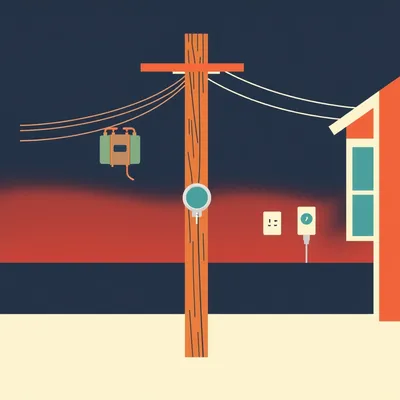
#3825: Low Voltage, High Stakes: Electricians vs Linemen
Why 120V is "low voltage" and what separates electricians from linemen at the meter.
#3804: Stateful Firewalls vs. Modern Threats
Is a basic firewall still enough in 2026? We break down what each security layer actually catches—and misses.
#3797: How Self-Reverting Watchdogs Save Broken SSH Sessions
A dead man's switch for server configs that automatically rolls back risky changes when connectivity drops.
#3791: Who Still Runs Windows Server in 2026?
Windows Server still holds 32% of x86 server shipments. Here's where it's the rational choice.
#3764: Rooting's Last Stand: Play Integrity vs. Power Users
Google’s Play Integrity API is making rooted phones useless for banking. Is rooting dead?
#3694: The Hidden World of Electronic Component Distributors
Digikey, Mouser, and Farnell aren't normal retailers—they're the backbone of global electronics manufacturing. Here's how they work.

#3658: How Reddit Built Guardrails for Anonymity
Reddit didn't solve harassment by killing anonymity. It built friction, reputation systems, and distributed governance.

#3657: How to Actually Save Your Shopping Cart
Why shopping carts vanish when you close a tab — and what actually works to preserve them across devices.

#3651: What Happened to the Baby Health Vault App?
A parent wants a secure way to store medical photos of their child. No app does this well.

#3483: When AI Agents Invent Their Own Secret Language
From modem screech experiments to drone coordination — how AI agents learned to talk without us.
#3471: What OS Actually Runs Inside a Siemens PLC?
Siemens, Rockwell, Beckhoff — the OS choices inside modern PLCs are more varied than you'd expect.
#3466: Digital Archiving for Freelancers: Workflows & Risks
Why "keep everything forever" is more dangerous than "delete nothing" for small businesses.

#3358: Why Spies Still Use Dead Drops in 2026
Encryption is everywhere, so why risk a physical exchange? The answer reveals the limits of digital security.
#3223: Handcuffed to a Petabyte: Urgent Physical Data Transfer
When data moves faster by plane than fiber, couriers handcuff petabytes in reinforced cases across oceans.