
Cyberattacks
339 episodes · Page 9 of 15

#2225: The Physics of Eavesdropping: Nation-State Listening in 2026
From laser microphones to keystroke acoustics to the Great Seal Bug, what remote listening actually looks like when physics becomes the bottleneck—...
#2180: The Sandboxing Tradeoff in Agent Design
AI agents need broad permissions to be useful—but every permission expands the attack surface. We map the real threat landscape and the isolation t...

#2104: The Envelope Problem: Why Your VPN Isn't Enough
A VPN isn't magic. Learn how DNS and SNI leaks expose your browsing, and what encrypted DNS and ECH actually do to fix it.
#2103: AI Firewalls: Spotting Bombs on an Encrypted Conveyor Belt
With 95% of web traffic encrypted, firewalls can't read packets. Here's how AI analyzes metadata to detect threats without decryption.

#2102: Why Don't You Notice AI Security Delays?
Multi-layer security checks add latency, but modern CLIs hide it under 100ms using parallelization and speculation.
#2098: The Invisible War for the Radio Spectrum
Modern wars are won by controlling invisible waves, not just physical ground. Discover how electronic and cyber warfare merge to rewrite reality.
#2080: The Silent Failure of Emergency Alerts
Why your phone might sleep through a siren, and how traffic lights could save your life.
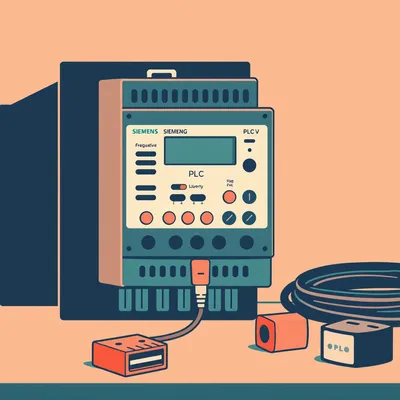
#2058: How Stuxnet's Code Physically Broke Iran's Centrifuges
Stuxnet didn't just infect computers—it rewrote PLC logic to spin uranium centrifuges into self-destruction while faking normal readings.
#2045: Anonymity Isn't the Problem, The Architecture Is
Why does Reddit amplify toxicity while other anonymous spaces stay healthy? It's not the mask—it's the room's shape.
#1991: Why 20 Clean Qubits Beat 1000 Noisy Ones
Israel just unveiled its first 20-qubit superconducting quantum computer, and it's not about size—it's about precision and control.
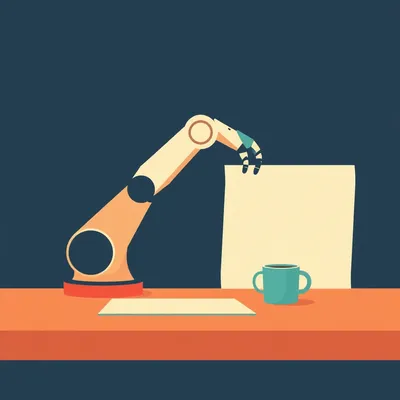
#1986: Desk Robots: Privacy, Power, or Annoyance?
These AI companions sit on your desk, watching your posture and listening in—so how do they protect your privacy while actually being useful?

#1928: Why Webhook Gateways Beat Direct Wiring
Unscale your chaos: Why Kong beats manual webhook sprawl for auth, routing, and latency.
#1908: The Web's New Bouncer: When to Block AI Bots
AI bots are crawling the web like a bank heist. Are Cloudflare's new controls protecting your content, or just helping Google?
#1892: Trust vs. Math: The Hybrid Finance of Hawala and Crypto
How hawala networks and crypto merge to fund covert operations, and why intelligence agencies are struggling to track the money.

#1891: From Phone Number to Spiderweb: The Power of OSINT Graphs
See how a single phone number can unravel a web of 200+ entities in seconds using OSINT graph tools.
#1887: The Lone Wolf Is a Myth
The Las Vegas 2025 incident wasn't a lone wolf—it was the terrifying new face of digital radicalization.

#1874: The Locking Cable Revolution: Fixing Your Flimsy Home Office
Tired of monitor cables and Ethernet plugs falling out? Discover the industrial-grade connectors that never slip, from SDI to etherCON.
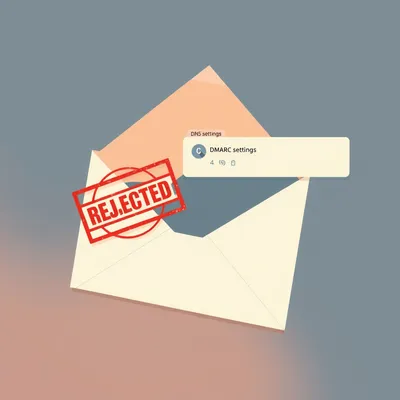
#1872: The Pinky Promise That Broke Email
SMTP is broken. DMARC is the fix. Learn why your emails might vanish after April 2026 and how to stop domain spoofing.

#1840: Your Calendar Is Now a Negotiation
AI agents are now negotiating meetings behind the scenes using JSON schemas and zero-knowledge proofs.

#1836: Why Your AI Agent Needs a Headless Browser
AI agents can't just use text—they need to see and click. Here's why headless browsers are the critical bridge to the live web.

#1832: From Local Chaos to Cloud Control
Local MCP servers are a configuration nightmare. Cloud aggregators like Composio offer a unified control plane for AI tools.

#1815: Escaping Chrome's Golden Cage: Vivaldi, Brave, Arc & Opera
Google Chrome dominates at 65% market share, but Manifest V3 is breaking ad blockers. Here's how Vivaldi, Brave, Arc, and Opera offer a way out.
#1814: Firefox vs. Chrome in 2026: The Privacy vs. AI Trade-off
Chrome dominates with 68% market share, but Firefox holds its ground with a privacy-first approach. We compare their 2026 performance, AI features,...

#1796: The Encryption Mirage: Are Your Keys Really Safe?
End-to-end encryption promises privacy, but hidden backdoors and metadata leaks can betray your trust.