Most coverage of circadian science leads with the same line. Get more sleep, buy blackout curtains, put the phone down an hour before bed. Personal responsibility, self-optimization, one more thing to feel guilty about at eleven at night.

And that framing is exactly backwards.
It's backwards because the biology was never the hard part. We've known the mechanism for decades. What we don't have is a single integrated policy body that treats light and time as public infrastructure. Which is what Daniel wrote in about this week.
He's asking for a thought experiment.
A thought experiment that's secretly a policy memo. Here's what he sent. He wants us to imagine a more circadian-aligned world. Not a world without artificial light, he's explicit about that. Just one where society makes a conscious effort to line itself up with the sun. And he's got two constraints he keeps coming back to. It shouldn't be dull. And people shouldn't have to choose between having time after work and doing something fun with it. So the balance shifts toward deliberate alignment, and he names two levers for how that happens. Working hours, and the artificial lighting we choose for our streets and our entertainment venues. Then the actual ask. If you were building a task force for improving human wellness through this means, what policies would you implement?
That's a lot of question in one prompt.
It's four questions wearing a trench coat. Is alignment even measurable, which lever moves the needle, does any of this make life worse, and what would you actually write into law.
The good news is the research base here is unusually strong. This isn't one of those episodes where we're gesturing at vibes. We can be concrete.
So before we start designing the task force, let's be precise about what we're actually trying to align. Because circadian alignment is a measurable thing, not a mood.
Right, and the definition matters. It's not more sleep, and it's not less light. It's matching the timing of light exposure and activity to the solar day. Morning light early, evening darkness early, activity in between. The measurable version of that is called phase, and you can get it from actigraphy, from melatonin onset, from sleep midpoint. It's a number.
Give me the stakes, because I suspect most listeners think of this as a wellness aesthetic. Blue light glasses, orange bulbs, that whole aisle of the store.
The mortality data is the part that stops people. A 2025 NHANES analysis, four thousand eight hundred and fourteen US adults, accelerometer-measured. The lowest quartile of circadian synchronization had seventy percent higher all-cause mortality. Hazard ratio of one point seven. And it's a U-shaped curve, which is the interesting bit. Both the most advanced and the most delayed timing raised mortality. So it isn't just night owls being punished. It's misalignment in either direction.
Seventy percent is not a small number.
It's the kind of number that, if it were attached to a chemical, would get the chemical banned. And there's a 2026 review in Physiological Reviews, Shea and Scheer and Gumz and others, that lays out the cardiovascular case. Chronic circadian misalignment is strongly associated with increased cardiovascular risk and disease progression. And major adverse cardiovascular events have a distinct morning peak. That's not a coincidence, that's the clock.
So the biology is settled enough to legislate on.
Settled enough to take seriously. And here's the thing that makes Daniel's prompt more than a thought experiment. We already have real policy experiments running. California's school start times. The daylight saving fight. Dark-sky ordinances in Seoul, in Reykjavík, in the Czech Republic, France, Slovenia. What we don't have is a single body that ties them together. There's no circadian task force anywhere. I went looking. The closest analogues are single-issue ordinances.
So the gap isn't knowledge. It's integration.
That's the gap. And that's what makes the prompt worth doing.
Daniel named two levers, working hours and lighting. Let's take them one at a time, because the evidence behind them is not equally strong.
They're not even close, honestly. Working hours is the weaker evidence base, and I say that as someone who wanted it to be stronger.
Start with why.
There's a study, five hundred and seven respondents, using the Morningness-Eveningness Questionnaire. It found that mismatch between your biological preference and your actual work start time links to reduced productivity. Flexible arrangements mitigate it. That's real, but it's self-reported and it's small.
And the practitioner consensus?
Flex-time, not just flex-place. That's the phrase that keeps coming up. The idea is you set core collaboration hours, ten in the morning to three in the afternoon, say, and let people arrange the rest around their chronotype. The evening types come in late and stay late. The morning types come in early and leave early. Everyone overlaps in the middle.
Which is a scheduling policy, not a health policy. Nobody's measuring anyone's melatonin.
And the study everyone cites for work-time reform isn't even about timing. The four-day workweek study in Nature Human Behaviour, two thousand eight hundred and ninety-six employees, a hundred and forty-one organizations across Australia, Canada, Ireland, New Zealand and the UK. Well-being improved. But that's about total hours, not when the hours fall. It's adjacent evidence. It is not proof that re-timing work works.
I appreciate you flagging that, because it would be very easy to slide that one into the argument and hope nobody checks.
It happens constantly. The four-day week gets cited as if it validates every schedule reform. It validates one thing, which is that fewer hours helps. Timing is a separate question.
So lever one is plausible but soft. Lever two?
Lever two is where the science gets hard and specific. And it hinges on a metric most people have never heard of. Melanopic EDI.
Say it slowly.
Melanopic equivalent daylight illuminance. It's the CIE-blessed standard for quantifying how much a light source actually affects your physiology. And here's why it matters. Photopic lux, the old standard, is tuned to what your eye sees. Peak sensitivity around five hundred and fifty-five nanometers, in the green. Melanopic EDI is tuned to what your body responds to. Peak sensitivity around four hundred and eighty nanometers, in the blue.
So the two numbers can disagree.
They can disagree wildly. Which means a light can look dim to your eye and still be biologically loud. That's the technical hinge of this entire episode. Every policy argument about street lighting runs through that distinction, whether the people making the argument know it or not.
Give me a concrete case.
The AMA recommends roadway lighting with a correlated color temperature below three thousand Kelvin. Fewer short wavelengths, less melanopic punch. And that recommendation drew a strong reaction from the lighting industry and the US government. Both of them.
What's the industry's objection?
Cost, mostly. And the claim that brighter, whiter light is safer. Which is the belief we'll come back to. But the AMA recommendation is a real precedent. A major medical body looked at the melanopic evidence and said the default for street lighting should change.
And there are actual numbers for outdoor light limits already on the books.
There are, and they're beautifully boring. The CIE light-trespass limits. Ten lux pre-curfew, two lux post-curfew in medium-brightness zones. Twenty-five lux pre-curfew, five lux post-curfew in city centres. These are existing technical standards. A task force wouldn't have to invent them. It would have to adopt them.
Five lux in a city centre after curfew. That's dim.
It's dim by current practice. It's not dim by historical standards. And that's the point. We didn't always light cities like airport aprons.
Now the strongest real-world precedent, which is the one that actually changed behaviour at scale.
California SB 328. Two thousand nineteen, first in the nation. Middle schools start no earlier than eight, high schools no earlier than eight thirty. Effective July two thousand twenty-two. And the NBER study that came out this September found a thirteen percent increase in students sleeping eight hours or more.
Thirteen percent is a big effect for a scheduling change.
It gets better. Boys saw the largest reductions in sadness, hopelessness and suicidal ideation. Hispanic students saw the biggest drop in concentration difficulties and the largest math and English gains. Those are mental health outcomes and academic outcomes moving together, off a start time.
So of the two levers, schedules have the strongest real-world evidence.
Schedules have the strongest evidence of actually having been tried and measured. Lighting has the strongest mechanistic evidence and the weakest field evidence, which is a strange asymmetry. We know exactly how melanopic light affects the clock. We have almost no studies measuring what real street lighting does to real people over years.
Hold that thought, because that gap becomes important later.
It becomes the whole problem later.
So we have the mechanism and the precedents. Now the harder question. Does any of this make the world duller, and who pays for the transition?
The dullness fear is the one Daniel flagged explicitly, and it's the one I want to take apart, because the evidence against it is stronger than people expect.
Take it apart.
The 2023 Science review, Zielinska-Dabkowska and Schernhammer and Brainard and Hanifin. It looks at the belief that bright light equals safety and prosperity, and finds that belief has limited research support. Limited. And then it goes further. Unshielded, glary lighting can actually reduce safety, because it blinds you. You can't see the person standing in the shadow because the lamp is in your eye.
So the bright-equals-safe intuition is doing the opposite of what it claims.
In some configurations, yes. Which means a dimmer, warmer-lit night isn't a concession to health at the expense of safety. It might be more sociable and no less safe. The review's framing is that we have a fear of darkness that isn't well supported by the data.
That answers Daniel's constraint directly. The world doesn't have to be dull.
The world we've built might be the dull one. Think about what a glare-lit street actually offers you. You can see the pavement. You can't see the sky, you can't see the faces across the road, you can't see anything that isn't directly under the lamp. There's a version of this where the warm, low, shielded lighting is the one where people actually linger.
There's an equity dimension here too, and I don't think most coverage touches it.
Almost none of it does. Light pollution is unevenly distributed by race and socioeconomic status. Affluent neighborhoods get more darkness. Poorer areas get glare. Which means a circadian policy is also a justice policy, whether or not anyone frames it that way.
The review's line about this is the one I'd put on the wall.
Every citizen should have the right to access darkness and quality, responsible outdoor lighting for improved health and well-being. That's the framing. Darkness as a right, not as a luxury good.
Now the transition problem, because California is also the cautionary tale.
The health wins are real and the implementation is where policy usually dies. San Francisco Unified had to redesign bus routes. They worked with Yale, Georgia Tech and Northwestern, generated about a thousand feasible schedules, and saved roughly five million dollars. So the logistics are solvable. That's the encouraging part.
But solvable isn't free.
Solvable isn't free, and it required institutional investment that most districts don't have. Some parents say later starts complicate commutes and push back on sports schedules. Some students just go to bed later and pocket the difference. And Osea Giuntella, one of the NBER authors, is careful about this. He calls later start times effective and powerful tools, but one institutional factor in a complex sleep-deprivation problem. One factor.
So a task force that only moves start times is going to be disappointed.
A task force that only moves start times is going to be disappointed and will deserve it. This is the lesson from every single-issue reform. You fix the schedule and the phone and the homework load and the after-school job are all still there.
Which brings us to the live test case, which is daylight saving time. This is the perfect natural experiment for everything we've been describing.
It's almost too perfect. The House passed the Sunshine Protection Act in July to make daylight saving permanent. The American Academy of Sleep Medicine condemned it immediately.
And the Senate?
Stalling. Senate Republicans have shown little appetite, the midterms complicate everything, and the US falls back to standard time in November as scheduled. So we get the worst of both worlds. A House vote for the wrong policy and no actual change.
Why is permanent daylight saving the wrong policy, given that most people want it?
Because the health-optimal answer is permanent standard time, and that's the politically unpopular one. Ken Wright at CU Boulder makes the case cleanly. Standard time is more closely aligned with the natural patterns in the environment under which we, as humans, have evolved. And he points out the specific problem with DST. Less morning light, and the sun is high in the sky when the clock says one in the afternoon. After midday.
The clock and the sun disagree, and your body believes the sun.
Your body always believes the sun. That's the entire point. And the sleep medicine consensus is unanimous on this. The AASM, the Sleep Research Society, the European societies. Permanent standard time.
And the AASM president's line about the House vote.
Dr. Fariha Abbasi-Feinberg. The House ignored the overwhelming evidence supporting the health and safety benefits of permanent standard time and instead chose to force dark, dangerous mornings on millions of Americans. That's not a cautious statement. That's a body that's been arguing this for years and lost a vote.
Here's the tension I keep circling. Fifty-six percent of Americans prefer permanent daylight saving. Forty-two percent prefer standard time. AP-NORC, fall of last year.
So the health-optimal policy is the minority position. That's the task force's hardest problem, and it's not a science problem. It's a politics problem. You can have the entire sleep medicine community on your side and still lose, because people like light in the evening more than they like light in the morning, and they vote accordingly.
Which means the task force can't just publish recommendations. It has to sell them.
It has to sell them against a preference that's baked into how people feel about their evenings. That's the job. And the DIY crowd is already way ahead of the institutions on this, which is the strangest part of the whole picture.
Explain.
There's a whole community running circadian lighting at home. Home Assistant integrations, adaptive lighting, whole-house setups that shift color temperature through the day. There's a thread from a few years back, five hundred and thirty-four points, people comparing notes. One commenter, anything above thirty-six hundred Kelvin is a no go for me after sunset. Another one, it's not just aesthetics, I believe it has a major impact on my sleep health.
So individuals are running policy-grade lighting in their own homes.
Individuals are running policy-grade lighting in their own homes while cities still have no circadian-aware outdoor lighting standards. The personal is far ahead of the institutional. People solved it for themselves and then went back to a street that's lit like a parking lot.
And there's a research gap that should temper all of this, which you flagged earlier.
The Science review calls for sparse direct, empirical measurements. That's their phrase. There are no rigorous field studies measuring the direct physiological impact of real-world outdoor street and building lighting on healthy humans under naturalistic conditions. None.
So a task force would be legislating partly on inference.
Partly on inference, partly on mechanism, partly on the school start time data, which is a different intervention. If you're honest about it, the strongest thing you can say is that the mechanism is well established and the population-level field evidence is thin. That's a real problem for anyone writing policy.
So let's do the synthesis. If you were running this task force, what actually goes in the report?
I'd structure it in tiers, because the evidence isn't uniform. Tier one, the things we can justify today. Adopt the CIE light-trespass limits as a floor for new municipal lighting. Adopt the AMA's sub-three-thousand-Kelvin recommendation for roadway lighting. Fund the field studies the Science review says don't exist, because you can't build tier two on nothing.
And tier two?
Tier two is the harder stuff. Core collaboration hours as a default in large employers, with the flex-time framing rather than flex-place. School start times following the California model, but with transition funding attached, because the San Francisco bus redesign is the difference between a policy that works and a policy that gets repealed.
And the DST question?
Permanent standard time, and be honest that it's the unpopular answer. If you can't win that, you at least don't make it worse by going permanent DST.
There's one more layer here that doesn't show up in the academic literature at all.
The procurement layer.
Hilbert: What color temperature actually ends up on the pole?
Say that again.
Hilbert: The number on the spec sheet. Everyone in this conversation is treating three thousand Kelvin as a health threshold. It isn't. It's a compromise that got negotiated, and the people who negotiated it were thinking about glare complaints and maintenance contracts.
That's a fair correction, actually. The AMA recommendation is a recommendation. It isn't a standard.
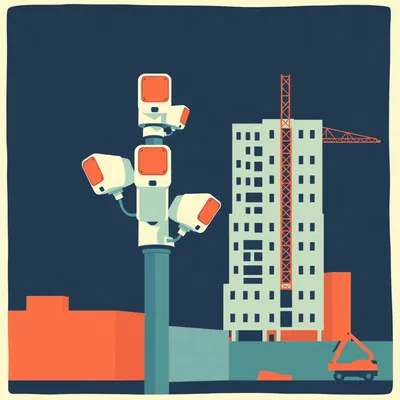
Hilbert: I spent a stretch of time around the people who write municipal lighting tenders. The ones who specify what gets bought. And the thing I'd tell you is that the correlated color temperature on a street light is chosen by a procurement officer. Not a health officer. A procurement officer. And I never met one who'd been told what melanopic EDI is. Not once.
So the most consequential circadian number in a city is a purchasing decision.
Hilbert: It's a line item. You write the tender, you get three bids, you pick one. The Kelvin number comes with the fixture. Nobody in that room is thinking about anybody's melatonin. They're thinking about whether the maintenance contract covers lamp replacement and whether the residents will call in complaints about glare. That's the whole conversation.
Which means the leverage point isn't health ministers.
Hilbert: It's purchasing departments. If you want to change what's over a street, you change the tender template. That's a document. Somebody writes it. It's not glamorous and it's not in any of the papers you've been reading.
How long does a fixture stay up?
Hilbert: Fifteen, twenty years if nobody hits the pole. So whatever number the procurement officer picks, that's the lightscape for a generation. You can publish all the reviews you want. The pole outlives the recommendation.
That reframes the whole task force question.
Hilbert: I'd put a procurement officer on it. And a maintenance contractor. The people who actually touch the hardware. The rest of it's commentary.
That reframes the whole task-force question, and it's where I want to leave the discussion. If the most consequential circadian decisions are made by procurement officers and school boards rather than health agencies, then the composition of the task force matters more than the recommendations it produces. Who's actually in the room is the policy.
And the timing is not hypothetical. The Senate is sitting on the Sunshine Protection Act right now. Ontario is still falling back in November. The Northwest Territories just moved to end daylight saving entirely. This is being voted on this year, in real jurisdictions, with real consequences.
The thing I keep coming back to is the evidence gap. The Science review says the field studies don't exist. Which means the first recommendation out of any honest task force might have to be fund the research, not change the bulbs. You can't build a generation of lighting policy on inference and then act surprised when it doesn't hold.
And on the cutting-room floor, the detail that didn't fit anywhere else. The Brazilian study, seventeen hundred and sixty-two people. Every thirty minutes of morning sun exposure before ten in the morning was associated with a twenty-three-minute earlier sleep midpoint. Thirty minutes of light, twenty-three minutes of phase shift. That's the lever, in one number. It's not a policy. It's just the thing the policy would be trying to buy.
And the UK Biobank figure that goes with it. Median outdoor daylight was two and a half hours a day across more than four hundred thousand people. That's the baseline we're working from.
Two and a half hours. Most of it incidental.
That's the episode. Thanks to Hilbert Flumingtop, our producer, who has apparently been reading municipal tender documents for fun.
This has been My Weird Prompts.
If you want to send us something, email us at show at my weird prompts dot com. We read everything.
We'll be back soon.
See you tomorrow.