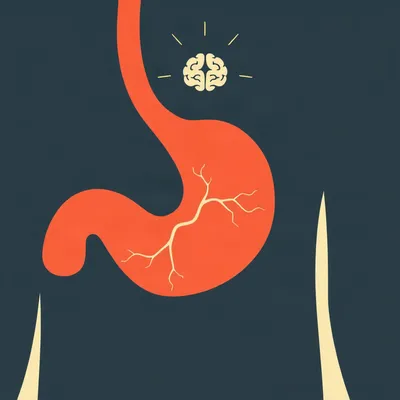
Daniel sent us this one, and it's a question that picks up right where some of our earlier conversations left off. We've talked about the aftermath of gallbladder removal — the chronic diarrhea, the bile reflux, the sphincter dysfunction. Twenty percent of patients end up with post-cholecystectomy syndrome, and a lot of them are just told to live with it. The prompt asks the obvious next question: has anyone actually tried to build a replacement? Not a transplant from a donor, but an engineered device — a bionic gallbladder. And if not, what's the closest thing we've got?

The answer is more interesting than most people realize. There have been attempts going back to the nineteen seventies — some of them genuinely creative, some of them deeply flawed, and a few happening right now that are surprisingly close to something real. But before we get to the engineering, we have to be precise about what the gallbladder actually does, because that's where most of the bad designs go wrong. They treat it like a simple storage bag.
Which it isn't.
It absolutely isn't. The gallbladder does three things that are all tightly coordinated. First, it concentrates bile. The liver produces about six hundred milliliters of dilute bile per day, and the gallbladder squeezes that down to about fifty milliliters by reabsorbing water and electrolytes. You end up with this concentrated detergent that's five to twenty times more potent than what the liver originally made. Second, it stores that concentrated bile between meals. And third — and this is the part that matters most for device design — it releases it in a pulsatile bolus when you eat, triggered by cholecystokinin, which is a hormone your small intestine releases when fats hit it.
It's not just a tank. It's a tank with a sensor and a pump and a concentration mechanism, all built into one thin-walled sac.
And when you remove it, all of that goes away. The liver keeps making bile, but now it just drips continuously into the duodenum, whether you're eating or not. You lose the concentration step, you lose the timed bolus release, and you lose the storage buffer. So you've got this constant trickle of unconcentrated bile leaking into your small intestine, and when you eat a fatty meal, there's no surge — you just get the same trickle. That's the "constant drip" problem.
That's why the body can't compensate. The liver doesn't have a storage mode. There's no backup system. Once the gallbladder is gone, the bile plumbing is permanently altered.
And the consequences cascade. Bile acids in the colon draw water in and stimulate motility, so you get diarrhea. Bile in the stomach — because without the sphincter of Oddi's coordinated timing, bile can reflux upward — causes chemical gastritis. And bile acid malabsorption means you're losing fat-soluble vitamins. The JAMA Surgery meta-analysis from twenty twenty-three put it at twenty percent of patients developing chronic post-cholecystectomy syndrome. That's not a rounding error. That's millions of people.
We know what's broken. The obvious question: has anyone tried to fix it? The answer is yes, and the attempts go back further than you might think.
The first serious attempt was in the nineteen seventies, and it was beautifully simple in concept and disastrous in practice. Surgeons in London ran a small trial — twelve patients — where they implanted an external tube that collected bile from the common bile duct into a bag worn outside the body. The patient would then re-feed the bile through a nasogastric tube after meals. The idea was that you're just putting the bile where it's supposed to be, when it's supposed to be there.
This sounds like the medical equivalent of patching a leak with duct tape and a bucket.
It basically was. The Lancet published the results in nineteen seventy-two, and the short version is: it worked for bile timing. Patients had fewer diarrhea episodes. But the infection risk was catastrophic. You've got an open tract from the outside world into the biliary tree, and bile is not sterile once it leaves the body. Several patients developed ascending cholangitis, which is a life-threatening infection of the bile ducts. And patient compliance was terrible — people don't want to wear an external bile bag and re-feed themselves through a tube. The whole thing was abandoned within a few years.
The external reinfusion approach died because it couldn't solve the infection barrier. But that didn't stop people from trying internal devices. I know there was a patent filed a few years ago that got some attention.
Right — the University of California, San Francisco filed a patent in twenty eighteen for what they called an "artificial gallbladder." The design is a subcutaneous silicone reservoir with a one-way valve. The surgeon connects it to the common bile duct, bile flows in and fills the reservoir, and then the patient manually compresses it through the skin after meals to squeeze bile out. It's implanted under the abdominal skin, so no external port — that solves the infection problem from the nineteen seventies approach.
It's a passive bag. There's no sensor, no feedback loop, no concentration mechanism. You're just... squishing yourself after lunch.
That's the fatal flaw. The device can't sense cholecystokinin. It can't detect that you've eaten. It can't measure bile acid concentration. It doesn't know when to release or how much. The patient has to remember to compress it, and they have to guess the right timing and pressure. Meanwhile, real gallbladder function is exquisitely tuned — the sphincter of Oddi relaxes within minutes of eating, the gallbladder contracts in a coordinated wave, and the whole thing shuts off when the meal is done. A manual squeeze bag does none of that.
It's the musical equivalent of beige wallpaper. It technically covers the surface but misses the entire point.
There are other problems. The bile-duct anastomosis — the surgical connection between the device and the common bile duct — is a nightmare for biocompatibility. Bile is corrosive. It's basically a detergent. It degrades most polymers over time. Silicone holds up better than most materials, but you still get biofilm formation, you still get bile salt precipitation that can clog the valve, and you still get the risk of the device acting as a nidus for infection. Any implant in the biliary tree carries a five to ten percent risk of ascending cholangitis, stent occlusion, or migration. The FDA has not cleared any device for bile storage or diversion as of twenty twenty-six.
That's the UCSF patent's real legacy — it clarified what the problem actually is. It's not just "store bile." It's "store bile, concentrate it, sense when to release it, release it in a pulsatile bolus, and do all of that inside a hostile chemical environment for decades without failing." That's a much harder problem.
Which brings us to where the real innovation is happening now. Those early attempts failed because they were too simple. But in the last few years, researchers have gotten much more creative.
Let's look at the MIT project, because that one surprised me.
This is the DARPA-funded project at the MIT Media Lab, and it's wild. They're working on a shape-memory polymer pouch — imagine a small sack made of a material that can be programmed to hold one shape at body temperature and then contract to a different shape when heated above a threshold. The heating is done by a tiny resistive element woven into the polymer. And here's the clever part: the trigger is a swallowed capsule.
Wait — the patient swallows a pill that tells the pouch to squeeze?
The capsule contains a simple sensor that detects the pH change and the presence of certain enzymes when it hits the stomach during a meal. It sends a wireless signal to a controller implanted alongside the pouch, which activates the resistive heater, the polymer contracts, and bile is squeezed out. After a programmed interval, it cools down and relaxes, allowing the pouch to refill. The DARPA program review from twenty twenty-five reported the prototype can cycle five hundred times before material fatigue sets in.
Five hundred cycles. That's less than two years of meals if you eat three times a day.
And that's in a lab setting, not inside a body with bile and immune cells and mechanical stress from movement. Five hundred cycles is a proof of concept, not a product. But the feedback loop idea — using a swallowed sensor to trigger release — that's novel. It solves the timing problem that killed the UCSF design.
It also introduces a new problem, which is that you now have a battery and a wireless receiver and a heating element implanted inside your abdomen, wired to a bile-filled pouch. What happens when the battery dies?
That's the question nobody has a good answer for yet. The DARPA project uses an inductive charging coil, so you'd recharge it through the skin — like a phone on a charging pad, but for your bile pouch. But inductive charging through abdominal tissue is inefficient, and every component you add is another failure point. The resistive heater burns out, the capsule doesn't transmit, the polymer develops a crack, and suddenly you've got a non-functioning device inside your biliary tree that's now a blockage risk.
It's ingenious but fragile. What about the biological approach? I know Wake Forest has been working on something that sidesteps the materials problem entirely.
The Wake Forest Institute for Regenerative Medicine has been developing what they call a "bioartificial gallbladder." The concept is to take a decellularized porcine gallbladder — basically a pig gallbladder that's been stripped of all its cells, leaving just the extracellular matrix scaffold — and seed it with the patient's own biliary epithelial cells. The idea is that the cells will repopulate the scaffold and create a living, functional gallbladder that can be implanted.
Like growing a replacement organ from a scaffold. We've seen this approach for tracheas and bladders.
Exactly the same principle. The advantage is that it's living tissue — it should theoretically be able to concentrate bile, respond to hormones, and resist infection the way a native gallbladder does. No batteries, no polymers, no heating elements. The disadvantage is that as of twenty twenty-six, it has never been tested in an animal model. It's strictly in vitro. The cells grow on the scaffold in a dish, and they look right under a microscope, but nobody knows if they'd survive implantation, connect properly to the bile duct, or actually function.
Even if it works in a pig, you've got the rejection problem. The cells are the patient's own, sure, but the scaffold is porcine. The immune system might still attack it.
That's the hope with decellularization — removing the cells also removes the antigens that trigger rejection. But you're right, it's not a solved problem. The extracellular matrix contains proteins that can still provoke an immune response, and the bile environment is uniquely hostile. Bile salts are cytotoxic at high concentrations. If the seeded cells can't maintain a protective mucus layer, they'll be digested by the very substance they're supposed to store.
The bioartificial approach is elegant but decades away. But there's a third direction that's actually the most radical, and it's already been tested in humans.
The bile bypass shunt. And this one flips the entire problem on its head. Instead of trying to build a new gallbladder, you just reroute the bile to where it's less harmful. The Karolinska Institutet in Stockholm ran a pilot study — eight patients, published in the journal HPB in January twenty twenty-six — where they implanted a tube that diverts bile from the common bile duct directly to the terminal ileum, bypassing the duodenum and jejunum entirely.
The bile never touches the upper GI tract. It goes straight to the lower small intestine, which is where bile acids are normally reabsorbed anyway.
And the results were striking. At six months, they reported a seventy-five percent reduction in diarrhea frequency. Patients went from multiple episodes a day to near-normal bowel habits. The mechanism makes sense — you're keeping bile away from the stomach and duodenum, so no bile reflux gastritis, and you're delivering it to the ileum in a way that mimics the natural reabsorption pathway.
What's the catch?
First, eight patients is tiny. This is a pilot, not a trial. Second, bypassing the duodenum means bile isn't present for the initial phases of fat digestion, which happens partly in the duodenum. The patients in the study didn't show signs of fat malabsorption at six months, but the long-term effects are unknown. Third, you've permanently altered the anatomy in a way that's difficult to reverse. And fourth, the same infection and occlusion risks apply — you've got a foreign tube sitting in the biliary tree, and if it migrates or blocks, you're looking at emergency surgery.
Seventy-five percent reduction in symptoms is not nothing. That's a real signal.
It's a very real signal. And the Karolinska team has applied for Phase Two trial authorization, which could start as early as twenty twenty-eight if the European Medicines Agency approves it. This is the closest thing to a near-term solution that actually addresses the root physiology rather than just managing symptoms.
Let's talk about symptom management, because that's where most patients are stuck right now. What does the current standard of care look like, and why does it fail for so many people?
The first-line treatments are bile acid sequestrants — cholestyramine is the most common. It's a powder you mix with water, and it binds bile acids in the intestine so they can't cause diarrhea. It works for maybe sixty to seventy percent of patients with bile acid malabsorption. The problem is tolerability — it tastes terrible, it causes bloating and constipation, and it interferes with the absorption of other medications and fat-soluble vitamins. A lot of patients just stop taking it.
If cholestyramine doesn't work?
Then you're looking at antidiarrheals like loperamide, which treat the symptom but not the cause. Ursodeoxycholic acid — which is a synthetic bile acid that's less toxic to the intestinal lining — helps some patients, but the evidence is mixed. Dietary fat restriction is universally recommended, but it's a quality-of-life compromise, not a solution. And for about thirty percent of patients, none of these work well enough to restore normal function.
This is where the misconception busting needs to happen. The prompt asked about life-altering complications that go beyond treating a few symptoms, and I think there's a real failure in how the medical system thinks about post-cholecystectomy syndrome.
The biggest misconception is that post-cholecystectomy diarrhea is just IBS. It's not. Bile acid malabsorption is a distinct, testable, and treatable condition with a completely different mechanism than irritable bowel syndrome. But a lot of primary care doctors and even some gastroenterologists don't test for it. They hear "diarrhea after gallbladder removal" and reach for the IBS playbook.
The test exists. It's called the SeHCAT scan — tauroselcholic acid scan. You swallow a capsule with a synthetic bile acid tagged with a radioactive tracer, and they measure how much of it you retain after seven days. If you retain less than fifteen percent, you've got bile acid malabsorption. The sensitivity is ninety-six percent according to a twenty twenty-two paper in Gut. It's a definitive test.
It's underused. In the United States, SeHCAT isn't even FDA-approved — it's available in Europe and Canada, but American patients often can't get it. Instead, they get a trial of cholestyramine and if it works, the diagnosis is presumptive. If it doesn't, they're often left without answers.
The most impactful thing a patient can do right now isn't waiting for a bionic gallbladder. It's finding a gastroenterologist who specializes in bile acid malabsorption and getting properly diagnosed. If you're in Europe, ask for a SeHCAT scan. If you're in the US, push for a therapeutic trial of a bile acid sequestrant and don't let them write you off with an IBS diagnosis.
Ask specifically about "bile acid diarrhea." Use that phrase. It forces the doctor to think about a specific pathway rather than lumping you into the functional GI disorder bucket. Patient communities online are often ahead of general gastroenterologists on this — they know which specialists take it seriously and which treatments actually help.
This is where I get frustrated. We're talking about millions of people who had their gallbladders removed, often for good reasons — symptomatic gallstones are miserable — but were told the surgery has no long-term consequences. And then they develop chronic diarrhea or bile reflux and they're treated like it's a mystery or, worse, like it's in their head.
The "disposable organ" framing is a real cultural problem in surgery. The gallbladder is treated as expendable because you can survive without it. But survive and thrive are different things. Ten to twenty percent of patients develop significant chronic symptoms that require ongoing medical management. That's not a rare complication — that's a common outcome that we've normalized.
Which brings us back to the bionic gallbladder question. Given everything we've discussed — the UCSF passive bag, the MIT smart pouch, the Wake Forest bioartificial scaffold, the Karolinska bypass shunt — where are we actually headed?
I think the honest answer is that a fully autonomous bionic gallbladder with a cholecystokinin sensor, a concentration mechanism, pulsatile release, and decades-long durability inside a bile environment is not coming in the next decade. Maybe not in the next two. The technical hurdles are immense. Bile-resistant electronics basically don't exist — bile degrades everything. Long-term implantable power for an active device is still an unsolved problem. And sealing the bile-duct connection against infection is a surgical challenge that nobody has cracked.
The bypass shunt is different. That's a passive tube — no electronics, no moving parts, no feedback loop needed. It's just clever plumbing.
That's why I think the Karolinska approach is the one to watch. It sidesteps the hardest problems by changing the anatomy instead of replicating the organ. If the Phase Two trial confirms the pilot results, we could see bile bypass shunting become a real clinical option by the early twenty-thirties. It won't be for everyone — patients with certain anatomies or prior surgeries won't be candidates — but for the right patients, it could be transformative.
There's also a deeper question that none of these devices address, which is whether the gallbladder should have been removed in the first place. We're building bionic replacements for an organ that's often removed without exhausting non-surgical options.
That's the uncomfortable conversation that surgery hasn't fully had yet. There are gallbladder-preserving procedures — cholecystolithotomy, where you remove the stones but leave the gallbladder, or endoscopic stone extraction. They're more technically demanding, they have higher recurrence rates, and they're not widely taught. But for a subset of patients, preserving the gallbladder would prevent the entire post-cholecystectomy syndrome problem.
It's the classic surgical tension. Cholecystectomy is one of the most common surgeries in the world — over a million a year in the US alone. It's safe, it's quick, it's laparoscopic, and it definitively solves the stone problem. But it creates a new problem for a significant minority of patients, and we've been slow to acknowledge that trade-off.
That's what makes the bionic gallbladder challenge so interesting from an engineering perspective. It's not just "build me a replacement part." It's "build me a replacement part that does everything the original did, in the same hostile environment, for decades, without causing new problems, and oh, by the way, the original also concentrated bile by a factor of ten using a mechanism we don't fully understand how to replicate synthetically.
The concentration problem is underappreciated. The gallbladder doesn't just store bile — it actively modifies it. The epithelium pumps sodium and chloride out, water follows by osmosis, and you end up with this thick, potent detergent. If your bionic gallbladder just stores bile without concentrating it, you're still delivering dilute bile to the duodenum. It's better than a constant trickle, but it's not the same.
There's a whole signaling dimension we haven't touched. The gallbladder isn't just a passive responder to cholecystokinin — it also produces its own signaling molecules. There's evidence it secretes fibroblast growth factor nineteen, which feeds back to the liver to regulate bile acid synthesis. When you remove the gallbladder, that feedback loop is disrupted, and the liver's bile acid production becomes dysregulated. A bionic device would need to replicate that endocrine function too, or you're still not restoring normal physiology.
The bionic gallbladder is a harder problem than an artificial heart, in some ways. The heart is a pump — a complex pump, but a pump. The gallbladder is a chemical processing plant with a sensor array and an endocrine gland and a timed release mechanism, all in a package the size of a small pear.
It sits in a part of the body that's mechanically active, constantly exposed to bacteria from the gut, and bathed in a corrosive fluid. An artificial heart has the luxury of pumping blood, which is carefully maintained by the body's own homeostatic systems. An artificial gallbladder has to handle bile, which is basically industrial-strength detergent.
The MIT approach with the shape-memory polymer is clever because it accepts the concentration problem as unsolved and focuses entirely on the timing problem. They're not trying to make concentrated bile — they're just trying to release whatever bile is available at the right time. It's a partial solution, but a partial solution that addresses the most disabling symptom, which is the unpredictable diarrhea.
That's the right engineering instinct. Don't try to solve everything at once. Solve the most impactful piece first, and iterate. The bile bypass shunt is the same philosophy — it doesn't concentrate bile, it doesn't store it, it just puts it where it does less harm. And for seventy-five percent of the pilot patients, that was enough.
For anyone listening who's dealing with post-cholecystectomy symptoms, what's the concrete takeaway from all of this?
First, get properly diagnosed. Bile acid malabsorption is not IBS, and the treatment is different. If you can get a SeHCAT scan, do it. If you can't, ask for a trial of a bile acid sequestrant and see if it helps. Second, find a gastroenterologist who specializes in this — they exist, and they're often at academic medical centers. Third, know that the bionic gallbladder is not around the corner, but the bile bypass shunt could enter Phase Two trials within a few years. If you're really struggling, ask your doctor about clinical registries or trials you might qualify for.
Don't let anyone tell you that your symptoms are just something you have to live with because the surgery was "successful." The surgery removed your gallbladder — it didn't remove your right to a functional digestive system. There are options, and more are coming.
The broader point is that we need to rethink what counts as a successful surgical outcome. A cholecystectomy that eliminates gallstone pain but leaves the patient with chronic diarrhea is not an unqualified success. It's a trade-off, and patients deserve to understand that trade-off before they go under the knife.
If you're a biomedical engineer listening to this — this is a wide-open problem. The gallbladder is a fascinating target for bioengineering precisely because it's been neglected. Everyone's working on hearts and kidneys and pancreases. The humble bile storage sac has barely been touched. There's room for novel work here.
The materials science alone is a career's worth of problems. You need something that resists bile degradation, prevents biofilm formation, flexes millions of times without fatigue, and interfaces safely with living tissue. If someone cracks that, they're not just solving the gallbladder problem — they're opening up implantable devices for the entire GI tract.
The answer to the prompt's question — could we live in an era of bionic gallbladders — is a qualified yes. Not tomorrow, not in five years, but the foundations are being laid. The MIT smart pouch, the Wake Forest scaffold, the Karolinska shunt — these are real projects with real data. They're early-stage, they're imperfect, but they exist. And that's more than most people realize.
In the meantime, the most powerful intervention isn't a device at all. It's a diagnosis. Bile acid malabsorption is testable and treatable, and millions of patients are walking around undiagnosed because their doctors never checked. That's the low-hanging fruit.
The body after gallbladder surgery is a different machine that needs different rules. We're slowly figuring out what those rules are — and maybe, eventually, we'll build a machine that restores the original ones.
Now: Hilbert's daily fun fact.

In the eighteen sixties, French surveyors in what is now Niger used an instrument called a "graphomètre" — a semicircular brass protractor with two fixed sights and one movable alidade — to triangulate distances across the Sahel. The word "alidade" comes from the Arabic "al-idhâdah," meaning "the revolving radius.
...right.
Here's a thought to leave you with. We've spent this episode talking about engineering a replacement for an organ most people don't think about until it's gone. But maybe the real frontier isn't the device. Maybe it's the decision to remove the organ in the first place. If we get better at preserving gallbladders — through stone extraction, through medical management, through watching and waiting — we might need fewer bionic replacements. The best implant is the one you never needed.
If you've had your gallbladder out and you're struggling, ask for that SeHCAT scan. And if you know someone in biomedical engineering, tell them the gallbladder is hiring. This has been My Weird Prompts. Thanks to our producer Hilbert Flumingtop. Find us at myweirdprompts.com or wherever you get your podcasts.
We'll be back next week.