Two to four hours. That's the half-life of immediate-release Ritalin. The drug is fully out of your body inside a day — and Daniel spent part of a war finding out that this fact is almost perfectly useless.

That's the whole tension in one number, isn't it.
Daniel's prompt this week is personal. He takes a stimulant daily, and when the war here forced a few days without it, he found it was, in his words, no joke. His pharmacist had told him missing a day or two is no big deal. His experience said otherwise. He wants to know what's actually happening in the brain and body when a daily stimulant just stops, whether every day of withdrawal is roughly the same or whether it gets harder, and why clinicians who take SSRI withdrawal seriously treat stimulant withdrawal like a rounding error.
Herman Poppleberry here, and I'll say up front, this is one of those topics where the mechanism is interesting and the sociology around it is almost more interesting. Let's start with the brain, because that's where the dismissal starts to look strange.
Go.
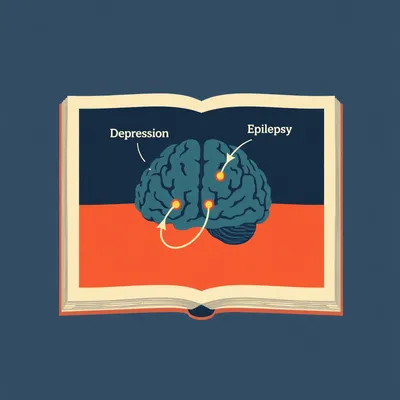
Methylphenidate blocks the reuptake of dopamine and norepinephrine — the transporters that would normally vacuum the neurotransmitter back out of the synapse get plugged, so the signal lingers. Amphetamines go further, they make the transporters run backwards and push extra transmitter out. Either way, day after day, your synapse is running richer than its design spec. And the brain is not passive about that. It downregulates receptors, it adjusts transporter density, it shifts the whole homeostatic set point down to compensate.
So the drug raises the floor and the brain lowers the ceiling.
That's a fair compression of it, yes.
How fast does that compensation happen, though? Is this years of wiring, or something that turns over in a week?
It's both, in a way, and that's what makes the timing question so slippery. The receptor changes begin within days of continuous dosing — the homeostat doesn't wait for your next prescription. But how long they take to fully reverse after you stop is exactly what nobody has charted in prescribed patients. The honest framing is: the adaptation builds quietly while you feel fine, and then presents its bill all at once when the drug leaves.
Which is why the whole thing reads as a surprise.
Right. Nothing about the compensated state announces itself. You feel normal on the medication — better than normal, functional. The deficit only exists relative to the drug. It's like a household that's quietly restructured its budget around a second income. Every month fine. Remove the income and the mortgage doesn't change — that's the set point that no longer matches.
And here's the part the pharmacist's reasoning misses. When you stop the drug, the drug clears fast — that half-life is real. But the adaptation doesn't clear fast. The downregulated receptors, the shifted set point, they persist for days to weeks. You're left with a brain tuned for a chemical environment that no longer exists. A hypodopaminergic state. Fatigue, flattened mood, hypersomnia, hunger, agitation.
The label actually says this, doesn't it. People assume it's hidden in the fine print.
It's not hidden at all. The prescribing information for methylphenidate products lists withdrawal symptoms by name — dysphoric mood, depression, fatigue, insomnia or hypersomnia, increased appetite. It's right there. The syndrome is labeled. What it isn't, is operationalized. There's no diagnostic criteria, no severity scale, no incidence number for people taking a therapeutic dose as prescribed. Labeled but not studied — those are different states, and the entire clinical culture around this drug treats them as the same thing.
Labeled but not studied. I'd get that printed on a mug, but I'd have to read it every morning and feel tired.
Now — Daniel's question about quick-out medications. Immediate-release methylphenidate, half-life of two to four hours, most patients dose it two or three times a day. Which means between doses, every single day, levels fall far enough that some patients get what's been called a mini-withdrawal. The afternoon crash.
The famous four pm wall.
The four pm wall, exactly. The point is that an IR patient isn't withdrawing once, when the pharmacy runs out. They're cycling through a partial version of withdrawal every afternoon of their life. And there's a reasonable argument — I want to be careful, this is pharmacokinetic reasoning, not a trial result — that a brain doing that daily is already sensitized to the discontinuation pattern.
So the IR patient is effectively in withdrawal training. Daily reps.
That's a more muscular phrasing than I'd put in a paper, but as a picture it's not wrong. Whether the daily sawtooth actually makes full discontinuation worse is untested. But it does mean the IR patient already knows what the first hours of withdrawal feel like — they've had the preview, at low amplitude, every afternoon.
Whereas Vyvanse.
Lisdexamfetamine is a prodrug. The amphetamine is bound to an amino acid, lysine, and the rate-limiting step is enzymatic cleavage in red blood cells. You can't rush it by taking more, and the body releases it on roughly its own schedule — an effective curve of ten to thirteen hours, much smoother than an IR tablet. So the formulation doesn't just change how strong the withdrawal is, it changes the shape of the curve. IR gives you a sawtooth. Vyvanse gives you a long gentle ramp down.
Which cuts both ways, presumably. Smoother coming off — but also no daily practice at the dip.
That's the interesting inversion, yes. The patient on the smooth formulation has never rehearsed the drop. When it finally comes, it's the first one they've had in years. Whether that makes it subjectively worse is, again, unstudied — but Daniel's question about whether every day is the same has at least one hidden variable in it, which is what the patient's own dosing history trained them to expect.
So when Daniel asks whether each day of withdrawal is about the same, the honest answer is the evidence doesn't cleanly say.
The plain answer is that nobody has run the study, and that absence is itself the finding. Here's what the pharmacokinetic logic suggests, though. Onset within twelve to twenty-four hours of the last dose. Days one through three are the acute peak — fatigue, sleepiness, flattened mood, sleeping too much. Then days four to ten, irritability and concentration difficulty tend to peak. Then a slow stabilization over two to four weeks, longer with high doses or long-term use.
But that's a physical timeline.
And it's the wrong one for answering what Daniel felt. Here's the distinction I'd draw, and I think it matters more than anything else in this segment. The pharmacological trajectory peaks early — day one to three, then it's downhill. But the functional burden goes the other way. On day one, you've got one bad day behind you. By day six, you've got six days of not working, not focusing, snapping at people, and the consequences of those days stacking up on you. The chemistry is improving while the life is degrading.
That's why day five can feel worse than day one even as the symptoms technically fade.
Yes. Think of it like a fever versus the missed payroll the fever caused. The fever breaks on day three; the payroll problem compounds for weeks.
And if you're Daniel, during a war, with a family, the functional side is the whole story. Nobody cares that their dopamine receptors are slowly renormalizing when they're on day four of being unable to hold a sentence together.
And the war context doesn't just interrupt supply — it multiplies the functional stakes. Every day of withdrawal during a war is a day you also need to be alert, calm, decisive. The symptom profile and the situational demands are perfectly opposed.
I want to put the evidence question to you directly, because there's a study people reach for here.
The two thousand twelve Buitelaar study. Twenty-three adults on long-term OROS methylphenidate — that's the Concerta delivery system — continued their drug, twenty-two switched to placebo under double-blind conditions. The finding: no evidence of withdrawal or rebound. And that study circulates. It is the citable proof that stimulant discontinuation is no big deal.
Twenty-two people.
Twenty-two people, one formulation, a short blinded phase, and — this is the part I'd underline — it measured what the investigators chose to measure, with the instruments they chose, over the window they chose. Absence of detected withdrawal is not absence of withdrawal. If you don't ask about the four pm wall or the day-five functional crater, you won't find them.
Twenty-two people deciding what a few million patients feel. Democracy works differently in pharmacology.
And contrast what we do have. There's a twenty eighteen case report — Krakowski and Ickowicz — an eleven-year-old boy with autism and ADHD who developed vomiting, headaches, and light sensitivity after abrupt methylphenidate discontinuation. Then, later, migraines and marked malaise immediately after a dose reduction in lisdexamfetamine. A dose reduction. Not even a full stop.
A child, though. How far does one pediatric case report travel?
Not far, and that's the point. The authors say it themselves almost in passing: literature on stimulant withdrawal in children is limited to case studies, and adult data comes overwhelmingly from substance use disorder populations. Not prescribed patients. So the evidence base for the exact population Daniel belongs to — therapeutic dose, prescription, years of continuous use — is case reports on one side and a single twenty-two-person OROS study on the other. That's the entire shelf.
It's worth pausing on the substance-use populations for a second, because that's where the vocabulary comes from, isn't it. The binge-and-crash literature.
It is, and it contaminates everything downstream. When the only discontinuation data comes from people who were using gram quantities non-medically, the symptom picture you inherit is the picture from those quantities. Therapeutic-dose patients are being described in a language calibrated to a different exposure entirely. It's like learning about caffeine withdrawal exclusively from studies of people who drank thirty espressos a day.

Medieval Pottage Facts. Worts was the medieval word for the leafy greens, such as cabbage, leeks and kale, that went into a peasant's pottage. The pot was full and the day was still long.
Somewhere a peasant ate his worts and got a solid afternoon's work done regardless.
Back to the shelf, though — because here's what I find strange, and you're the reader of clinical literature in this family as much as I am. Why does the SSRI side of the library look completely different?
That was my next question. The antidepressant people got a reckoning.
They did, and it's recent. Twenty twenty-four, Henssler and colleagues in Lancet Psychiatry — a systematic review establishing the incidence of antidepressant discontinuation symptoms. Twenty twenty-five, Kalfas in JAMA Psychiatry, using standardized scales, the DESS checklist, symptom by symptom against placebo. And Horowitz and Perry this year concluded at least half of people experience withdrawal when stopping antidepressants, with risk rising with dose, duration, and previous withdrawal. That is a body of work. There is nothing like it for stimulants. No DESS analogue, no meta-analysis, no incidence estimate for therapeutic-dose patients. Nothing.
Half of antidepressant users get withdrawal, and we know that to a decimal, while on our side of the pharmacy we have a case report about one eleven-year-old and a study with twenty-two adults.
Twenty-three if you count the ones who kept the drug.
The control group carries the whole field.
So the question is why the asymmetry, and I think there are about four reasons stacked on top of each other. First one: the addiction framing. Stimulants carry a boxed warning for abuse and dependence. It's on the label. And the moment discontinuation symptoms get filed under addiction rather than under iatrogenic discontinuation syndrome — and those are different clinical categories — the patient describing dysphoria and crushing fatigue after running out gets heard through a substance-use lens.
He's not withdrawing, he's drug-seeking with better vocabulary.
And here's the cruel irony, because the data doesn't support that lens for this population. A JAMA Network Open review last year found no RCT-identified addiction behaviors in therapeutic use, and the FDA's own review attributed misuse mostly to diversion — pills getting out to people they weren't prescribed to. The dependence problem in the population is largely not coming from patients taking their own medication as prescribed. But the boxed warning doesn't distinguish, and neither does the reflex.
Second reason.
The medication holiday. There's a clinic blog, well-read, updated this spring, that states it plainly: ADHD medications don't create the kind of dependency that requires increasing doses or causes dangerous withdrawal, and many of my patients take medication holidays without issue. That's the conventional wisdom stated out loud, and it's the direct ancestor of the pharmacist's missing a day or two is no big deal.
Note what that sentence can never be shown wrong about.
Say it more.
The patients who tolerate holidays get cited. The ones who can't — they just stop appearing in the anecdote. It's not a claim about the population, it's a claim about who still talks to you.
That's the unfalsifiability, yes. Nobody counts the dropouts from the holiday.
Third.
Third — and this one I find the most quietly damning. The phenomenology. SSRI withdrawal is physically bizarre. Brain zaps, tingling, flu-like aches, dizziness. Nobody has ever confused a brain zap with their depression returning — it's an alien symptom, it announces itself as drug-related. Stimulant withdrawal is fatigue, poor focus, low motivation, irritability. Which is the treated condition. It walks like ADHD and it quacks like ADHD, so the clinician hears relapse.
The withdrawal wearing the illness's coat.
That's the single most common misattribution in this whole space. And it's structurally self-sealing — the worse the withdrawal, the more it looks like the underlying condition, the more confidently it gets dismissed as the underlying condition.
And a patient who argues gets the double diagnosis: ADHD plus drug-seeking behavior.
Which loops back to the boxed warning. The fourth reason is history, honestly. SSRI withdrawal got a patient-driven reckoning — advocacy, lay expertise, the Royal College of Psychiatrists forced into a position statement in twenty nineteen, high-profile journalism. Stimulant patients haven't had that moment. Partly smaller population, partly — well, if you complain that you can't function without your stimulant, there's a well-worn groove the complaint falls into.
Let's do the pharmacist fairly, though. From behind the counter, the reasoning is almost airtight.
Almost airtight, and I want to lay it out, because it's not stupidity. IR methylphenidate clears in twelve to twenty hours. That's just true. The drug is out of your system — pharmacokinetically, the statement is correct. The label says withdrawal occurs after abrupt discontinuation or dose reduction following prolonged use, and says nothing at all about missed doses or daily dips. So the pharmacist who reads the label finds no missed-dose warning, applies a true pharmacokinetic fact, and lands on no big deal.
The one error is that the drug was never the thing that persisted.
The adaptation is the thing that persists. And there's a professional incentive on top — Schedule II rules, no early refills, the whole apparatus we went into when we covered the regulatory burden on these medications, the maze episode. When the system makes escalation costly, reassurance is the path of least resistance.
And it's not a monolith, you were saying.
It's not. A pharmacist in northeast Ohio — Chris Peshek, at Discount Drug Mart — went on record early this year warning that stopping suddenly can cause withdrawal, tiredness, sleep disturbance. So the profession contains people saying it plainly. They're just not the default.
Which leads us to the natural experiment nobody ordered.
The shortage. Recurring for about three years now, tied to federal production limits and demand that keeps climbing — prescriptions up fifty-eight percent between twenty twelve and twenty twenty-two, and in twenty twenty-three more than seven in ten adults with ADHD reported difficulty filling prescriptions. A Philadelphia patient, Madison Blank, told WHYY she called fifty pharmacies in one day and then went weeks without medication. Her description: by the end of the day, it's like you're spent, because you're really just working all day to keep yourself on track. Her psychiatrist said he'd never seen a shortage like it in fifteen years of practice.
Fifty pharmacies. That's not a medication holiday, that's a scavenger hunt with a crash at the end.
A university survey in March — four hundred thirty-eight students with stimulant prescriptions — found about sixty-five percent had past-year difficulty obtaining their medication, and over half reported shortage-related consequences. Millions of people forced into unplanned discontinuation. Which is precisely the scenario the clinical literature has no data on, because nobody designed the study. The shortage converts what clinicians imagine as a voluntary holiday into involuntary discontinuation, at population scale, with no one collecting the outcomes.
And there's a cruel detail in that survey worth naming — the people hit hardest are the ones doing everything right. Filling on time, calling ahead, following the rules. The system's best-behaved patients are the ones being run through the unplanned trial.
Daniel's version of it had sirens. Madison Blank's had a phone list. Same pharmacology.
Different country, different cause, no data either way.
"Crash" is the wrong word for it.
How's that?
A crash ends. What you're describing, Corn — the day five worse than day one business — that's not a crash, that's a debt. My darts teammate's boy has been on the short-acting ones since he was fourteen. Pharmacy in town couldn't fill it for three weeks last month. I kept the tally on the scoreboard slate at the club, because the boy's father kept saying he was fine and I don't trust a man who describes Tuesdays at darts as fine. Sleep marked down in hours. Work shifts missed. Eleven days of it before the supply came through.
You kept a slate.
The club's slate, for scores. I used the back. Wiped it after, obviously.
Eleven days — did the worst of it land where you'd expect, the first three days?
First three days he slept. That part matches your diagram, Herman, you and your sawtooth. The bad stretch was days six through nine. He came back the week after the pills did. So.
Eleven days on a slate nobody asked for.
The slate was there. Wiping it was no trouble. I did twenty years of nights on mixing desks — you write things down when nobody else will, and you wipe them when the show's over.
What did you do with the tally?
Nothing. He got his prescription back.
Days six through nine. The chemistry's supposed to be improving by then.
It is — and that's the split we drew earlier landing in real data, such as it is. The pharmacology peaks at day three and declines, and the boy's worst stretch started at day six. What's compounding by then isn't the drug absence, it's the accumulated deficit. Missed shifts, missed structure, sleep debt on top of sleep debt. The functional burden doesn't decline with the plasma levels — it accrues interest.
A slate is a better instrument than nothing, which is apparently the alternative the field went with.
I mean — a single case, chalk on a scoreboard. But you know what it has that the Buitelaar study doesn't?
A day-by-day record kept by someone with no hypothesis to defend.
Twenty-two people, one formulation, whatever window the investigators picked. Versus one boy, eleven days, written down at the time by somebody who wasn't asking a question. I'm not saying the slate beats the trial. I'm saying nobody has funded the version of the slate that would.
Cutting-room floor, before we go. I had two things left over. One — Cosci and Chouinard wrote about the lag phase between a drug coming to market and medicine recognizing its withdrawal syndrome. That lag is the whole story here; stimulants have been prescribed since the fifties and we're living inside their lag phase right now. Two — the word crash itself. SAMHSA's treatment guidance uses crash for the end of a stimulant binge. So a clinician hears crash from a prescribed patient and pattern-matches to the street, not the pharmacy. Even the vocabulary is pointed the wrong way.
The vocabulary problem is real and nobody planned it, which is somehow worse. And the Cosci and Chouinard point deserves its second of air, because it reframes everything we've said. If recognition of withdrawal syndromes historically lags by decades, then the question isn't why is stimulant withdrawal ignored — it's why anyone expected otherwise. The field has been here before, with the benzodiazepines, with the antidepressants. The lag is the pattern.
Here's where I land, then. We have a validated checklist for antidepressant withdrawal and a chalk slate for stimulant withdrawal, and the difference isn't the patients — it's that one group of patients got believed at scale and the other is still waiting. The shortage is running the largest uncontrolled discontinuation trial in the history of this drug class, right now, and nobody's collecting the outcome. If the establishment ever wanted to know what stimulant withdrawal looks like, the last three years handed them the experiment. It's sitting there the way a tally sits on the back of a slate — written down, and waiting for someone to decide it counts.
Whether the reckoning arrives or whether day six stays mislabeled as your ADHD coming back — that's the open question I'd leave with Daniel.
Thanks as always to our producer, Hilbert Flumingtop, at the desk through all of that. If this was your kind of episode, go back for episode twenty-five twenty-seven, Do Brain Changes from Therapy or Pills Actually Last; episode one oh two, The ADHD Med Maze; and episode twenty-eight ninety-one, Do ADHD Drug Holidays Actually Work. This has been My Weird Prompts. You can find the show notes and the full archive at my weird prompts dot com.
We'll be back soon. See you tomorrow.



 chatterbox-regular