
Episodes
6390 episodes · Page 1 of 320

#6524: Why Israel Never Finished Its Sovereign Hebrew AI
Israel signed a 37-million-shekel contract for a Hebrew language model 13 months after ChatGPT had already rendered its technical rationale obsolete.

#6523: Unpacking Israel's National AI Strategy
Israel set a national target of 100,000 AI accelerators, but primary documents commit no state budget to building them.

#6522: Nebius and the GPU Cloud Pivot
Born from Yandex's post-invasion breakup, Nebius transformed leftover assets into a $65 billion GPU cloud backed by Nvidia.

#6521: Multitenancy in Qdrant Vector Databases
Migrating a hundred small tenants into a pooled Qdrant collection reduced resident memory by roughly eighty percent.

#6520: Mapping Multi-Tenancy Across Vector Databases
Isolating tenants physically into namespaces can cut vector query costs a hundredfold compared to using metadata filters on shared indexes.

#6519: How Smuggled GPUs Move Through Real Companies
Freight forwarders, not buyers, wired over $176 million for restricted Nvidia chip servers, unraveling a major export diversion scheme.

#6518: Why Export Bans Cannot Stop Remote Compute
Data centre colocation vacancy in Johor, Malaysia, sits at just 0.7 percent as foreign AI developers rent access to controlled Nvidia hardware.

#6517: Why GPU Wiring Dictates Model Parallelism
Crossing from NVLink inside a server to InfiniBand between servers drops available bandwidth by a factor of eighteen.
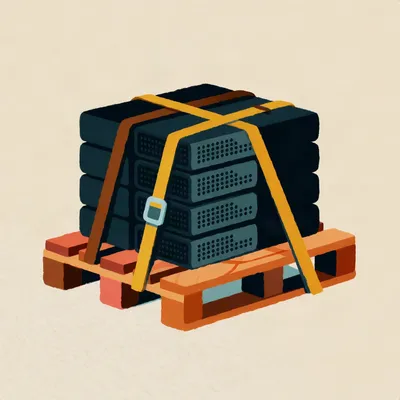
#6516: Why Cargo Thieves Are Targeting GPU Shipments
Six pallets of Nvidia hardware worth $11.4 million vanished after being loaded onto a fraudulent food transport truck in Oakland.

#6515: Creative Schemes Behind the Global GPU Hunt
Engineers carried eighty terabytes of training data across international borders in four checked suitcases to reach rented servers in Malaysia.

#6514: Why Even Solo Developers Face a GPU Shortage
H100 rental contracts jumped nearly 40 percent in five months as on-demand GPU capacity sold out across legacy and cutting-edge hardware.

#6513: Why Dual-Socket Servers Win on Dense AI Models
Populating a second EPYC socket sped up dense LLM inference by 183 percent, but delivered only 102 percent on sparse models like DeepSeek R1.

#6512: Build Servers Never Actually Build Anything
A Woodpecker CI server runs entirely as an idle control plane using roughly 100 MB of RAM while external agents handle compilation.

#6511: Why Voiceprints Are Not an Interoperable File Format
ISO/IEC 19794-13 explicitly excludes the data produced at feature or voice model levels, standardizing audio encapsulation rather than voiceprints.

#6510: Voice Isolation Before Speech Recognition
Running voice isolation on clean speech without a competing talker increases transcription word error rates from 0.04 percent to nearly three percent.

#6509: How a Knesset Government Can Form with Under 61 Votes
Under Israeli Basic Law, a new government can be sworn in with just 49 votes in favor, needing only a simple majority of those present.

#6508: Why Speech Transducers Omit Common Symbols
A transducer-style speech model cannot learn to emit an at-sign through fine-tuning if the character is missing from its fixed output vocabulary.

#6507: Why Broadcast Headsets Fit Commentators but Not Voiceover
Classic broadcast headsets avoid room noise at close range, but almost none use native USB or fit long studio voiceover sessions.

#6506: Why Generative Audio Restoration Hallucinates Highs
Hardware bandwidth limits force modern neural denoisers to hallucinate missing high frequencies from scratch rather than clean real audio.

#6505: Why Blanket Forts Beat Expensive Portable Vocal Booths
A blanket fort dampens room reflections for under eighty-five dollars, but no portable fabric rig can stop outside noise from entering.