
#hardware-engineering
224 episodes

#5579: Cutting Things With a Dremel: What Actually Works
Cut-off wheels vs cutting bits, RPM by material, and why lateral cutting is fine with the right attachment and fatal with the wrong one.
#5541: Re-terminating a Keystone Jack After a Bad Ethernet Run
A DIY Ethernet run came up at 80 Mbps on 2.5G fiber. Here's what went wrong and whether re-termination is a skill worth learning.
#5516: Wall Anchors: Why Your Holes Keep Failing
Nylon anchors don't fill gaps — they multiply grip. Here's what actually works when your hole is compromised.
#5514: Drilling Concrete: Jigs, Anchors, and Fidelity
Why your hammer drill wanders off mark, which wall-capable jigs actually grip, and how to match drill bits to anchors.

#5381: What Hotels Know About Laundry Machines
Washer-extractors, 400 G-force spins, and why a hotel laundry machine won't fit in your apartment.

#5376: Why a Zello Pager Wearable Doesn't Exist Yet
Pagers blink until acknowledged. Zello beeps until you tap. But nobody's shipped the wearable that bridges them.
#5371: Corded vs Cordless Jigsaws: What Actually Matters
Amps and SPM are the least predictive specs on the box. Here's what actually determines whether a jigsaw cuts square.

#5286: Soldering Isn't Dead — It's a Hiring Bottleneck
Robots build the boards, but humans fix them — and the industry can't hire enough people who can hold an iron.
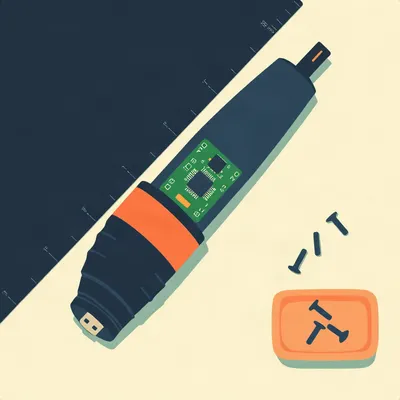
#5270: Teardowns as Documentation: Inside the Hardware Repair Playbook
A dead Dremel sparks a deep dive into teardowns as a documentation discipline — and why board-level knowledge matters more than ever.
#5268: 10 Absurd Power Tools That Actually Got Made
A motorized leaf pruner, a chainsaw bayonet, and the Suck Kut — ten power tools that solve problems nobody had.

#5263: Why Micro USB Ports Break and How to Fix Them
Micro USB ports fail mechanically, not electrically. Here's why they break, how to diagnose it, and whether a USB-C swap is worth it.
#5211: Brass vs Stainless: Marking HDPE Boxes That Last
Engraving HDPE storage boxes means fighting heat, not cutting. Here's how stencil material, carbide bits, and groove depth all connect.

#5131: Drill Bits Decoded: Wood, Steel & Tile
Why the right drill bit matters more than the drill itself — and how each material shapes its perfect tool.
#5127: Brushless vs Brushed Motors: What You're Really Paying For
Carbon blocks, copper windings, and a controller that changes everything. Here's what "brushless" actually means on your tools.
#5125: Why Your Cordless Tool Dies While Plugged In
Power path management explained — why your Dremel can't charge and run at the same time, and what it would take to fix it.

#5124: Sharpening, Cleaning & Polishing with a Rotary Tool
Can a Dremel really sharpen a knife? What about drill bits? We break down which accessories work and which are a waste.
#5114: Concrete Screws vs Drywall Anchors: What Actually Works
Concrete screws need pilot holes—here's why, plus how to match bits, avoid rebar, and pick the right anchor for drywall.
#5111: The Quiet Appeal of Industrial-Grade Stuff
Why do some people get genuinely excited about a heavy-duty bin? The strange, satisfying world of spec-driven purchasing.
#5110: Carabiner Load Ratings: What Can They Really Hold?
Carabiners are stronger than you think—but the real risk isn't the hook breaking. We break down load ratings, gate design, and trust.

#5107: The Wearable Power Grid: Smart or Just Early?
Is a distributed belt-mounted power system the future of EDC, or just a clever fantasy? We dig into the engineering.
#5101: Drill Bits and Concrete: What Actually Worked
A 12V drill, a $20 bit set, and a reinforced safe room wall — what actually happened, and why the first bit failed.

#5097: Who Actually Gets Paid to Test Hardware?
Real testing vs. affiliate content — and whether AI can finally separate genuine reviews from the noise.
#5096: Vacuum Engineering: When Industrial Machines Beat Consumer Gear
Why a $500 Bosch industrial vacuum outperforms a $700 Dyson — and what happens when you take construction-site gear home.
#5092: Pelican Cases vs. Neoprene: The Real Tool Travel Trade-Off
Weighing hard cases like Pelican Air against neoprene sleeves and padded inserts for carrying tools on flights.