
Local AI
394 episodes · Page 11 of 17

#2466: The Hidden Trap of Embedding Model Lock-In
What happens when your vector database works great — until your embedding model gets deprecated and your vectors become useless.
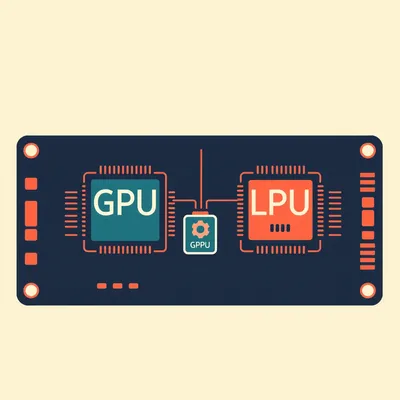
#2431: The 3 Markets in an AI Trench Coat
GPUs, LPUs, and ASICs: why the best hardware for AI depends entirely on what you're trying to do.

#2426: Why DeepSeek V4's Prose Feels More Vivid Than Claude or GPT
A million-token context window at 2% the KV-cache cost — and prose that actually breathes. Here's what makes V4 different.

#2398: Your Taste, Your Data: Owning Your AI Preferences
Why can’t you describe your perfect movie—but you’d know it if you saw it? A vision for portable, user-owned AI taste profiles.
#2358: ESP32 vs Raspberry Pi: The Microcontroller Mindshift
Why your smart thermostat doesn’t run Linux—and why that’s a feature. The surprising differences between microcontrollers and single-board computers.

#2357: Microsoft's Phi: When Data Quality Beats Model Size
Explore Microsoft AI's Phi family of small language models, designed for edge deployment and high efficiency.

#2356: Why AI Coding Needs Two Brains
Discover how specialized fast apply models streamline AI-powered code edits, cutting costs and latency while maintaining precision.

#2355: Why Open-Weight Models Are Winning
Discover how Cogito v2.1 leverages process supervision and MoE architecture to redefine reasoning efficiency in open-weight AI models.

#2352: The Structured Output Gap in Vision APIs
How do object detection APIs like Gemini, AWS Rekognition, and YOLO compare for automated annotation workflows?

#2349: The 30-Person Lab Outpacing AI Giants
Discover how Arcee AI’s Trinity Large Thinking delivers cutting-edge reasoning at a fraction of the cost, all from a team of just 30.
#2337: When Diarization Fails Silently
Discover how PyAnnote and other tools tackle the critical task of identifying "who spoke when" in audio—and why it’s harder than it sounds.
#2326: Voice Control Simplified: Home Assistant’s Local Stack
Discover how to build a reliable, vendor-agnostic voice control system for Home Assistant without relying on Amazon or Google.

#2325: Why Depth Is the Hardest Thing for AI to See
Can AI turn your apartment photos into a precise 3D model? Explore the tech behind photogrammetry and spatial reconstruction.

#2314: One Model or Three? Inside Claude's Architecture
What makes Claude’s Haiku, Sonnet, and Opus different? Discover how architecture shapes their unique strengths and weaknesses.

#2312: When Bigger Context Windows Aren't Better
Exploring the real-world impact of massive context windows in AI models, from academic research to codebase analysis.

#2311: Danish AI: Bridging the Localization Gap
How does AI handle Danish? Explore the challenges and progress in making AI tools work for small-language populations.

#2288: The Invisible Gatekeeper of Voice Tech
How voice activity detection shapes every step of the voice tech pipeline, and why it’s harder than it seems.

#2274: Weekend Projects Gone Wild: Evaluating AI Startup Pitches
From fridge tax agents to guilt-scheduled cron jobs, we evaluate ten AI-driven startup ideas that could exist—but probably shouldn’t.

#2271: Vector Search in a Single File
What if you could do vector search with just SQLite? We explore sqlite-vec, the extension that adds embeddings to the world's simplest database, an...
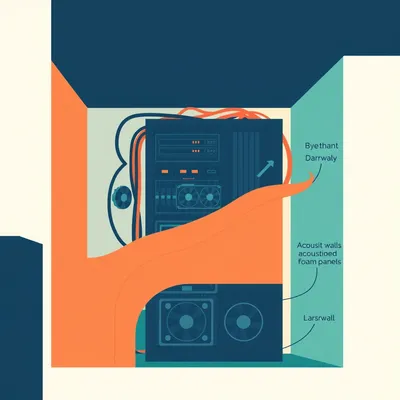
#2193: Running Claude in Your Apartment (The Physics Says No)
Building a local AI inference server to rival Claude Code sounds great until you do the math on heat, noise, and neighbor relations.

#2175: Let Your AI Argue With Itself
What happens when you let multiple AI personas debate each other instead of asking one model one question? A deep dive into synthetic perspective e...

#2074: Generative Social Science: When AI Agents Develop Theory of Mind
See how a new framework models 10,000 virtual citizens to test policies before spending a dime.

#2067: MoE vs. Dense: The VRAM Nightmare
MoE models promise giant brains on a budget, but why are engineers fleeing back to dense transformers? The answer is memory.

#2065: Why Run One AI When You Can Run Two?
Speculative decoding makes LLMs 2-3x faster with zero quality loss by using a small draft model to guess tokens that a large model verifies in para...