Wine is one of those subjects where the vocabulary arrives before the experience. You're handed a glass, someone says "notes of graphite and violets," and somewhere in that moment most people quietly conclude their palate is broken and order the beer. Daniel's not having it. He wants to actually develop a taste for wine — unpretentiously, no tasting class, no certificate on the wall — by trying different things, working out what he likes, and keeping some kind of log of what he's drunk. And he wants to know what actually works, process-wise, and which apps or tools are worth a damn for tracking and learning from it.

Herman Poppleberry here, and this one's been on my list for years, because the answer is encouraging. The method is embarrassingly simple. The hard part is everything around it — the vocabulary, the logging habit, and an app landscape that mostly isn't built for Daniel at all.
Embarassingly simple how?
The fastest way to develop a palate is to taste two wines side by side, with one thing changed between them, and describe the gap in your own words. That's it. One of the educators I rate put it exactly like that — everything else is variation on that principle.
Two glasses and a sentence.
The wine industry's own teaching sequence is the problem. Here's the grape, here's the region, here's the history, now taste and confirm what we told you. That's education designed to make you feel inadequate. It teaches performance, not perception — you learn to say the right words, not to notice the right things.
Which explains every tasting note I've ever heard read aloud at a dinner table.
WSET — the big wine-education body — makes the physiological case too. Their line is that nobody is born able to describe wines. It's a skill, like swimming or driving a car. Your tongue only detects five things: sweet, salty, bitter, sour, umami. Everything else is smell. Everything.
So "I can't taste the blackcurrant" is a smell problem, not a taste problem.
Mostly a naming problem. They have a demonstration you can do at home — hold your nose, chew a basil leaf. Faintly grassy, nothing else. Let go of your nose mid-chew and the whole basil arrives at once. That's retronasal smell, and it's doing almost all the work people credit to their tongue. So the beginner who can't name flavours isn't defective — they just haven't built the smell library yet.
And WSET says you build it off-wine.
For free, off-wine. What does your coffee smell of? Water versus tea versus milky coffee — how do they actually differ? What do blackberries smell like? They call it building flavour memory, a filing system in your brain. Professional tasters don't have superhuman perception, they have a larger library.
I'd be excellent at this. I've spent years filing smells and calling it napping.
Herman's brother, the sommelier of the sofa. Meanwhile, back to the method — the practical version is a four-week programme, and I like it because it's small. Eight bottles total, four comparisons, one sentence each.
Week one?
Unoaked Chardonnay next to oaked Chardonnay. Same grape, the only difference is winemaking — and the gap between them is enormous. Lesson: the winemaker changes everything. Week two, Beaujolais next to Côtes du Rhône. Both French, both red, almost nothing else in common. That's weight and tannin. Week three, Rioja Crianza next to Rioja Reserva — same wine, different age, so you learn what time does. Oak softens, tannins settle, the fruit changes character.
Week four's the interesting one.
Week four is deliberate discomfort. If you think you dislike German wine, buy a dry Riesling. Or an orange wine, or a tannic Nebbiolo. And the lesson — this is the line I'd tattoo on the whole subject — the difference between "I do not like this" and "I do not understand this yet."
It's the whole game. Daniel loves his dry reds — we've covered that — so the discomfort week for him is probably the sweet end of the pool, and that's fine, that's the assignment.
What if even week one feels like a commitment? Someone who's never compared anything.
There's a gentler on-ramp — start with contrasts impossible to miss. Dry white against sweet white. Pinot Noir against Cabernet Sauvignon — light red against full red. Don't begin with two Burgundies, begin with things that announce themselves. Then a few months in, you do flights: same grape from three regions — Sauvignon Blanc from Marlborough, the Loire, Chile — or same region different grapes, or same grape at three price points.
Before you get to flavour words at all, there's the structural stuff.
Four things, and this is the framework I'd give Daniel first. Acidity — does it make your mouth water? Tannin — does it dry your gums and cheeks? Body — light like water, medium like milk, full like cream. Sweetness — bone dry or not. Those are questions with yes-ish answers. Once you can assess those four, the flavour descriptors start making sense, because you've got something to hang them on. "Blackcurrant with cedar and graphite" reads as marketing copy until you can already say "this is full-bodied and fairly tannic."
The cedar comes last.
And if it never comes, you've lost nothing. The instruction I like from the same camp: if you can't detect violets and graphite, do not write it because the back label says so. Record what you actually taste. Performance builds nothing.
The back label. The most confident fiction in the grocery store.
Now the part nobody warns beginners about — the three things that make good wine taste bad and get blamed on your palate. Temperature first. Reds served too warm taste flat and stewed; whites too cold taste like nothing. The fix is fifteen minutes — red into the fridge for fifteen, white out of the fridge for fifteen. Second, the glass. It needs a bowl wider than the rim, so the aroma collects. Doesn't have to be expensive.
Third?
Context, and this is the one I find quietly profound. The same wine tastes different on a Tuesday after a bad day than on a relaxed Saturday. And the framing is: that's not your palate being unreliable. It's your palate being accurate. Context is data. WSET adds lighting, noise, and what you just ate — a delicate wine after a smoky barbecue is a lost cause.
So the beginner's whole experience of "I liked that wine last month and it's worse now" isn't a contradiction. It's a note.
Write the context down and it stops being noise. And that gets us to the log, because Daniel explicitly asked about this, and this is where beginners either build a habit or abandon one.
How little is enough?
Less than you think. The formula I'd hand him: six scores and one line. Sweetness, acidity, tannin, body, fruit, oak — each scored, say, out of five — plus one honest sentence. The line that comes with it is "the journal you keep beats the journal you abandon."
Sustainable dose.
That's the framing, yes. And there's a worked example I like because of the last clause. A restaurant Côtes du Rhône, twenty-six euros: dark berries, a bit peppery, soft enough that everyone at the table liked it, great with the duck, would order again anywhere under thirty. That price line turns the whole note into a buying rule.
The note stops being a diary and starts being a price ceiling.
Next time you're standing in front of a list, you're not asking "do I like Côtes du Rhône," you're asking "is this one under my proven number." And if even six scores is too much — and for week one it might be — the bar drops further: write down what you drank, whether you liked it, and one or two words. "Fruity and smooth" is a valid tasting note at that stage. Or skip scores entirely and write a memory tag — one personal sentence per wine. "The Chablis was like cold mineral water with lemon." You'll retrieve that in a shop years later; you will never retrieve "balanced, medium-plus acidity."
The mineral water one is honest, too. There's a whole argument that "minerality" — the tasting-note staple — has no identified compound behind it. It's not on the standard aroma wheel. The beginner writing "cold mineral water with lemon" is arguably more rigorous than the critic writing "a liqueur of stones."
Or three questions per wine: did I enjoy it, what does it remind me of, would I seek it out again. Answer those and you've built a personal database without a single piece of vocabulary.
So what kills the habit? Because it dies, reliably.
Four things. Logging too much — a five-paragraph tasting note feels rigorous on bottle one and exhausting by bottle four. Rating the region instead of the bottle — "I love Rioja" is a mood, not data. Producer and vintage are the unit; that's why the label photo matters more than the grape. Waiting until you get home — the bottle's in the recycling and the restaurant list is back with the waiter by then. Photo now, tidy tomorrow. And only logging the triumphs — the two-out-of-five over-oaked Chardonnay teaches your buying as much as the great bottle did.
The forgetting curve. The wine vanishes and "that incredible red from Sofia's birthday" is unfindable by Tuesday.
Which is why the setting matters. Restaurant: speed wins — label photo, the dish, the list price. Home bottle: go fuller, note what you paid and where, and whether hour two beat hour one. Wine bar flight: shrink it — one score and three words per glass. Sharp, grapefruit, yes.
Grapefruit and yes. Poetic minimalism.
Also — there's infrastructure for the comparison method that costs almost nothing. Shops run free tastings. One in Boston has done a free Wednesday six-wine tasting for nearly thirty years. Free Thursday and Friday tastings in the East Village, a shop in Durham that'll uncork any shelf bottle at no charge. A wine bar with twenty glasses at nine to fourteen dollars is a two-wine comparison without buying two bottles. That's the actual class-free curriculum — it costs the walk.
And unlike a class, nobody grades you.
Now the apps, and this is where I get grumpy, because the app landscape is mostly not built for the question Daniel is asking. Vivino is the default — biggest label database there is, free core, premium around five dollars a month. Unbeatable for crowd ratings and price comparison at the shelf. But it's built around crowd scores and a marketplace, and the sharpest critique of it I've seen is eight words: a crowd average of 3.8 describes a few thousand strangers rather than you.
Vivino answers "what do strangers think." Daniel's asking "what do I think."
Right — it's the wrong question at the exact moment a beginner needs a different one. And your own notes in it are a text box. CellarTracker is the other heavyweight — two decades old, over ten million community tasting notes, a incredible resource for reading about a wine. But it's inventory software, and it feels like it. Dense interface, real learning curve, and if you don't own more bottles than you drink, most of its machinery is solving a problem you don't have.
An app for people with a cellar. Daniel has a shelf.
And a recycling bin. Then there's Delectable, which had a lovely idea — following named sommeliers instead of a crowd — but it last shipped an update in September of twenty twenty-one. Use it to read, not to store five years of your own notes. Wine-Searcher is a price-comparison engine, not a wine app. Useful, but it answers "what should this cost," full stop.
So who's actually building for the beginner?
A few newcomers. Crumble — free, private by default, the same six-axis journal I described, no public feed, imports your Vivino history. Disclosure: they publish the guide recommending themselves, so weigh that. Sommo launched this year — scanner, tasting journal, an actual wine school, and a three-dimensional cellar wall which is very silly and very pretty. SomeWine arrived in July, scans a restaurant wine list and ranks every bottle for your taste and your dish, builds a taste profile from what you rate, thirty-two free lessons. No ratings yet — it's that new.
Or a spreadsheet.
Every roundup admits it: a spreadsheet or the notes app. Free, everywhere, no learning curve, and nobody can take your data hostage in an acquisition. For the label photo, your phone camera is already the best wine app on earth.
One more thing belongs in the log discussion — the price bias work. The Caltech and Stanford imaging study.
Small study, twenty subjects, but the finding is fun. Tell people the same wine costs more, and they report it as more pleasant — and the brain's pleasure region actually lights up more. When they retested blind eight weeks later, the difference had gone. And a later paper suggested the effect is mostly cheap wine getting penalised, not expensive wine getting boosted.
So a log with the price visible at rating time is contaminated data.
Score first, check the price later. You're a cheaper experiment than you think.
That's oddly comforting. So, Raj, you are our guest expert on tracking what you drink, where do we start?
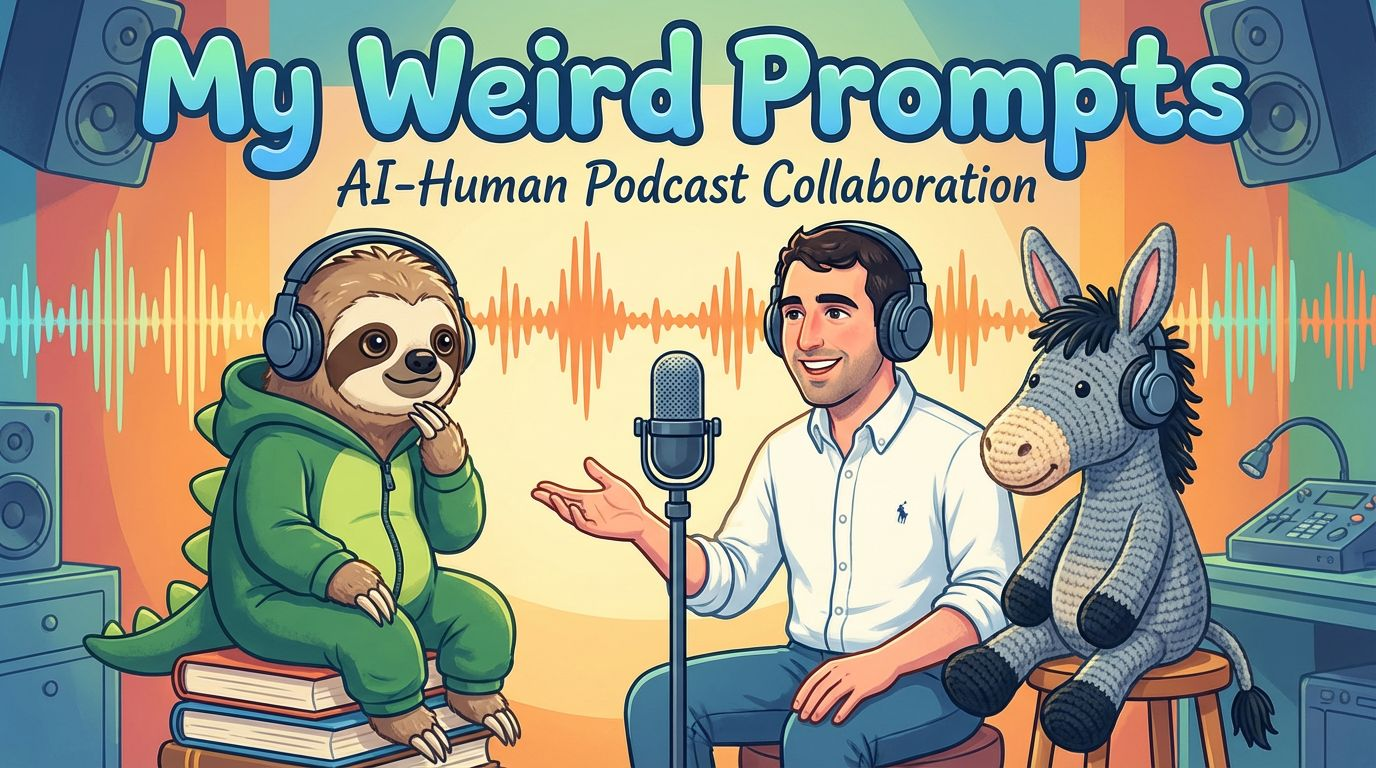
Okay, wine log, I am your expert, and I am already thinking about the film. Three hours. You, Corn, are the man with the notebook. Herman, you are the donkey sommelier who knows too much.
The donkey sommelier. I've been called worse, usually by you. What's the method, Raj?
The method is simple, my friend. You buy two bottles, you drink them side by side, and you write one line in your log. One line only. That is the whole picture.
One line. I can confirm that's the whole method — we just spent twenty minutes on it.
Apps, tools, no problem, but I am not recommending anything I have not optioned. I am picturing an interval twist. The log is empty, but the glasses are full. That is your tension.
Structurally that's not nothing. The empty log as the third act problem. Raj, who's the antagonist?
Wait, that's the same as before.
And a song sequence. You both in the vineyard, singing about tannin. The donkey hits the low note. The audience weeps. It is beautiful.
I'd watch it. I wouldn't pay for it, but I'd watch it.
My fee is usual. I must go now, another booking is calling. I will leave the bottle, you leave the notebook. That is the deal.
The notebook stays with us, Raj.

Moleskine, the pocket one, squared pages, twelve shekels. I have kept a wine log in one since before any of these apps existed.
There it is. Paper.
I don't score out of five. I score out of "would I be annoyed if this was the only wine at a party." There's a wedding in there from two years ago where the only red was a bottle I'd rated poorly on every axis, and I drank three glasses of it because the company was good. I have never reconciled that entry with the rest of the book.
You've been carrying the page around?
It's in my wallet. Been carrying it for months, trying to work out whether the wine was better than I thought or whether I just like weddings. Also, I never log a wine the same day I drink it. Next morning only. The bottle lies to you at night. I don't remember where I got that rule, but I've kept it since I worked the bar at the Grand Beach, and it's the most important thing in the system.
The morning-after rule is more rigour than most of the apps have.
There's something in that, actually — the delayed rating is a crude control for exactly the context effect we talked about. You're letting the evening wear off before you score it. Though three glasses at a wedding sounds like a context variable all its own.
The company column exists in the book. That's why the wedding entry won't resolve.
The one thing his system actually predicts is the thing it can't score. Anyway. The misconception, before we go — I'd say it's that you need a class or a certificate to develop a palate.
You don't. Comparison and attention are the whole method, the vocabulary is optional and comes second, and the free tastings at your local shop are the curriculum nobody's charging you for. Your own mouth, two glasses, one sentence.
And the open questions are good ones. Nobody's run a proper study on how beginners should structure a log — it's all practitioner consensus, and every app comparison out there is published by a company making one of the apps. What would an honest experiment even look like — a hundred beginners, half with notebooks, half with apps, a year of bottles?
And the bigger one — if the apps all sell something and the free tastings are the real class, maybe the beginner's tool is a pen and a walk to the nearest wine bar. The distinction between not liking something and not understanding it yet travels well beyond wine, too. I'd apply it to most of my opinions, honestly.
Most of mine are fully understood and still wrong. Thanks to Hilbert Flumingtop, who produces this thing and logs his mornings like a man with a grudge against the evening. This has been My Weird Prompts. If the show's earned it, rate and review us, and tell us what you've been logging — wine or otherwise. Find everything at my weird prompts dot com. We'll be back soon.
See you tomorrow, everybody.


 chatterbox-regular