Daniel's been watching footage again. Guys in Faraday suits climbing onto a live half-million-volt line, a helicopter hovering next to a steel tower, someone hanging off a crossarm three hundred feet up. His question is the obvious one after you watch that: who actually signs up for this, what's the safety record, and is the tower stuff something every lineman does or is that its own weird subculture.

And the answer to that last one is no, and the gap between what the public pictures and what the trade actually is might be the most interesting part of this whole thing. The word lineman covers a spectrum so wide that two people with the same job title might never have done the same task in their careers.
So the guy in the bucket truck outside your house and the guy dangling from a helicopter over a river crossing are both linemen, but they're not the same job.
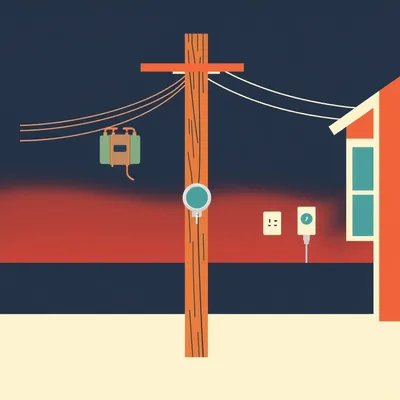
Not even close. The trade splits into distribution and transmission. Distribution is the neighborhood level, the poles you see on your street, typically anywhere from four to thirty-five kilovolts. That's bucket trucks, climbing wood poles, rubber gloves, hot sticks. Transmission is the long-distance stuff, the steel lattice towers, sixty-nine kilovolts up to seven hundred sixty-five kilovolts. That's a different world.
Seven hundred sixty-five. That's the number where you don't even pretend the air is an insulator anymore.
At that voltage, the air itself starts conducting around you. The standard practice at those levels is barehand work, where the lineman is bonded to the line and brought to the same potential. You wear a conductive suit, a mesh Faraday suit, and you literally sit on the wire. The current flows around you, not through you. Same reason a bird can sit on a line.
Which is one of those explanations that's technically reassuring and emotionally useless. The bird isn't wearing a conductive suit and hoping the bonding wand makes contact before the arc does.
The bonding wand is the part people don't see in the YouTube footage. Before you touch the line, you extend a wand to equalize potential. If you just reached out and grabbed it, the arc would find you first. That initial contact is the moment. After that, you're at line potential and it's, well, not safe, but stable.
Daniel asked who gets into this. Let me put it in the least romantic terms possible. It's a union apprenticeship. The IBEW outside lineman program is three and a half years, seven thousand hours of on-the-job training plus classroom work. You apply through a regional joint apprenticeship committee, you take an aptitude test, you interview before a panel, and you sit on a ranked list for up to two years.
And the aptitude test is the filter. Sixty-nine questions, ninety-seven minutes, no calculator. Thirty-three algebra and functions questions, thirty-six reading comprehension. Scored on a one to nine stanine scale. Most programs require a four to get an interview, but the competitive lists mean a four never gets called. The guides tell you to aim for seven or higher.
A stanine. That's a word I haven't heard since standardized testing in school. Nine-point scale, mean of five, standard deviation of two. And a four on that test means you can probably do the math but nobody's going to find out.
Because there are two hundred fifty to three hundred applicants for twenty-four seats at some programs. The bottleneck isn't interest, it's training capacity. Which is strange, because the trade is simultaneously desperate for bodies.
That's the tension. Forty-five percent of experienced linemen are projected to retire within ten years. More than half of utility workers are over forty-five. The industry calls it the silver tsunami. And at the same time, there are roughly two hundred dedicated lineworker training programs in the country, and a school like Northwest Lineman College reports seventy-three percent placement. The jobs are there.
The pay is there too. Apprentices start around sixty percent of journeyman scale, which is higher than inside wireman apprentices who start at forty to forty-five percent. Journeyman at IBEW Local 611, that's New Mexico, is about fifty-four thirty an hour base, twenty-two oh eight in benefits, so a total package around seventy-six thirty-eight an hour. Storm work pushes annual earnings past two hundred thousand.
Storm work is the part where the lifestyle stops being a job and starts being a deployment. You chase hurricanes, ice storms, derechos. You work sixteen-hour days for weeks. You sleep in staging areas. The money is spectacular and the burnout is real.
And the physical toll. The nonfatal injury data is dominated by overexertion, fifty-two percent of days-away cases. Falls and slips are another twenty-five percent. Median days away from work for a power line worker is twenty days, versus eight for all occupations. These aren't minor sprains. These are torn shoulders, blown knees, back injuries from climbing and hauling and positioning in awkward spots.
So the entry path is competitive, the pay is excellent, the physical cost is high. Now let's talk about the safety record, because Daniel asked and the numbers are interesting.
Twenty-one fatal work injuries in twenty twenty-four, a rate of thirteen point eight per hundred thousand full-time workers. The all-worker average is three point three. So roughly four times the average. That sounds alarming, and it is, but the trend matters. A decade ago the rate was running nineteen to twenty-four per hundred thousand. So it's come down meaningfully.
Context also helps. Roofers are at forty-eight point seven. Structural iron and steel workers, thirty-seven point eight. So the guy putting the roof on your house is more than three times more likely to die on the job than the guy working on a seven hundred kilovolt line. That's not intuitive.
It's not, and it tells you something about how much engineering has gone into keeping linemen alive. The trade has procedures for everything. The danger is real but it's managed through a level of discipline that most people don't associate with blue-collar work.
What actually kills them? The public imagines electrocution, and that is the leading cause. Nearly half of fatal injuries in the twenty eleven to twenty fifteen window were electrocution. Sixty-two of one hundred thirty-one.
But falls were one-fifth of the deaths. Forty-three of two hundred one. And more than forty percent of those falls were from thirty feet or higher. So Daniel's instinct about height is statistically justified. Falls and transportation incidents together account for nearly half of all fatalities. The truck crash on the way to the job is part of the risk profile.
Transportation. That's the one nobody puts in the YouTube montage. The deadliest part of the day might be the drive to the substation.
And the seasonality. Fatalities cluster in summer and autumn. Sixty-nine in summer, fifty-five in autumn, versus thirty-seven in winter and forty in spring. That's storm season, heat season, the months when the grid is under maximum stress and the work is most urgent.
So the safety record is improving but the residual risk is concentrated in the extreme tasks. That's the pattern. The routine work has been made relatively safe through engineering and procedure. What's left is the stuff that can't be engineered away.
Which brings me to the specialty question, because this is where the answer gets interesting. Barehand work is a distinct discipline with its own training and its own psychology. The technique was first used in nineteen sixty. It's been performed on the Russian eleven fifty kilovolt system. Hot stick work has been done at seven sixty-five. These are not things a distribution lineman does.
And then there's the helicopter version. Which is apparently a formal credential in Australia. The national training register lists a unit called maintain energised transmission lines using barehand techniques from a helicopter. That's the actual name of the qualification.
Aerial linemen train four to six years total and earn forty-one to fifty-four dollars an hour. The helicopter hovers alongside the tower, the lineman sits on a platform or is bonded to the line, and they do the work while the pilot holds position. The pilot is arguably doing the harder job.
The pilot is holding a multi-ton aircraft steady within a few feet of a live conductor while the guy on the platform is trying to torque a bolt. If the pilot sneezes, the lineman has a very bad day.
And that's the thing about the trade. The skill ceiling is essentially unbounded. You can spend a career on distribution and never touch a steel tower. You can spend a career on transmission and never do barehand. You can do barehand for years and never go near a helicopter. Each layer is a smaller group of people with more specialized training.
So when Daniel watches that footage, he's watching maybe the top few percent of the trade. The guys who do helicopter barehand work on major transmission lines are an elite within an elite.
And the entry pipeline for that elite starts in the same place as everyone else. The apprenticeship. The aptitude test. The panel interview. Nobody starts on a helicopter.
Let me ask you something. You mentioned the silver tsunami. The workforce is aging out. The projects are enormous. There's a twenty-two billion dollar plan for new three hundred forty-five kilovolt lines in the Midwest. A seven point seven billion expansion in the Southwest. SunZia, five hundred twenty miles of five hundred kilovolt line, eleven billion dollars, employing over a thousand linemen. The demand is there.
And the training capacity isn't. That's the bottleneck. Two hundred programs, most of them small, and the apprenticeship system is built around regional committees that can only take so many people per year. The IBEW isn't going to flood the market because that would drive down wages, but the grid buildout is going to take decades and there aren't enough bodies.
So the person who gets into this line of work right now is walking into a seller's market. A high school graduate with a year of algebra and a CDL permit can, in three and a half years, be making seventy-six dollars an hour in total compensation with two pensions and more overtime than they want.
And that's the pitch the industry should be making. Debt-free six-figure path. The apprenticeship pays you to learn. You're not taking out loans for a degree that might not lead anywhere. You're earning from day one.
The catch is the life. The travel. The storms. The missed birthdays. The body at forty-five. The trade chews people up. The median days away from work being twenty tells you these injuries are serious. You don't do this for thirty years and walk away with your knees intact.
Some do. The guys who move into supervision, training, safety roles. But the field work is a young person's game in a lot of ways. The twenty-five to thirty-four age bracket was a quarter of the fatalities in that five-year window. That's not the age you expect to see in a dangerous trade, but it's when you're doing the most field work.
So the profile of who gets in. Young, male, overwhelmingly. The fatality data from twenty eleven to twenty fifteen shows one hundred ninety-nine of two hundred one were men. Ninety-six percent native-born. A lot of them from rural areas where climbing poles and working outdoors isn't exotic.
The trade runs in families too. Lineman fathers, lineman sons. It's a culture. The apprenticeship is a gatekeeping mechanism, but the social network is how people find out about it in the first place.
And the pre-apprenticeship schools are the other entry point. Northwest Lineman College, Southeast Lineman Training Center. Five to fifteen thousand dollars. Not officially endorsed by the IBEW, but they help with placement because they give you the basic climbing and electrical skills before you apply.
The alternative route is the hours-based path. Eleven thousand documented hours in the trade lets you bypass the apprenticeship and sit for the journeyman exam. Seventy percent pass rate required. That's for people who came up through non-union shops or adjacent trades.
So there are multiple doors, but they all lead to the same place. A job where the routine is dangerous and the extremes are terrifying.
And where the extremes are getting more attention because of automation. This is the part I find interesting. There's a startup called Voltair that launched in March, pitching weatherized hybrid drones for power utility inspections. The inspection side of line work is being automated.
But the drone can't climb the pole. That's the line from the industry experts. AI can't climb a utility pole. The physical work, the actual manipulation of conductors and hardware, that's not going anywhere.
Not yet. But the inspection work is a significant part of the job. Walking the line, checking for damaged insulators, vegetation encroachment, hot spots. If drones take that over, the trade shifts even more toward the high-risk physical intervention work.
Which would concentrate the risk profile even further. If the safe inspection work is automated, what's left is the stuff you can't do with a camera. The stuff that requires a human body on the structure.
That's the trajectory. The trade becomes smaller, more specialized, and the remaining work is disproportionately the dangerous work.
Let me pull on the barehand thread a little more, because Daniel specifically asked about the tall structure work and I want to make sure we're clear on what that involves.
Barehand work is the thing that looks like magic in the videos. The lineman wears a conductive suit, gets transferred to the line, and works on it while it's energized. The suit is a Faraday cage. The current flows around the body. The lineman is at the same potential as the line.
The transfer is the part that would keep me awake at night. You're in a helicopter or on a platform, and you have to move from ground potential to line potential. That transition is where the arc risk lives.
The bonding wand handles that. You extend the wand to the line first, equalize potential, then make contact. It's a procedure. It's rehearsed. But yes, that's the moment where a mistake is fatal.
And the voltage. Seven hundred sixty-five kilovolts. At that level, the air around the line is ionized. You can hear it. The corona discharge is visible at night. You're working inside a field that's actively trying to kill you.
The Russian eleven fifty kilovolt system is the highest voltage ever used for barehand work. That's an experimental line, a test bed. The standard transmission voltages in the US top out at seven sixty-five.
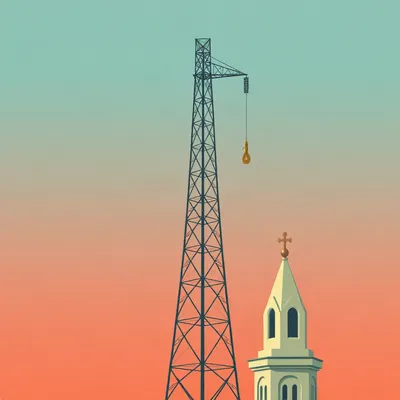
So when Daniel watches a video of someone working on a tall pylon, he's probably watching transmission work at sixty-nine to five hundred kilovolts. The really tall towers, the ones that cross rivers and valleys, those are the transmission lines.
And the tower itself is a different climbing problem. Steel lattice, no insulation, the structure is grounded. You climb it with a fall arrest system, and you're working around energized conductors the whole time. The clearances are engineered, but you're still a body in a steel cage with a live wire running through it.
The heights. Daniel mentioned heights. A typical transmission tower is a hundred to two hundred feet. Some river crossings are three hundred feet or more. The tallest in the world are over twelve hundred feet, but those are outliers.
The fall protection is mandatory now. That's part of why the fatality rate has come down. The old-timers used to free climb. The stories from the seventies and eighties are hair-raising. Belt and spikes, no fall arrest, just climb and hope.
The trade has professionalized. That's the real story of the safety improvement. It's not that the work got less dangerous. It's that the procedures got better.
The culture changed. The macho stuff, the cowboy stuff, that's been pushed out. Not entirely, but the modern trade is disciplined in a way that would have been unrecognizable forty years ago.
To answer Daniel's questions directly. Who gets into it? Competitive applicants who pass a math and reading aptitude test, survive a panel interview, and commit to a three and a half year apprenticeship. The pay is excellent, the demand is high, and the physical toll is real.
The safety record is roughly four times the all-worker average, but improving. Electrocution is the leading cause of death, falls and transportation incidents are close behind. The risk is real and it's managed through engineering and procedure.
No, not all linemen do tower work. Distribution linemen work on poles and bucket trucks. Transmission linemen work on towers. Barehand and helicopter work are specialties within transmission. The guy in the YouTube video is the top of a pyramid.
The pyramid is about to get smaller at the base. The retirements are coming. The training pipeline isn't keeping up. The automation is taking the inspection work. The trade is going to look very different in fifteen years.
That's the second-order question. If the safe work is automated and the workforce is shrinking, does the remaining trade become more dangerous per worker because only the hard tasks are left?
That's a real concern. The fatality rate could plateau or even rise even as the absolute number of deaths stays low, because the denominator shrinks and the numerator concentrates.
The rate is the thing to watch. Thirteen point eight per hundred thousand now. If it's fifteen in five years, that's not necessarily because safety got worse. It might be because the job got more concentrated.
Hilbert: You're both right.
Hilbert: I own one. Several, actually. Well, not the helicopter. But I've got a bucket truck, a digger derrick, and about four thousand feet of old copper conductor sitting in a yard outside Tulsa.
Hilbert: Bought them at auction in oh three from a utility that was upgrading. Thought I'd start a contracting outfit. Had a guy named Ronnie who'd done line work in Oklahoma for twenty years. He said the money was in storm restoration, not in owning equipment. He was right.
Hilbert: The digger derrick sat for two years. Sold it to a fence company. The bucket truck I used for tree work for a while. The boom was rated for forty-six feet, but the insulation had been tested in nineteen ninety-eight and I never re-certified it. So I kept it below the power lines.
Hilbert: Ronnie used to say the difference between a lineman and a dead man is about six inches of air and a procedure you don't skip. He was missing two fingers on his left hand. Said he lost them to a guy who skipped a lockout.
The lockout piece is the unglamorous side of the trade that never makes the YouTube footage. De-energizing, testing, grounding. The paperwork. The verification. That's what keeps the fatality rate from being triple what it is.
Hilbert: Ronnie said the worst part wasn't the heights or the voltage. It was the callouts at two in the morning in an ice storm, driving three hours to a substation, and then waiting four more hours for the switching order before you could even start.
The waiting. That's the part that doesn't fit the heroic narrative. The actual work is maybe twenty percent of the job. The rest is logistics, clearances, and standing by.
Hilbert: I sold the conductor for scrap in oh nine. Copper prices were up. Got about eleven thousand for it. Ronnie took a job with a municipal utility in Arkansas. I think he retired a few years back.
Hilbert: The bucket truck I still have. It's parked behind my cousin's shop. Doesn't run. The boom's rusted. My cousin keeps asking when I'm going to move it.
The used equipment market is a graveyard of failed contracting dreams. Every auction has a row of bucket trucks and digger derricks that someone bought thinking they'd get rich on storm work.
The storm work itself is a lottery. You might make forty thousand in a month after a hurricane, or you might sit for six months with a truck payment and no calls.
Hilbert: Ronnie said the guys who made real money in storms were the ones who could leave at a moment's notice and didn't have a family waiting. He said the family men burned out in five years.
Hilbert: He was married three times. I don't know if that's related.
The divorce rate in the trade is legendarily high. The travel, the overtime, the unpredictability. It's hard on relationships in a way that the pay doesn't fix.
That's the tradeoff nobody puts in the recruitment brochure. You can make two hundred thousand a year, but you might miss every birthday and half the holidays for a decade.
Hilbert: Ronnie used to say the job was the best-paying bad decision he ever made. I think about that line a lot.
Hilbert: Anyway, you asked who gets into it. The answer is people like Ronnie. People who are good with their hands, can do math in their head, and don't mind being uncomfortable for long stretches. The ones who last are the ones who follow the procedures even when nobody's watching.
The procedures are the whole game now. The trade has moved from a culture of individual skill to a culture of verified compliance. The safety record improvement is almost entirely that shift.
Which is why the automation question is so interesting. The compliance culture is built for humans. Drones don't skip lockouts because they don't do lockouts. But they also can't torque a bolt on a live conductor.
The physical work is the moat. For now. The question is how much of the job can be redesigned so the physical work happens de-energized, or happens with the human at ground level operating remote tools.
That's the long-term trajectory. The lineman of twenty fifty might be operating a robot from a truck, not climbing a tower. But we're decades from that being economical.
The grid buildout is happening now. The hundred three thousand miles of new transmission lines projected in the next thirteen years. Those lines need to be built and maintained by people who can climb.
The trade is simultaneously facing a labor shortage, an automation threat, and a construction boom. That's a strange combination.
It means the person entering the trade now has unusual leverage. The unions know they can't fill the seats. The utilities know they can't build fast enough. The workers can demand better conditions and better pay.
The apprenticeship is still the bottleneck though. You can't just decide to be a lineman. You have to get through the test, the interview, the ranked list. The gatekeeping is real.
That gatekeeping is part of why the safety record is as good as it is. The trade filters for people who can do algebra and read a procedure manual. That's not elitism. That's survival.
Daniel's question about who gets into it has a clear answer. The people who get in are the ones who can pass a math test, sit through a panel interview, and then spend three and a half years proving they can follow procedures at height and around voltage.
The ones who stay are the ones who don't mind the travel, the storms, and the physical toll. The ones who leave are the ones who look at the twenty days of missed work per injury and decide the money isn't worth the body.
The safety record is what you'd expect from a trade that has engineered out most of the routine risk but still has to do the extreme tasks. Four times the average, half of it from electrocution, a fifth from falls, a quarter from transportation.
The tower work is a specialty within a specialty. Distribution linemen never touch a steel tower. Transmission linemen do. Barehand and helicopter linemen are the elite. The YouTube footage is the top of the pyramid.
Which is probably why Daniel finds it so compelling. It's the most dramatic version of a trade that's mostly unglamorous, procedural, and disciplined.
The drama is real though. The corona discharge, the arc flash, the helicopter hovering next to a live line. That's not CGI. That's a Tuesday for a small group of people.
The small group is about to get smaller. The retirements are coming. The pipeline is constrained. The automation is nibbling at the edges.
The trade will survive. The grid needs humans who can climb. But the trade of twenty thirty-five will be smaller, more specialized, and probably safer per worker, even if the rate looks worse because the denominator shrank.
That's the thing to watch. Not the absolute number of deaths. The rate. And whether the remaining work concentrates the risk.
Hilbert: Ronnie used to say the rate didn't matter. Said what mattered was whether you went home that night. He said every lineman knows someone who didn't.
Hilbert: I think about that when I see the bucket truck behind my cousin's shop. The boom's rusted. The controls are seized. But the warning stickers are still on it. Danger. High voltage. Keep clear.
Hilbert: Ronnie put those stickers on. Said they were the most important part of the truck. Said the stickers did more to keep people alive than the insulation ever did.
The warning label as safety equipment. That's the trade in miniature. The engineering matters, but the culture of warning, the constant reminder of what can go wrong, that's what keeps people alive.
That culture is hard to automate. A drone doesn't need a warning sticker. But a drone also doesn't have a family waiting at home.
Hilbert: Ronnie's family waited. The third wife, anyway. I think she was the one who finally got him to take the municipal job. Regular hours. No storms.
Hilbert: He said it was boring. Said he missed the adrenaline. But he stayed until retirement.
The boring version of the trade is the safe version. That's the tradeoff.
That's the answer to Daniel's question. The people who get into this are the ones who can handle the boring parts, the procedures, the waiting, the paperwork. The adrenaline is the reward, but the discipline is the job.
The safety record reflects that discipline. It's not great, but it's better than it was, and the trend is downward.
The tower work is a specialty. Not everyone does it. The ones who do are the ones who sought it out, trained for it, and accepted the additional risk.
The next time Daniel watches that footage, he'll know he's watching a small group of disciplined professionals doing the most extreme version of a trade that's mostly about patience.
He'll know the guy in the Faraday suit started with an algebra test and a panel interview, same as everyone else.
Thanks to our producer Hilbert Flumingtop for keeping the show running.
This has been My Weird Prompts. Email us at show at my weird prompts dot com with your own questions.
We'll be back soon.